What's inside
As an Amazon Associate I earn from qualifying purchases. This post may contain affiliate links at no extra cost to you.
What we cover
Choose bits for the material, not the biggest piece count
A drill-bit set is useful on site when its bits suit the materials you actually drill and are easy to identify. A 100-piece case full of duplicate sizes is less useful than a smaller set with the right wood, metal and masonry bits. Before buying, check the shank type, size range and whether the set includes replacements for the sizes you use most.
For occasional household work, a basic mixed set can be good value. For regular site work, separate, clearly marked sets are easier to manage: wood bits stay sharp, metal bits can be lubricated, and masonry bits can take the impact of a hammer drill. A mixed wood, metal and masonry bit set suits light, varied jobs, but check that the masonry bits are carbide-tipped and that the sizes match your anchors.
As an Amazon Associate we earn from qualifying purchases at no extra cost to you.


Match the bit to the job
Twist bits are the everyday choice for metal and many general-purpose drilling tasks. High-speed steel (HSS) bits are inexpensive and adequate for mild steel, aluminum and thin sheet when kept sharp and used at a sensible speed. Cobalt-alloy bits cost more but tolerate heat better, making them a better choice for frequent drilling in harder steel. They are not indestructible: forcing a dull bit or letting it overheat can still ruin it.
For clean holes in timber, brad-point bits start accurately and reduce wandering. Spade bits are cheaper for quick, rough holes, especially where speed matters more than a tidy edge. Auger bits clear chips well in deeper timber holes but need a drill with enough torque and a firm grip. For large holes, a hole saw is often more practical than buying a long run of large twist bits.
Masonry bits have a carbide tip for brick, block and concrete. A standard rotary drill can handle softer masonry and small holes, but drilling concrete is slower and can wear the tip. A hammer drill helps in brick and block; for frequent or larger holes in concrete, an SDS rotary hammer and suitable SDS bits are the more effective pairing. Do not put ordinary round-shank bits in an SDS chuck unless the tool’s adapter specifically supports them.
Quick comparison by material
| Job | Bit to look for | Best paired with | Common failure |
|---|---|---|---|
| Timber, clean holes | Brad-point or auger | Standard drill | Splintering from high feed pressure or a dull edge |
| Timber, rough large holes | Spade bit | Drill with a side handle for larger sizes | Bit grabbing and twisting the drill |
| Mild steel or aluminum | HSS twist bit | Drill in low gear at controlled speed | Overheating from excessive speed or pressure |
| Harder steel, repeated holes | Cobalt-alloy twist bit | Drill with cutting fluid where practical | Chipping from side load or a wandering start |
| Brick or block | Carbide-tipped masonry bit | Hammer drill, if appropriate | Worn tip or dust-packed flutes |
| Concrete, frequent anchor holes | SDS masonry bit | SDS rotary hammer | Using a worn bit or the wrong anchor-hole size |
What matters in a site-ready set
Look for useful size coverage rather than a headline piece count. A set spanning roughly 1–10 mm covers many pilot and clearance holes, while common masonry sets often include diameters that correspond to wall-plug sizes. If you fit anchors, follow the anchor maker’s specified hole diameter; a hole that is too wide can leave the plug spinning, while one that is too small can split the masonry or prevent proper seating.
Check how the case holds the bits. Loose bits rattle, get mixed up and are easy to lose; clear size markings save time when the case is dusty. Short bits are convenient in tight spaces, but longer bits help reach through thicker stock and can flex more. A set with replaceable or commonly available sizes is easier to maintain than one relying on unusual proprietary bits.
Most cordless drills use a 10 mm or 13 mm chuck. Make sure the largest bit’s shank fits your tool, and remember that the chuck limit is not the same as the drill’s practical capacity: large spade bits and hole saws can stall a compact drill. For impact drivers, buy hex-shank bits explicitly rated for impact use. An impact driver is not a substitute for a drill on every job, especially when precise, clean holes matter.
Spend where wear and downtime matter
For a homeowner drilling a few holes in timber, thin metal and brick each year, a modest mixed set is usually enough. Replace a blunt bit rather than pushing harder; excess force can overheat the bit, damage the workpiece or make the drill kick. A basic HSS twist-bit set is a sensible low-cost option for light metal work, provided it is not expected to handle hardened steel or daily production drilling.
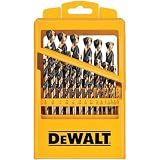
Tradespeople making regular anchor holes should prioritize masonry performance and keep fresh bits in the sizes they use. A SDS masonry bit set makes sense for an SDS rotary hammer; it is unnecessary spending if your work is limited to occasional small holes in soft brick with a hammer drill. For frequent steel work, a cobalt drill-bit set can last longer than basic HSS when used correctly, but it is a poor buy if most of your holes are in wood.
Keep bits cutting cleanly
Start metal holes slowly to prevent the bit skating, and use a center punch on smooth surfaces. For larger holes, drill a pilot hole where appropriate and reduce speed; too much speed creates heat, dulls the cutting edge and can burn or discolor the work. Cutting fluid helps with many metal jobs. Clear chips regularly rather than burying the flutes in swarf.
In wood, clamp the work where possible and ease off as the bit exits to limit tear-out. In masonry, use the correct rotation and hammer setting for the material, keep the hole clear of dust, and stop if the bit overheats or the tool labors. Check for pipes and cables before drilling walls, and wear eye protection: metal swarf, masonry dust and broken bit fragments are common hazards. A well-matched smaller set, kept sharp and organized, is generally a better site purchase than a large assortment you cannot identify or trust.