Our Top Picks
 DEWALT 20V Max Drywall Screwgun11.2 x 3.4 x 7.2 Inch11.2 x 3.4 x 7.2 inches2.6 PoundsCheck on Amazon
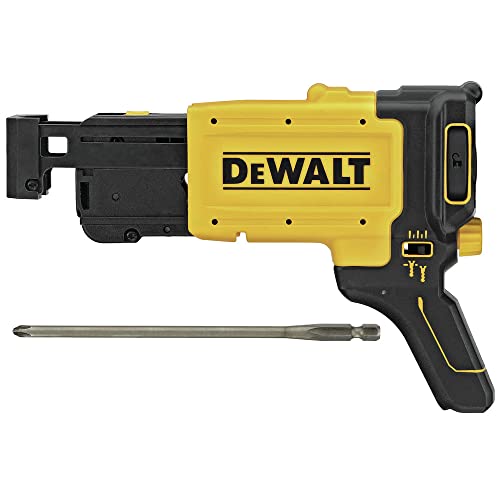 DEWALT Drywall Screw Gun Collated AttachmentOne Size6.38 x 2.63 x 9.25 inches1.4 PoundsCheck on Amazon


What's inside
As an Amazon Associate I earn from qualifying purchases. This post may contain affiliate links at no extra cost to you.
The best drywall screw gun here for most people is the Milwaukee M18 FUEL (2866-20), because its brushless motor, high no-load speed and Auto Start mode are built specifically for driving long runs of screws. A drywall screw gun is a screwdriver with an adjustable depth-sensing nose cone that stops the bit once the screw head sits just below the paper face, which prevents torn paper and over-driven fasteners. If you already own DEWALT 20V batteries, the DCF630B is the natural alternative, and the corded DW255 remains the simple option for a garage or a basement finishing job.
What we cover
Quick List
- DEWALT 20V MAX Drywall Screwgun (DCF630B) – best for DEWALT 20V battery owners who want modes and speed ranges
- DEWALT 6.0-Amp Corded Drywall Screw Gun (DW255) – best for unlimited run time near an outlet
- DEWALT Collated Attachment (DCF6202) – accessory for faster screw feeding, not a screw gun by itself
- DEWALT 20V MAX XR Screwgun and Cut-Out Tool Combo Kit (DCK265D2) – best for remodelers who want batteries plus a cut-out tool
- Milwaukee M18 FUEL Drywall Screw Gun (2866-20) – best for high-speed, high-volume hanging on the M18 platform
- RYOBI ONE+ 18V Brushless Drywall Screw Gun (P225) – best for homeowners already on RYOBI ONE+ batteries
Which One Is Right for You?
| If you… | Choose |
|---|---|
| hang many sheets and already own M18 batteries | Milwaukee M18 FUEL 2866-20 |
| want a cordless gun with selectable trigger, PushStart and lock-on modes | DEWALT DCF630B |
| have no batteries yet and need a gun, cut-out tool and charger in one kit | DEWALT DCK265D2 combo kit |
| work near an outlet and never want to charge a battery | DEWALT DW255 corded |
| own RYOBI ONE+ batteries and need a gun for one project | RYOBI P225 |
| own a compatible DEWALT screw gun and want collated strips | DEWALT DCF6202 attachment |
The major decision is the battery platform you want to live on. Every cordless gun here is sold as a bare tool except the combo kit, so the cost of batteries and a charger is part of the real price. The collated attachment is not a screw gun; it is an add-on for specific DEWALT models, so read compatibility notes before you consider it.
All 6 Picks in Detail
1. DEWALT 20V MAX Drywall Screwgun (DCF630B) – Best for DEWALT Owners Who Want Modes and Two Speed Ranges
As an Amazon Associate we earn from qualifying purchases at no extra cost to you.

The DCF630B is a brushless, bare-tool 20V MAX screw gun with four tool modes: trigger at high speed, trigger at low speed, PushStart and lock-on. It suits contractors and serious DIYers who already carry DEWALT 20V packs and want one tool for hanging board and driving fasteners into metal studs. Retailer specifications list a high-speed range of roughly 4,400 to 4,850 RPM, so confirm the exact figure on the product page.
- 20V MAX XR brushless motor
- Four modes: high-speed trigger, low-speed trigger, PushStart, lock-on
- Adjustable nose cone for screw depth
- 1/4-inch hex drive and LED light
- Bare tool: battery and charger sold separately
The top-mounted mode selector lets you change modes with one hand, and the low-speed trigger mode helps when you are driving screws into steel studs where control matters more than speed.
It weighs roughly 2 to 3 pounds depending on the source, which is light enough for ceiling work. Wear a dust mask and eye protection while sanding or cutting.
Pros
- Flexible mode selection
- Works with the full DEWALT 20V MAX battery line
Cons
- Battery and charger not included
- Feature set is more than a weekend user needs
Compared with the Milwaukee 2866-20, it offers more control modes, while the Milwaukee leans on a high-speed Auto Start design.
2. DEWALT 6.0-Amp Corded Drywall Screw Gun (DW255) – Best for Unlimited Run Time Near an Outlet
The DW255 is a corded, pistol-grip screw gun rated at 6.0 amps. It is the old-fashioned choice for basements, garages and new-build rooms where an outlet or extension cord is never far. Retailer specifications list a no-load speed of about 5,300 RPM, 60 in-lb of torque, an 8-foot cord, a 1/4-inch drive and a depth-sensitive nose cone, and the tool is listed at roughly 3 pounds.
- 6.0-amp corded motor
- Variable-speed trigger and reversing switch
- Depth-sensing nose cone
- 1/4-inch drive with a #2 Phillips bit tip (per listings)
- Cord length around 8 feet (retailer specs)
With no battery to charge, it is ready whenever it is plugged in. The trade-off is the cord, which can snag on ladders and drag across freshly hung sheets.
Use a heavy-duty extension cord of an adequate gauge for the run, and plug it into a ground-fault protected outlet when working in damp spaces such as basements. Keep the cord clear of the work area.
Pros
- Unlimited run time and no battery cost
- Proven, simple design
Cons
- Cord management on ladders and ceilings
- No brushless motor or modes
Next to the cordless DCF630B, it gives up mobility for continuous power and a lower price of entry.
3. DEWALT Collated Attachment (DCF6202) – Accessory, Not a Screw Gun
The DCF6202 is an accessory, so it does not belong in the screw gun group on its own. It is a collated magazine that clips onto compatible DEWALT screw guns so you can feed screws from a plastic strip instead of loading them one at a time. Retailer and DEWALT regional pages describe it as made for the DCF620 gun and note it takes collated screws from about 1 to 2-1/4 inches in length. Confirm that it fits your specific gun, including the DCF630B or the corded DW255, before you buy, because compatibility is model-specific.
- Collated magazine attachment (accessory)
- Screw length range about 25 to 57 mm (per retailer listings)
- Rotates 360 degrees on the gun (per DEWALT regional page)
- Tool-free attach and release (per listings)
- Compatibility: confirm against your exact gun model
Collated strips are faster for large jobs, because the magazine advances the next screw automatically. You pay for that speed in setup time and in needing strip screws.
For a small room, loose screws and a standard nose cone are often fine. Collated systems pay off when you are hanging many sheets across ceilings and walls.
Pros
- Feeds screws automatically for faster production
- Reduces repeated bending to pick up fasteners
Cons
- Works only with certain guns
- Collated screws and a bulkier nose add weight
It is an add-on for the DCF630B-class guns, not a competitor to them.
4. DEWALT 20V MAX XR Screwgun and Cut-Out Tool Combo Kit (DCK265D2) – Best for Remodelers Who Need Batteries and a Cut-Out Tool

This kit bundles a brushless 20V MAX XR drywall screwgun with a brushless cut-out tool, two 2.0 Ah batteries, a charger and a bag. It is built for remodelers, handymen and DIYers who want to hang board, cut openings for outlets and switches and drive screws without buying parts separately. Retailer listings describe the cut-out tool as a DCE555, running at up to 26,000 RPM.
- Two-tool kit: screwgun and cut-out tool
- Two 2.0 Ah 20V MAX batteries and a charger
- Kit bag and belt clips
- Screwgun with the same four-mode design as the DCF630B family
- Bits and collets for cut-out: confirm exact contents on listing
Having a spare battery matters on a day when you are hanging dozens of sheets. The cut-out tool replaces a drywall saw and reduces cutting time around boxes.
Cut-out tools throw fine dust, so wear a respirator rated for drywall dust, eye protection and hearing protection, and shut off power to circuits before you cut near electrical boxes.
Pros
- Everything needed to start, including batteries
- Cut-out tool speeds up outlet and switch openings
Cons
- 2.0 Ah packs run down quickly under heavy use
- Kit is more than a one-room job needs
Compared with the bare DCF630B, it is the choice when you do not own batteries yet.
5. Milwaukee M18 FUEL Drywall Screw Gun (2866-20) – Best for High-Speed, High-Volume Hanging

The 2866-20 is a bare-tool M18 FUEL screw gun with a brushless motor rated at 0 to 4,500 RPM by retailers. It targets drywall hangers and finishers who need to drive many screws quickly and want fewer interruptions. Its Auto Start mode lets you lock the trigger on so the motor only spins when a screw contacts the board, which reduces noise and saves battery. Retailers list a weight of about 2.5 pounds for the tool alone.
- M18 FUEL brushless motor, 18V
- No-load speed up to about 4,500 RPM
- Auto Start mode for hands-free lock-on use
- Adjustable nose cone, belt clip and PR2 bit (per retailer listings)
- Bare tool: battery and charger sold separately
Retailers also cite roughly 124 in-lb of maximum torque and a multi-year warranty, so verify both on the product page.
The design suits production work: a high speed range for field screws and an Auto Start mode to reduce wear. Keep the nose cone adjusted so each screw head just dimples the paper.
Pros
- High speed and efficient Auto Start behavior
- Compact for ceiling work
Cons
- Requires M18 batteries and charger
- Single focus: not a general-purpose driver
Against the RYOBI P225, it is the more professional-grade tool on a platform with many job-site tools.
6. RYOBI ONE+ 18V Brushless Drywall Screw Gun (P225) – Best for Homeowners on RYOBI ONE+ Batteries
The P225 is a brushless, tool-only drywall screw gun for the RYOBI ONE+ 18V platform. It suits homeowners finishing a basement or patching several walls who already own ONE+ batteries and chargers. RYOBI lists a no-load speed of 0 to 4,700 RPM, a weight of about 2.25 pounds, an adjustable removable nose cone, an LED light and a quiet-drive feature that reduces noise between screws.
- 18V ONE+ platform, brushless motor
- No-load speed up to about 4,700 RPM (manufacturer figure)
- Adjustable, removable nose cone
- LED light and belt clip
- Tool only: battery and charger sold separately
If you already own a few ONE+ batteries, this is the least expensive route to a dedicated screw gun, and it is light enough to use overhead.
It is not as rugged as the professional guns, so plan it for a few rooms at a time rather than for daily production work.
Pros
- Light weight and quiet-drive feature
- Works with a common home battery platform
Cons
- Batteries and charger sold separately
- Less durable than professional models for daily use
Next to the Milwaukee 2866-20, it offers similar speed claims in a lighter-duty package.
Specs Compared
| Model | Power source | Motor | Speed (per retailer or maker specs) | Included |
|---|---|---|---|---|
| DEWALT DCF630B | 20V MAX battery | Brushless | About 4,400 to 4,850 RPM (confirm on listing) | Tool only |
| DEWALT DW255 | Corded, 6.0 A | Brushed (confirm on listing) | About 5,300 RPM | Tool with cord |
| DEWALT DCF6202 | Not applicable (accessory) | Not applicable | Not applicable | Collated attachment |
| DEWALT DCK265D2 | 20V MAX battery | Brushless | confirm on listing | Screwgun, cut-out tool, 2 batteries, charger, bag |
| Milwaukee 2866-20 | M18 battery | Brushless (FUEL) | About 4,500 RPM | Tool only |
| RYOBI P225 | 18V ONE+ battery | Brushless | About 4,700 RPM | Tool only |
How We Chose These
We assembled this guide from desk research on the six items in the current catalog set rather than from bench work. We compared power source, motor type, speed ranges, included components and platform compatibility, using manufacturer product pages and retailer specification fields. Because some listings are bare tools and one is an accessory, we treated battery platform and bundle contents as first-class criteria. Where retailers disagree on a figure, we gave an approximate range and told readers to confirm. The collated attachment is described as an accessory because it does not function as a screw gun, and we placed no ranking weight on figures we could not trace to a published source.
What to Look For
Corded versus cordless
Cordless guns give freedom on ladders and in rooms without outlets, but need batteries and a charger. Corded guns offer unlimited run time and a lower tool price, though the cord can be a nuisance on ceilings. For a full house, many hangers prefer cordless guns with two batteries so one is always charged. For a single room or a basement, a corded gun is often adequate. If you already own a battery platform, factor that in, because a bare tool on your platform is often the cheapest path.
Speed, motor type and torque
Drywall screw guns are speed tools: no-load speeds in the 4,000 to 5,300 RPM range drive screws fast, because drywall screws need little torque. Torque matters mostly with metal studs, where the screw must bite through steel. Brushless motors run cooler, last longer and are more efficient than brushed motors, which extends battery life. Modes such as lock-on or Auto Start let the motor idle until a screw contacts the board, which cuts noise and wear. A low-speed trigger mode helps with metal stud work where you need more control.
Depth control and nose cone
The nose cone is the heart of the tool. It slides over the bit and stops the drive when the screw head reaches the proper depth. Set it so the head just dimples the paper without tearing it. A rule of thumb for the dimple is a depression of about 1/32 inch below the surface, enough to be covered by joint compound. If paper tears, back the nose cone off slightly; if heads stand proud, tighten it. Replace worn bits (often a #2 Phillips) promptly because a worn tip causes cam-out and tears the paper.
Screws, spacing and technique
For 1/2-inch drywall on wood framing, 1-1/4-inch coarse-thread screws are common, and 5/8-inch board often uses 1-5/8-inch screws; fine-thread screws are used for metal studs. Fastener spacing varies with code and board thickness, but spacing around 12 inches on ceilings and 16 inches on walls is a common rule of thumb; follow the manufacturer’s instructions and local requirements. Keep screws at least 3/8 inch from board edges. A worked example: a standard 4 by 8 foot wall sheet at 16-inch spacing needs roughly 30 to 35 screws, so a 20-sheet room means around 600 to 700 fasteners.
Dust, hearing and electrical safety
Drywall dust is fine and irritating, so wear a respirator or a well-fitted dust mask, eye protection and hearing protection when running powered tools or sanding. With corded tools, use a grounded cord in good condition and a GFCI outlet in damp areas. With battery tools, only use the charger designed for the platform, and keep packs out of extreme heat. Always switch off the power to circuits before you cut openings near wiring, and use a stud finder to locate framing and avoid hidden cables.
Battery platform planning
Bare tools look attractive until you add the batteries and charger. Count what you already own: if you have a few 5.0 Ah packs on a platform, a bare gun on that platform is a clean upgrade, and the same packs will also run your drill, impact driver and light. If you are starting from nothing, compare the cost and value of a kit with batteries against a bare tool plus separately bought packs, and consider the tools you may want in the next few years. A reasonable plan for a full-house job is two compact packs per person, rotated through the charger, while a small patch job can run on a single pack for a whole afternoon. Whichever route you pick, keep spare screws, a few replacement bits and a spare nose cone in the same bag.
Workflow: hanging, cutting openings and finishing
A smooth drywall job follows a rhythm. Hang ceilings first, then walls, staggering joints so that end seams do not line up. Mark the position of outlets and switches before you lift a sheet, then use a cut-out tool or a hand saw to open the holes after the sheet is fastened, which is why a router-style cut-out tool is popular with remodelers. Drive screws in a consistent pattern, working from the center of the sheet toward the edges so the board pulls tight to the framing. Check your work by running a taping knife along the surface; any screw head that catches the blade stands proud and should be driven slightly deeper. When a paper face tears, add another screw an inch or two away rather than trying to repair the damaged one, then cover both with compound.
Bits and accessories worth having
Keep a handful of spare #2 Phillips bits, because a worn bit is the most common reason for torn paper and cam-out. Some crews prefer a square-drive or a drywall-specific bit with a flared tip, while others like magnetic bit holders that pair with the nose cone. If you hang a lot of ceilings, a drywall lift or a helper to hold the board saves more time than any tool upgrade. A belt clip, a bit holder on the belt and a lanyard attachment are small details that keep you from climbing down a ladder to retrieve a dropped tool.
Questions
Can I use a regular drill to hang drywall?
You can, but a drill lacks the depth-sensing nose cone, so screws are easier to overdrive and tear the paper. A dedicated screw gun, or a drill with a drywall dimpler bit, gives cleaner results.
Do I need a collated attachment?
It is not necessary for small jobs. Collated systems speed up larger projects, but they require compatible guns and strip screws, so check your model’s compatibility first.
Is brushless worth it for a screw gun?
For frequent use, yes. Brushless motors run cooler and can extend runtime, which helps when hanging many sheets. For a single room, a corded or brushed tool is perfectly adequate.
What battery size should I use?
A 2.0 Ah pack is light and good for ceilings, while 4.0 to 5.0 Ah packs run longer between charges. Having two packs matters more than choosing the biggest one.
Why do my screws tear the paper?
The nose cone is probably set too deep or the bit is worn. Back off the depth adjustment slightly and replace the bit, then drive screws square to the board.
Can I drive screws into metal studs with these guns?
Yes, with the right self-drilling or fine-thread screws and a lower speed setting. Modes like low-speed trigger on the DEWALT guns are aimed at this use.
Update History
- October 20, 2026 – Initial publication; product set drawn from current catalog listings.
- Check the product page for current specifications and availability before buying.
Sources
- Manufacturer product and specification pages for DEWALT, Milwaukee and RYOBI
- Retailer listing titles and specification fields for each tool