What's inside
As an Amazon Associate I earn from qualifying purchases. This post may contain affiliate links at no extra cost to you.
What we cover
What you need for concrete curbing
For ordinary concrete curbing, buy a carbide-tipped masonry bit rated for hammer drilling, with a shank that matches your drill. A sharp bit in the right size matters more than an expensive coating or a long list of features. For a few holes in sound, unreinforced concrete, a standard masonry bit may be enough. For repeated holes, dense concrete, or a cordless drill that struggles, a rotary hammer and an SDS-Plus bit are a more dependable combination.
First check what the hole is for. Wall anchors and small screws commonly call for a 3/16- or 1/4-inch hole, but the fastener package specifies the actual diameter and depth. Do not choose a bit based on the anchor’s outside diameter alone. Curbing can also hide reinforcing steel, and drilling into a curb may be restricted near roads, utilities, or drainage. Confirm the location and purpose before drilling.
As an Amazon Associate we earn from qualifying purchases at no extra cost to you.

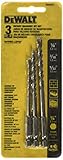


Bit types compared
| Bit and tool | Best use | Trade-off |
|---|---|---|
| Standard carbide masonry bit, hammer drill | A few small anchor holes in sound concrete | Affordable and widely available, but slower in hard or aggregate-heavy concrete |
| Quality hammer-rated carbide bit, hammer drill | Several holes or regular DIY use | Costs more than a basic bit; generally holds up better under impact |
| SDS-Plus masonry bit, rotary hammer | Multiple holes, larger diameters, or dense concrete | Requires an SDS-Plus tool; unnecessary expense for one easy hole |
| Multi-material or wood bit | Not recommended for hammer drilling concrete | May dull, overheat, or break without cutting the concrete effectively |
For a conventional hammer drill with a three-jaw chuck, look for a carbide-tipped masonry bit set rated for hammer drills. A small set is practical if you may need more than one anchor size. If you already know the required diameter and only need one or two holes, a single bit can cost less and avoids buying sizes you will not use.
Choose the size and shank
Match the bit diameter to the anchor maker’s instructions, and choose a bit at least as long as the required hole depth. Add a little extra length for dust at the bottom, but do not drill deeper than needed: deep holes can weaken a narrow edge and make it harder to seat a fastener properly. If the anchor needs a 2-inch embedment, mark that depth on the bit with tape or use the drill’s depth stop.
Check the shank before buying. A standard masonry bit usually has a round shank for a keyed or keyless chuck. SDS-Plus bits fit SDS-Plus rotary hammers and do not clamp into a normal three-jaw chuck. The tool must also offer a hammer-drill mode for a standard bit; an ordinary drill setting turns the bit but does not deliver the percussive action that helps it fracture concrete.
For routine holes in curb concrete, a SDS-Plus carbide masonry bit is worth considering if you already own a rotary hammer. SDS bits transfer impact efficiently and are less prone to slipping in the chuck. Buying a rotary hammer solely to install one small anchor is usually hard to justify; borrow or rent one if the drill bogs down and there are many holes to make.
Drill the hole cleanly
Mark the center and keep the hole away from the curb’s edges. As a practical starting point, avoid drilling closer than about 2 inches to an edge when the curb size and fastener allow it; a narrow concrete section can split, especially with an expanding wedge anchor. The required edge distance depends on the anchor and concrete, so follow the fastener instructions rather than treating that number as a guarantee.
Start at low speed with the bit held square to the surface. Once the tip has made a shallow seat, use steady pressure and let the hammer action work. Do not lean your weight on the drill: excessive force can overheat the bit, stall a cordless tool, or make the hole wander. Pull the bit out every few seconds to clear dust. Fine concrete powder trapped in the hole slows cutting and can prevent an adhesive or mechanical anchor from seating.
Use eye protection and hearing protection, and control the dust. Concrete dust contains respirable silica; use a suitable dust extractor or a vacuum attachment where possible, and avoid blowing dust around. Keep hands clear of the rotating bit and secure the work area so pedestrians cannot walk into the tool or its cord.
When drilling goes wrong
If progress stops abruptly, the bit may have hit a hard aggregate stone or reinforcing steel. Stop and withdraw the bit rather than forcing it. Check whether the hole can move slightly without compromising the fastener’s position. Do not keep hammering on suspected rebar; that can damage the bit and may weaken or expose reinforcement. If the curb is structural or the reinforcement matters, ask the responsible property owner or a qualified contractor before changing the location.
A bit that smokes, squeals, or becomes very hot is being pushed too hard, is dull, or is being used in the wrong mode. Let it cool, clear the dust, and check that hammer mode is selected. A worn or poorly made bit can take much longer than expected and leave an oversized, ragged hole. Replace it rather than compensating with more pressure. If a new, correct bit still makes little progress and the drill repeatedly stalls, switch to a rotary hammer instead of burning through batteries and bits.
What to buy for your job
For one or two small holes in ordinary curb concrete, a basic, correctly sized carbide masonry bit is a sensible low-cost choice. For a handful of holes or future masonry projects, buy a reputable hammer-rated bit or a small set with the sizes you actually use. For frequent drilling, larger holes, or a cordless drill that struggles, use an SDS-Plus rotary hammer and matching bits. In every case, the anchor’s specified hole size and depth—not the bit set’s biggest number—should guide the purchase.