What's inside
As an Amazon Associate I earn from qualifying purchases. This post may contain affiliate links at no extra cost to you.
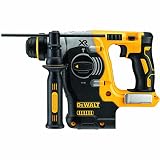
Drilling anchor holes in reinforced concrete is harder on a drill than drilling ordinary block or brick. You are cutting through dense aggregate, then possibly hitting steel reinforcement. The right tool depends on hole diameter, depth, quantity, and whether you can use a corded machine. For most jobs, a cordless SDS-plus rotary hammer is the best choice. A hammer drill with a conventional chuck is acceptable for small holes and occasional work, but it is slower and more tiring.
As an Amazon Associate we earn from qualifying purchases at no extra cost to you.


What we cover
What to look for in a hammer drill
For concrete anchors, compare impact energy rather than only voltage or maximum RPM. Impact energy is measured in joules and describes how hard the tool strikes the bit. A useful cordless SDS-plus rotary hammer usually falls between about 1.5 and 3 joules. That is enough for common 1/4-inch to 5/8-inch anchor holes without being unnecessarily large or heavy.
Choose a tool with three modes: rotary hammer, rotation-only, and hammer-only. Rotary hammer mode drills concrete. Rotation-only mode handles wood and metal bits when the correct chuck is fitted. Hammer-only mode is useful for light chipping, cleaning holes, or removing tile, although a compact SDS-plus tool is not a demolition hammer.
A clutch or electronic torque control is important when a bit catches on aggregate or reinforcement. It reduces wrist injuries and helps prevent the tool from twisting out of your hands. A side handle is essential, not an optional accessory. Look for a depth stop, variable speed, a brushless motor, and vibration control if you expect to drill more than a few holes.
If you already own batteries, staying within that battery platform is often sensible. A bare tool can cost much less than a new kit, and the batteries may be more valuable than small differences in drilling performance. For frequent concrete work, compare cordless SDS-plus rotary hammers rather than standard hammer drills.
SDS-plus rotary hammer versus hammer drill
A conventional hammer drill uses a toothed or electronic chuck to make the bit vibrate rapidly. It can drill small holes, but the hammering action is relatively shallow. You must push harder, progress is slower, and long masonry bits can slip in the chuck.
An SDS-plus rotary hammer has a dedicated bit holder that lets the bit move slightly while the tool drives it with a piston. The bit transfers impact energy much more efficiently. SDS-plus bits also change quickly and do not rely on chuck jaws gripping a round shank.
| Tool type | Best hole range | Best use | Main limitation |
|---|---|---|---|
| Conventional hammer drill | 3/16 to 3/8 inch | A few small plastic or sleeve-anchor holes | Slow in dense concrete; tiring for deep holes |
| Compact SDS-plus rotary hammer | 1/4 to 5/8 inch | Most concrete anchors and repeated drilling | Heavier and less useful for ordinary screwdriving |
| Larger SDS-plus or SDS-max tool | 5/8 inch and larger | Large anchors, core drilling, and heavy masonry work | More expensive, bulky, and excessive for small anchors |
A cheap hammer drill is fine when you are installing two or three 1/4-inch anchors in sound concrete. It is a poor bargain for dozens of holes, overhead work, or holes deeper than roughly 2 inches. In those situations, the cordless hammer drill options may look cheaper initially but can cost more in time, bits, and frustration.
The right size for anchor holes
For typical shelves, brackets, conduit, and light equipment, a compact 18-volt or 20-volt SDS-plus rotary hammer is the practical middle ground. A 1.5- to 2.5-joule model generally handles 1/4-inch, 5/16-inch, 3/8-inch, and 1/2-inch holes well. Use a 4.0 Ah or larger battery if you are drilling many holes; compact 2.0 Ah packs reduce weight but may run out quickly.
For 5/8-inch or larger holes, deep holes, or anchors installed every few inches, move toward a 2.5- to 4-joule SDS-plus tool. SDS-max is usually unnecessary for ordinary anchor work. It makes sense for large structural anchors, concrete coring, or sustained demolition, not for a handful of small holes.
Battery tools are convenient on ladders and unfinished sites. Corded rotary hammers still offer consistent power and unlimited runtime. If you are drilling a large number of holes in one location, a corded model can be the cheaper and faster option, provided you can safely route the cord.
Bits, rebar, and common failure modes
Use carbide-tipped SDS-plus masonry bits from a reputable manufacturer. Match the bit diameter to the anchor manufacturer’s specification, not to the screw diameter. A 3/8-inch wedge or sleeve anchor may require a 3/8-inch hole, while some specialty anchors specify a different size. The hole must also meet the required depth, often 1/2 to 1 inch deeper than the embedment to leave room for dust.
Drilling into reinforcement is a warning, not a normal part of the job. If the bit stops making progress, produces metallic dust, or gives a sharp ringing sound, stop and check the location. Do not casually cut structural rebar. Move the hole if the installation allows it, or have an engineer or qualified contractor approve the change. A dedicated rebar-cutting bit can damage the bar and may violate structural requirements.
Dust is another common cause of failed anchors. Drill to full depth, withdraw the bit several times while drilling, and clean the hole with a blow bulb or vacuum. For adhesive anchors, follow the adhesive manufacturer’s cleaning procedure exactly; a visibly clean hole is not necessarily clean enough. Dust left in the hole reduces friction and prevents chemical adhesive from bonding properly.
A reliable drilling procedure
Mark the hole and check for wiring, plumbing, and reinforcement before drilling. Use a detector where appropriate, but remember that detectors are not perfect through thick concrete. Start slowly to keep the bit from wandering, then switch to full rotary-hammer speed once the tip has formed a shallow seat.
Keep the tool square to the surface. A tilted hole can prevent an anchor from seating fully or leave too little concrete on one side. Do not lean your entire body weight on a small hammer drill; let the impact mechanism work. Clear dust periodically, especially in holes deeper than 2 inches.
After drilling, test the hole depth with the anchor or a depth gauge. Install the anchor exactly as specified and tighten it with a torque wrench when the instructions provide a torque value. Over-tightening can strip threads, crush soft concrete, or pull out expansion anchors. Under-tightening leaves the fixture loose.
Buying advice
Buy a conventional hammer drill if the job is occasional and limited to small holes. Buy a compact SDS-plus rotary hammer if you need reliable holes in reinforced concrete, expect more than a few anchors, or want less physical effort. Add quality bits, a side handle, eye protection, hearing protection, and a dust-extraction solution to the budget. The drill makes the hole, but the bit condition, hole cleaning, and correct anchor installation determine whether the finished fastening actually holds.