What's inside
As an Amazon Associate I earn from qualifying purchases. This post may contain affiliate links at no extra cost to you.
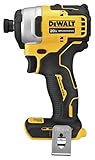
An impact driver can assemble cabinets and drive small screws quickly, but its speed and hammering action make it easy to strip a head, snap a fastener, or bury a screw too far. For small fasteners, the best choice is usually not the driver with the highest torque. Look for a compact tool with a controllable low-speed mode, a comfortable trigger, and a clutch or other reliable way to limit driving force.
As an Amazon Associate we earn from qualifying purchases at no extra cost to you.


What we cover
When an impact driver makes sense
Impact drivers deliver short rotational blows when resistance rises. That helps with long screws and repetitive fastening, and the hex collet accepts common 1/4-inch bits. But the blows also make the tool less predictable than a drill near the end of a small screw’s travel. Many impact drivers have no adjustable clutch, so the operator must control depth with the trigger and stop promptly.
For delicate assembly—electronics, thin sheet metal, softwood trim, or hardware with small machine screws—a drill/driver with a clutch is often the safer tool. An impact driver earns its place when the job involves many fasteners, longer screws, or awkward work where its compact size and strong driving action help.
Features to look for
Prioritize a variable-speed trigger that stays manageable at low speed. Multiple drive modes can help, especially a mode intended for small fasteners or self-tapping screws, but read the manual: mode behavior varies by tool. A selectable mode is useful, not a substitute for a test piece and a steady hand.
Compact length and low weight matter during overhead or cabinet work. Compare bare-tool weight and overall length, then account for the battery; a large battery can make a compact driver tiring or nose-heavy. A belt hook and work light are practical extras. For shared batteries, staying within an existing cordless platform may be worth more than a small difference in specifications.
Choose a compact impact driver with low-speed settings if you need impact action for assembly. If most fasteners are small or easy to damage, a clutch-equipped cordless drill/driver is usually the better first tool.
Impact driver or drill/driver?
| Tool | Best fit | Main risk with small fasteners |
|---|---|---|
| Impact driver | Repeated driving, longer screws, limited-access work | Overdriving or stripping before you react |
| Drill/driver with clutch | Small screws, delicate materials, controlled assembly | Clutch may slip too early or vary with material |
| Hand screwdriver | Final snugging, fragile parts, very small screws | Slow for large quantities; less consistent under fatigue |
A cheap drill/driver is fine for occasional furniture assembly and small pilot holes. If it has a working clutch, it can be more useful for this task than a powerful impact driver. Buy an impact driver when its speed, compact body, or ability to handle tougher fastening will see regular use—not just because its torque figure is larger.
Match the bit to the fastener
Use a fresh bit with the exact drive type and size. A Phillips bit that is one size too small can cam out under impact and round the screw recess. Pozidriv, Torx, square, and Phillips drives are not interchangeable; look closely at the screw head and use the matching bit. Keep the bit straight and apply firm axial pressure so it stays seated.
For screws going into wood, drill a pilot hole when the material or fastener calls for one. A rough starting point for a pilot hole in hardwood is close to the screw’s root diameter; in softwood, use a smaller pilot or none only when the screw manufacturer’s guidance and a test piece support it. Near an edge, pilot holes help reduce splitting. For machine screws, start threads by hand for several turns before using a powered tool.
Use impact-rated hex-shank bits with an impact driver. Standard drill bits may fit some adapters, but they are not designed for repeated impact loading and can break. If you need to drill a pilot hole, a drill/driver is generally the simpler choice. A set of impact-rated driver bits in common sizes is a sensible addition if you use an impact driver often.
Set up for control
Before assembly, set the tool to its lowest practical speed or gentlest mode and test on scrap from the same material. Drive a screw partway, then finish slowly while watching the head. On an impact driver without a clutch, release the trigger just before the screw reaches the surface and finish with brief trigger pulls. A hand screwdriver is a good choice for the last snug turn on small hardware.
Do not use a fixed number of trigger pulls as a depth setting: battery charge, screw size, bit condition, and material all change the result. If a screw stalls, cams out, or twists noticeably, stop. Continuing can strip the head, break the screw, or damage the workpiece. Back it out with the correct bit, inspect the threads and hole, and repair or replace damaged parts rather than driving harder.
For repeated identical joints, make a test assembly first and mark a depth reference if useful. Keep the work supported, hold the driver in line with the screw, and reduce pressure as the head seats. The right driver is the one that lets you complete the work without relying on speed to overcome poor fit or setup.