What's inside
As an Amazon Associate I earn from qualifying purchases. This post may contain affiliate links at no extra cost to you.
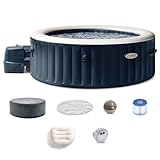
The best inflatable hot tubs for a backyard are the Intex PureSpa Greywood Deluxe for larger, frequent-use households, the Bestway SaluSpa Miami for small spaces and lower entry cost, and a Bestway SaluSpa St. Lucia or similar compact four-person model when storage and patio footprint matter most.
The right choice depends less on the advertised person count than on the tub’s filled footprint, usable seating area, heater performance, insulation, and the amount of water and electricity you are prepared to manage. A “six-person” tub is usually comfortable for four adults, while a two- to four-person tub is often most practical for two.
As an Amazon Associate we earn from qualifying purchases at no extra cost to you.


What we cover
Quick comparison: which inflatable hot tub fits your backyard?
| Model or type | Typical external size | Water capacity | Advertised capacity | Heating performance | Best for |
|---|---|---|---|---|---|
| Bestway SaluSpa Miami AirJet | 71 in diameter × 26 in high | 177 gal | 2–4 people | Up to approximately 104°F; about 1.5–2°F per hour in favorable conditions | Small patios, couples, and first-time buyers |
| Bestway SaluSpa St. Lucia AirJet | 71 in diameter × 26 in high | 177 gal | 2–3 people | Up to approximately 104°F; similar heater class to the Miami | Two adults who want a compact round tub |
| Intex PureSpa Plus Greywood Deluxe, six-person version | 77 in diameter × 28 in high | 290 gal | Up to 6 people | Up to approximately 104°F; roughly 1–2°F per hour depending on weather | Families and regular social use |
| Large inflatable tub, six- to seven-person class | 85–93 in diameter × 28–30 in high | 300–400 gal | 6–7 people | Usually similar maximum temperature, but slower recovery because of the larger water volume | Large yards and groups willing to pay higher running costs |
Dimensions and capacities can vary by package, country, and production revision, so confirm the specification label before buying. Leave at least 12–24 inches of clearance around the pump and enough room to remove the cover without dragging it across a fence, wall, or planting bed.
Best choices by backyard situation
Best for a small patio: Bestway SaluSpa Miami AirJet
The Miami’s roughly 71-inch circular footprint is easier to place than a large six-person tub. Its 177-gallon water volume also reduces filling, heating, draining, and chemical costs. For two adults, it provides a more usable experience than its maximum four-person claim suggests.
Choose it when the tub will sit on a level patio or compact deck and you expect to use it once or twice a week. Its principal compromise is interior space: four adults can fit, but legroom and shoulder room become limited. A 120-volt plug-in system is convenient, although it should connect directly to a suitable GFCI-protected outlet rather than an undersized extension cord.
Best for regular family use: Intex PureSpa Plus Greywood Deluxe
The larger Intex PureSpa Plus models offer more interior room, a padded floor, an insulated cover, and a stronger case for family use. A six-person label is most realistic for four adults or several children, because the inflated walls and built-in seating consume some of the diameter.
The advantage is comfort and fewer arguments over space. The cost is significant: approximately 290 gallons of water is about 64% more than a 177-gallon compact tub. That additional volume takes longer to heat and costs more to replace when water quality declines. It also creates a heavier load. Water alone weighs roughly 8.34 pounds per gallon, so a 290-gallon tub contains about 2,419 pounds of water before adding the tub and occupants.
Best when storage matters: a compact four-person AirJet model
Compact Bestway and Intex inflatable tubs are easier to drain, dry, fold, and store than large square models. They suit renters or homeowners who do not want the tub visible year-round. Before choosing one, measure the storage location as carefully as the installation area: a damp liner folded too soon can develop odor and mildew.
A compact model is also the safer financial choice if you are unsure how often you will use the tub. The lower water volume means less waste if the novelty wears off after a few months.
How to match tub dimensions to your yard
Do not measure only the circular or square liner. Add the pump, plumbing, access path, and cover-opening space. A 71-inch tub needs at least a roughly 95-inch by 95-inch working area for comfortable access, and a 77-inch tub is better treated as needing about 101 inches by 101 inches.
- Measure the foundation: use a rigid, level surface such as a properly prepared patio or a manufacturer-approved base. Grass can settle, puncture the liner, and make the water level uneven.
- Check the load: water weighs approximately 8.34 pounds per gallon. A filled 177-gallon tub can exceed 1,700 pounds before people enter it.
- Protect circulation: leave clear access to the filter housing and pump intake. Do not wedge the pump against a wall or cover its ventilation openings.
- Plan drainage: draining 177–300 gallons beside a foundation can cause pooling or seepage. Direct water toward an approved drain area, not a neighbor’s property.
- Check electricity: use the specified GFCI-protected circuit. Avoid daisy-chained power strips and outdoor extension cords unless the manufacturer explicitly permits the arrangement.
Heating speed, insulation, and operating cost
Most plug-in inflatable tubs heat to approximately 104°F, but they are not rapid-heating appliances. Starting with 60°F tap water requires an 44°F temperature increase. At a heating rate of 1.5°F per hour, that is about 29 hours in ideal conditions before accounting for wind, evaporation, and heat loss. Cold weather can make the process slower.
The cover is often more important than a small difference in jet count. Use the insulated cover whenever the tub is not occupied, secure it against wind, and keep the water temperature lower between sessions. An inflatable thermal ground mat and a windbreak can reduce heat loss, but do not block the pump’s ventilation.
As a planning example, suppose a 177-gallon tub uses 4 kilowatt-hours to heat and maintain temperature for one session, while electricity costs $0.18 per kilowatt-hour. The electricity portion is:
4 kWh × $0.18 = $0.72 per use.
That is only an illustration, not a guaranteed operating cost. Cold weather, frequent reheating, poor cover fit, and raising the temperature from cold water can multiply consumption. Add sanitizer, test strips, filter cartridges, water, and occasional cleaning when calculating the real cost.
Setup and maintenance that prevent early failure
Initial setup
- Inspect the packed liner for cuts, then inflate it without overfilling. The walls should be firm but not drum-tight, especially in hot sun.
- Install the filter, plumbing fittings, drain cap, and pump seals before filling.
- Fill to the marked level, checking for leaks around valves and connections as the water rises.
- Test and balance the water before using the heater or soaking. Follow the supplied sanitizer instructions and use a suitable test kit.
- Run filtration and heating only after confirming that the water level is above the minimum required line.
Routine ownership
Rinse or replace the filter cartridge according to the water condition rather than waiting until flow becomes weak. Heavy use, sunscreen, body oils, leaves, and hard water can clog filters quickly. Keep the cover clean and inspect its straps, clips, and foam inserts; a waterlogged or torn cover loses insulating value.
Inflatable walls and seams usually wear before the pump motor does. Dragging the liner, placing it on rough concrete, allowing pets near it, and storing it while wet are common causes of punctures and odor. Keep a compatible repair kit available, but treat a repeated leak at a seam or valve as a reason to contact the manufacturer rather than repeatedly patching it.
Drain and thoroughly clean the tub when water becomes difficult to balance or at the interval recommended by the manufacturer. Never mix concentrated pool chemicals together, and do not use the tub if the water causes persistent skin or eye irritation. People with health conditions, pregnancy-related questions, or concerns about heat exposure should ask a qualified healthcare professional before using a hot tub.
Decision matrix for choosing the right size
| Your situation | Recommended class | Why | Main compromise |
|---|---|---|---|
| Small patio; two users; occasional weekends | 177-gallon compact tub | Lower footprint, faster fill, lower replacement cost | Limited room for four adults |
| Four users; weekly operation; moderate yard | 250–300-gallon six-person class | More leg and shoulder room | Higher energy, water, and chemical use |
| Large household or regular entertaining | 300–400-gallon large inflatable tub | Best shared comfort | Slowest heating and greatest structural load |
| Uncertain commitment or seasonal storage | Compact four-person tub | Lower financial and storage risk | Less comfortable for groups |
Bottom line
For most backyards, select the smallest tub that comfortably fits the people who will actually use it. Choose a compact Bestway SaluSpa Miami or similar model for two adults and a constrained patio; move to an Intex PureSpa Plus or comparable six-person tub for four regular users; and buy a larger model only when your foundation, electrical setup, drainage plan, and operating budget all support its extra water volume. The best inflatable hot tubs for backyard use are the ones that leave enough clearance, heat efficiently under a good cover, and remain manageable to clean after the initial excitement fades.