What's inside
As an Amazon Associate I earn from qualifying purchases. This post may contain affiliate links at no extra cost to you.
Anyone searching for the best mattresses 2026 consumer reports guidance will quickly discover that no single source delivers a complete answer. The landscape of mattress-buying research spans everything from accessible consumer magazines to high-end industry market reports, and the gap between these resources is enormous. A first-time mattress buyer needs something fundamentally different from a procurement analyst evaluating supply-chain trends. The concrete problem most readers face is simple: you need to know which mattress construction, firmness level, and price range will actually serve you for the next decade of nightly use, and you need reliable, independent data to make that call.
What separates genuinely useful mattress research from wasted money is whether the source addresses the decisions a consumer can actually control. A magazine issue explaining how to evaluate coil systems, foam densities, and trial-period policies gives you leverage at the point of sale. A market segmentation report listing production volumes by city tells you almost nothing about whether a particular hybrid model will keep your lower back pain-free. The five resources reviewed below span that entire range, and understanding where each sits will save you from spending badly on information that does not match your actual question.
As an Amazon Associate we earn from qualifying purchases at no extra cost to you. Product prices and availability are accurate as of the date shown and are subject to change.



Quick Picks
| Product | Best For | Price |
|---|---|---|
| Consumer Reports: How to Find a Mattress You’ll Love | Individual buyers seeking practical selection guidance | $27.79 |
| Consumer Reports: Best Mattress for Your Money | Value-focused shoppers comparing mid-range options | $7.99 |
| Consumer Reports June 2005 Issue | Historical perspective on mattress industry evolution | $12.64 |
| 2016 Innerspring Mattresses World Market Report | Industry analysts and B2B researchers | $995 |
| 2016 Crib-Size and Specialty Mattresses World Market Report | Manufacturers targeting regulated niches | $995 |
How We Picked
Evaluating resources that all claim to answer the same keyword requires criteria beyond star ratings. We prioritized four factors. First, practical applicability: does the content give a reader something actionable to do at a mattress store or on a checkout page? Second, depth of mattress-specific detail: does it go beyond general consumer-advice platitudes into construction anatomy, material performance, or brand-by-brand comparisons? Third, cost-to-value ratio: a $7.99 magazine and a $995 industry report can both be excellent or terrible relative to what they deliver. Fourth, audience alignment: content designed for individual purchasers should not be ranked alongside content designed for corporate procurement teams.
The 5 Best Mattresses 2026 Consumer Reports in 2026
Consumer Reports: How to Find a Mattress You’ll Love
This edition is aimed squarely at the overwhelmed first-time or replacement-mattress buyer who does not know what questions to ask. Its strength lies in translating manufacturer jargon into plain-language decision factors, covering firmness terminology, return-policy red flags, and the practical differences between innerspring, foam, and hybrid constructions. The editorial approach is systematic: it walks a reader through self-assessment before comparison shopping, which is the right sequence.
- Pros: Actionable step-by-step framework; clear explanations of mattress construction types
- Pros: Covers trial-period and warranty pitfalls most buyers overlook
- Con: No brand-specific ratings or numerical scores, so you still need a second source for shortlist narrowing
Skip this if you already own a mattress and want a direct model comparison. It is educational rather than evaluative, and readers wanting ranked lists will find it frustrating.
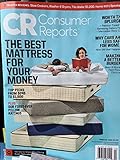
Consumer Reports: Best Mattress for Your Money
The value-focused buyer who wants to know whether a $1,500 mattress is meaningfully better than a $700 one will find this edition more directly useful. It emphasizes price-to-performance tradeoffs and identifies where diminishing returns begin in mattress pricing tiers. The February magazine format means the content was structured around budget-conscious decision-making rather than luxury features, which serves the majority of buyers well.
- Pros: Clear framework for identifying the sweet spot between cost and durability
- Pros: Addresses common upsell tactics at mattress stores and online
- Con: Published data is dated; foam and hybrid technology has advanced considerably since the original issue
If you need current model-specific recommendations rather than general budget principles, pair this with a more recent ratings source. As a standalone guide to understanding value, it remains genuinely instructive at under eight dollars.
Consumer Reports June 2005 Issue
This archive issue serves a narrow but real audience: researchers, journalists, or curious consumers who want to understand how mattress marketing and construction norms have shifted over nearly two decades. The June 2005 edition predates the bed-in-a-box revolution, which makes its framing of mattress purchasing feel almost historical. For someone trying to understand why current industry practices exist, tracing them backward through older editions offers genuine context.
- Pros: Unique archival snapshot of pre-direct-to-consumer mattress economics
- Pros: Useful for identifying which consumer complaints from the era remain unresolved today
- Con: Almost entirely irrelevant for making a 2026 purchase; no current brand coverage
Do not buy this expecting practical buying advice. It is a reference document for understanding how the mattress market transformed, valuable only to a specific intellectual curiosity.
2016 Innerspring Mattresses World Market Report
This is a B2B market research document, not a consumer guide. At $995, it delivers city-level production segmentation, trade-flow analysis, and manufacturing capacity data for innerspring mattress producers worldwide. An investor evaluating a mattress company’s supply chain or a procurement officer at a hospitality brand selecting bulk suppliers would find genuine value here. A homeowner choosing a queen-size mattress for their bedroom will find nothing useful.
- Pros: Comprehensive global production and trade data for the innerspring segment
- Pros: Useful for understanding cost structures that explain retail pricing variance
- Con: Completely inaccessible format for individual buyers; no product-level or brand-level guidance
Skip this unless your role involves mattress manufacturing, distribution, or investment analysis. For consumer buying decisions, it is a mismatch of both audience and utility.
2016 Crib-Size and Specialty Mattresses World Market Report
The companion volume to the innerspring report covers crib-size, mattress inserts, and non-innerspring specialty constructions. It is equally industrial in focus, addressing regulated product categories where safety standards and export requirements shape manufacturing decisions. A compliance officer or a startup developing a new crib-mattress line would use this to understand competitive positioning and production baselines across regions.
- Pros: Detailed coverage of regulated niche segments often ignored by general market reports
- Pros: Useful for manufacturers assessing global competition before market entry
- Con: $995 price tag for information no consumer will ever apply to a purchase decision
This is not for you if you are shopping for a crib or specialty mattress as an end user. Parent-facing safety guidance exists in far more accessible formats at a fraction of this cost.
Buying Guide
Matching the Resource to Your Decision Stage
Before purchasing any mattress-information product, identify where you are in the buying process. If you have never purchased a mattress before and do not understand coil counts, foam densities, or hybrid layering, start with a practical guide like the first two magazine editions. They teach vocabulary and frameworks. If you already know what you want but are comparing two or three specific models, these publications will not help; you need current owner reviews and return-policy comparisons from retailers directly.
Evaluating Information Freshness Against Industry Turnover
The mattress industry has undergone rapid material and distribution changes over the past decade. New foam formulations, adjustable-base compatibility standards, and direct-to-consumer trial policies mean that any guide more than two or three years old will contain at least partially outdated assumptions. When reviewing older Consumer Reports editions, treat the underlying physics and construction principles as still valid but discount brand names, model availability, and pricing benchmarks entirely.
Assessing Value Relative to Expected Usefulness
A $7.99 magazine that changes how you approach mattress shopping is exceptional value. A $995 market report that informs a product-launch decision worth hundreds of thousands is also justified. The mismatch occurs when a consumer pays industrial prices for industrial content or when a researcher dismisses a cheap magazine as trivial. Always ask whether the information in the resource will change a decision you are actually about to make, then judge price against that single criterion.
Our Verdict
The top pick for the vast majority of readers searching this term is Consumer Reports: How to Find a Mattress You’ll Love. It addresses the real gap between knowing you need a new mattress and knowing how to evaluate one. For the budget-conscious reader who wants a quick framework without commitment, Consumer Reports: Best Mattress for Your Money at $7.99 is the best-value option in this group. The $995 market reports win only under one condition: if you are a professional whose job depends on manufacturing, distribution, or investment decisions in the mattress sector, in which case neither magazine edition comes close to the data depth they provide.
FAQ
Do Consumer Reports magazine issues still publish mattress ratings?
Consumer Reports continues to publish mattress ratings in current issues and on its website, but the older print editions reviewed here are archive purchases rather than current ratings sources. For up-to-date model comparisons, readers should consult the organization’s current publications or verified owner-feedback platforms.
Is a $995 market report ever worth buying for a consumer?
Essentially never. Market segmentation reports are designed for corporate strategy teams, not individual purchasers. The data they contain about production volumes and trade flows does not translate into actionable mattress-buying advice for a homeowner or apartment renter.
How do I know if an older mattress guide is still relevant?
Construction principles such as coil-gauge differences, foam-density effects on support, and the relationship between firmness and sleep position remain valid across decades. What does not remain valid: specific model names, current pricing, and return-policy norms that have shifted significantly with the rise of online-only mattress brands.
What should I look for in a good mattress buying resource?
Look for guides that explain the mechanism of comfort and support rather than simply ranking brands, that warn you about policies you will encounter post-purchase (delivery, trial periods, return fees), and that help you translate your body type and sleep habits into construction specifications. Those three elements, delivered clearly, represent what separates a worthwhile guide from filler.