What's inside
As an Amazon Associate I earn from qualifying purchases. This post may contain affiliate links at no extra cost to you.
Cabinet hinges and pulls rarely need a large drill. They need a tool that is easy to control, a sharp bit, and holes placed accurately. Too much speed or torque can strip a screw, chip a cabinet door, or send a bit through the face. For most hardware installation, a compact 12-volt drill is plenty; a 18- or 20-volt drill is useful if it will also handle larger holes and general home projects.
As an Amazon Associate we earn from qualifying purchases at no extra cost to you.



What we cover
What to look for in a cordless drill
Choose a drill with a variable-speed trigger, a clutch with several settings, and a keyless chuck that grips small bits securely. A two-speed gearbox is helpful: use low gear for driving screws and high gear for drilling pilot holes. A compact head and light weight matter when working inside cabinets or holding a drill at arm’s length.
For hinge screws, the clutch is more than a convenience. Set it low, test on scrap of similar material, then increase it only until the screw seats. Stop before the clutch repeatedly clicks. Cabinet hardware screws are often short and easy to overdrive; driving them at full speed can strip the hole or damage the finish. If your drill has no clutch, use the trigger gently and finish by hand with a screwdriver.
12-volt or 18/20-volt?
| Type | Best fit | Trade-off |
|---|---|---|
| Compact 12-volt drill | Hinges, knobs, pulls, pilot holes, and assembly | Usually lighter and easier to control; less capacity for large hole saws or long, large screws |
| 18/20-volt drill | Hardware plus routine home repair and larger drilling jobs | More power and battery options, but often heavier and easier to overdrive small screws |
| Impact driver | Driving many long screws or fasteners | Fast and powerful, but its hammering action is less forgiving on small hardware and delicate finishes |
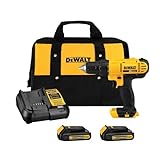
For a one-time kitchen refresh, a basic compact drill is often the sensible buy. If you already own batteries in a tool brand’s cordless system, a bare tool can be less expensive than a kit. Otherwise, a kit with two batteries lets one charge while you work. Compare the compact 12-volt drill kits for a lighter hardware-focused setup.
A 18- or 20-volt drill is a better choice if this tool will also drill larger holes in framing or run longer fasteners. The extra power does not make hinge work more accurate, though. Use the low-speed setting and clutch rather than relying on the drill’s maximum torque. Consider a 18-volt drill kit with an adjustable clutch for a general-purpose option.
Bits and setup matter as much as the drill
Use the bit type and size that fit the screw head. A mismatched Phillips bit can cam out and chew up the screw before it is fully seated. For pilot holes, follow the screw maker’s guidance when available; as a general rule, the pilot should be close to the screw’s solid core diameter, not its outside thread diameter. In hardwood, a pilot hole is especially important. In softwood, it still reduces splitting near a door edge.
Before drilling, mark each hole with a sharp pencil or an awl, and use a template or measuring jig to keep pulls level and evenly spaced. Clamp a piece of scrap wood behind a through-hole to reduce tear-out on the back face. For knobs or pulls with through-bolts, check the bolt length before tightening; a bolt that bottoms out can leave the hardware loose even when it feels snug.
A small cabinet-hardware bit set is worth considering if you need common pilot-hole sizes and a fresh driver bit. Avoid forcing a dull bit: it runs hotter, wanders more easily, and can burn or splinter the wood.
A controlled installation method
First, remove a door if the job is easier on a bench, and support it so it cannot shift. Mark hole locations with a template, then make a small starting dimple with an awl. Hold the drill square to the surface. Drill at a moderate speed with light pressure; let the bit cut rather than leaning on it. For a through-hole, stop as the tip begins to emerge, then finish from the opposite side if you can. This helps prevent splintering.
For hinge screws, drill pilot holes only as deep as needed. A piece of tape on the bit makes a simple depth marker. Start screws slowly and stop when the hinge leaf sits flat. If a screw spins without tightening, the hole may be stripped; do not keep driving. A slightly larger replacement screw may work if it still fits the hinge, but in a visible or load-bearing location, repair the hole with a glued wooden plug or dowel and redrill after it cures.
Common mistakes and when to use an impact driver
The most common failures are holes that drift off the mark, splintered exits, stripped screw heads, and screws driven too deep. Prevent them with a template, a sharp bit, a backing board, and low clutch settings. If the bit walks on a slick finished surface, a small awl dimple helps it start in place. Keep the drill straight; angling a pilot hole can pull a hinge out of alignment when the screw tightens.
An impact driver is usually unnecessary for cabinet hinges and pulls. Its repeated impacts can drive small screws too far in an instant, and the noise and force add little value here. It can make sense for building or fastening cabinet boxes with longer screws, but use a drill for precise pilot holes and delicate hardware. If you use an impact driver, begin at low speed, keep a firm grip, and stop early to finish by hand.
For a typical hardware job, buy the lightest drill that fits the rest of your work, then spend attention on layout and bits. A compact 12-volt model is enough for most hinges and pulls; step up to 18/20 volts for broader drilling needs, not because cabinet screws require extra force.