What's inside
As an Amazon Associate I earn from qualifying purchases. This post may contain affiliate links at no extra cost to you.
Multi-material drill bits are useful when one job crosses several surfaces: ceramic tile over cement board, brick beside a wood stud, or a masonry wall with a timber batten behind it. They are not the fastest bit for every material, but they reduce bit changes and are less likely to snag when you move from a hard surface to a soft one.
The best general-purpose choice is a carbide-tipped bit with a spear-shaped or ground carbide tip. It can cut wood, brick, block, tile, drywall, plastic, and some light metals. For regular work in reinforced concrete, thick porcelain, or structural steel, use dedicated bits instead.
As an Amazon Associate we earn from qualifying purchases at no extra cost to you.

What we cover
What Multi-Material Bits Are
A multi-material bit usually has a carbide cutting tip brazed to a steel body. Unlike a standard twist bit, the carbide tip scrapes and chips hard, brittle materials rather than relying on a sharp steel edge. The flutes carry dust and chips out of the hole, while the round shank fits most cordless drills.
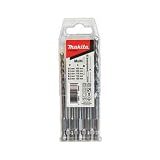
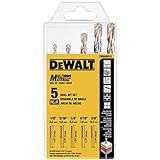
Look for a bit set labeled for brick, masonry, tile, wood, and metal. Marketing descriptions vary, so check the manufacturer’s material list rather than assuming every “multi-purpose” bit is suitable for masonry. A set of carbide-tipped multi-material drill bits is a sensible starting point for household repairs.
Where They Work Best
These bits are particularly good for drilling small anchor holes through glazed ceramic wall tile and into brick or block. They also work well for pilot holes in wood, plastic, plasterboard, and soft metal such as aluminum. A single bit can pass through tile, the adhesive bed, and masonry without needing to be swapped.
They are less convincing in thick porcelain tile. Porcelain is denser than ordinary ceramic tile and can overheat a general-purpose carbide tip. For several holes in porcelain, a diamond-grit tile bit or diamond hole saw is usually faster and lasts longer.
They should not be your first choice for concrete with aggregate, reinforced concrete, or deep masonry holes. A rotary hammer with an SDS-Plus masonry bit removes material much more efficiently. Multi-material bits are also a poor substitute for a sharp high-speed-steel bit when drilling several holes in steel.
Choosing the Right Bit
| Job | Best bit type | Important limitation |
|---|---|---|
| Tile over brick or block | Carbide-tipped multi-material bit | Use low speed and no hammer action through the tile |
| A few holes in porcelain | Diamond-grit tile bit | Costs more and needs cooling |
| Wood and drywall | Multi-material bit or standard twist bit | A brad-point bit makes cleaner wood holes |
| Deep holes in brick or concrete | Masonry bit, preferably SDS-Plus for heavy work | Needs a hammer drill or rotary hammer |
| Sheet metal | High-speed-steel twist bit | Multi-material bits are slower and may wander |
Choose the diameter based on the anchor, not the screw. A common plastic wall plug may require a 6 mm or 1/4-inch hole, while larger anchors may need 8 mm, 10 mm, or more. The package should state the actual hole diameter. If the bit is undersized, the anchor may split or fail to expand; oversized holes leave the plug loose.
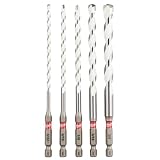
For impact drivers, buy a set with a 1/4-inch hex shank specifically rated for impact use. A normal round-shank bit held in a hex adapter can work for light drilling, but it is not as secure and may break under repeated impact loading. For ordinary drilling, a standard impact-rated hex-shank bit set gives better compatibility.
How to Drill Tile and Brick
Mark the hole with a pencil or fine marker, then cover the mark with a small piece of masking tape. The tape helps prevent the tip from skating on glossy tile. Start with the drill held square to the surface and run it at low speed. Do not use hammer mode while crossing the tile; the hammer blows can crack the glaze or loosen the tile from its adhesive.
Once the carbide tip has passed through the tile, stop and switch to hammer mode only if the bit manufacturer allows it and the material behind the tile is masonry. Keep the speed moderate. A typical small bit should run around 300 to 800 rpm in tile and brick, depending on diameter and the drill’s speed control. Larger bits generally need slower speeds.
Clear dust every few seconds by withdrawing the bit. Dust packed into the flutes increases friction and heat. For a hole deeper than roughly 25 to 40 mm, withdraw the bit several times rather than forcing it continuously. Use eye protection; masonry dust and broken tile fragments are sharp.
Do not drill blindly near electrical cables and plumbing. A wall scanner can help, but it is not perfect. Avoid the area directly above or below outlets, switches, radiators, and plumbing fixtures unless you know the service routes.
Avoiding Common Failures
The most common failure is overheating. A carbide tip that turns blue, loses its edge, or stops cutting after one hole has been run too fast or forced too hard. Let the bit cool between holes. For porcelain or long drilling sessions, use a diamond bit with water or the cooling method specified by its manufacturer; do not assume a general-purpose bit can be water-cooled.
Another failure is using hammer action on tile. Even if the bit survives, the tile may chip around the hole. A chipped edge is especially visible around bathroom fittings and shelf brackets. Start with a smaller pilot hole only when the bit manufacturer permits it; some carbide tips cut poorly when used undersized.
Bits also fail when they encounter hidden steel. Stop if progress suddenly becomes slow and the bit squeals. Change to a metal-rated bit only if you can safely confirm the obstruction is not a cable or pipe. For occasional household work, a basic masonry and anchor bit set is cheaper than buying specialized bits for every diameter.
When the Cheaper Set Is Fine
A low-cost multi-material set is adequate for hanging a mirror, fitting a cable clip, installing a curtain bracket, or drilling a few holes through ceramic tile and soft brick. Expect normal wear, and buy a spare of the most-used 6 mm or 1/4-inch size.
Spend more when you need many holes, clean holes in porcelain, reliable impact-driver use, or consistent sizing for critical anchors. A better bit will not compensate for excessive pressure or the wrong drill mode, but it usually holds its cutting edge longer and clears dust more effectively. For one small DIY project, the cheaper option is often the practical choice; for repeated masonry and tile work, dedicated bits pay for themselves in speed and fewer damaged holes.