What's inside
- Best OTC hearing aids by situation
- Head-to-head comparison of important specifications
- Sound customization: the feature that matters most
- Fit, comfort, and charging are connected
- Return policies deserve as much attention as the hardware
- Ownership realities: cleaning and parts that wear first
- How to choose without overpaying
- When an OTC hearing aid is not the right next step
- Best OTC hearing aids by situation
- Head-to-head comparison of important specifications
- Sound customization: the feature that matters most
- Fit, comfort, and charging are connected
- Return policies deserve as much attention as the hardware
- Ownership realities: cleaning and parts that wear first
- How to choose without overpaying
- When an OTC hearing aid is not the right next step
As an Amazon Associate I earn from qualifying purchases. This post may contain affiliate links at no extra cost to you.
The best OTC hearing aids for most adults are Sony CRE-C20 for a discreet rechargeable design, Jabra Enhance Select 500 for stronger app-based customization, Lexie B2 for practical value, and AirPods Pro 2 for people who want hearing assistance alongside familiar Bluetooth earbuds. The right choice depends less on the loudest amplification than on how precisely you can adjust sound, how reliably the devices fit, and whether you will remember to charge and clean them.
As an Amazon Associate we earn from qualifying purchases at no extra cost to you.


What we cover
- Best OTC hearing aids by situation
- Head-to-head comparison of important specifications
- Sound customization: the feature that matters most
- Fit, comfort, and charging are connected
- Return policies deserve as much attention as the hardware
- Ownership realities: cleaning and parts that wear first
- How to choose without overpaying
- When an OTC hearing aid is not the right next step
Our Top Picks


Best OTC hearing aids by situation
| Best for | Recommended type or product | Why it fits the situation | Main compromise |
|---|---|---|---|
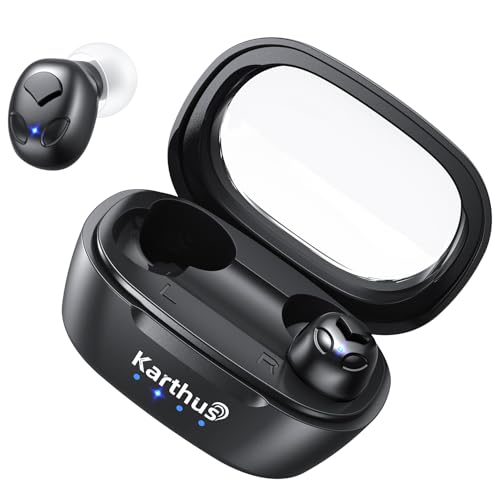
| First-time buyer who wants a small device | Sony CRE-C20 | In-the-canal design, rechargeable battery, app adjustments | Less visible than behind-the-ear models, but smaller controls can be fiddly |
| Frequent conversations in changing environments | Jabra Enhance Select 500 | Detailed sound personalization, directional microphones, Bluetooth streaming | Usually costs more than basic OTC models |
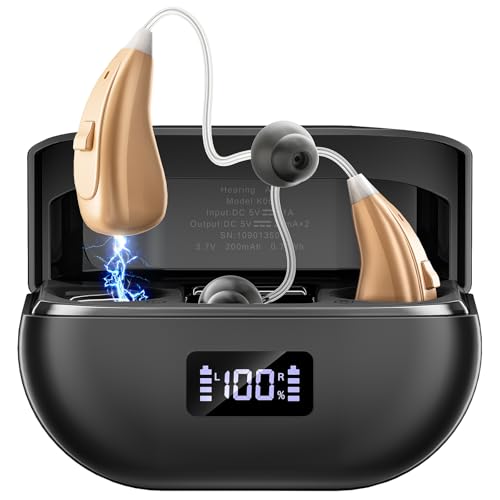
| Value-focused buyer who wants support | Lexie B2 | Behind-the-ear fit, app control, remote support options, replaceable batteries | Uses disposable size-312 batteries rather than a charging case |
| Light hearing assistance plus everyday earbuds | AirPods Pro 2 with the supported hearing features | Familiar controls, rechargeable case, Bluetooth ecosystem, hearing-test workflow | Fit, battery routine, and feature availability depend on the phone and region |
| Maximum simplicity | Basic preset OTC hearing aids | Fewer menus and usually a lower purchase price | Limited fine-tuning for voices, music, wind, and background noise |
Head-to-head comparison of important specifications
Exact package contents, prices, and regional features can change, so confirm the current manufacturer listing before ordering. The figures below describe commonly published configurations and typical operating expectations rather than a guarantee for every user.
| Option | Approximate device weight | Power method | Typical operating time | Bluetooth | Customization |
|---|---|---|---|---|---|
| Sony CRE-C20 | About 1.4 g per device | Rechargeable case | Up to about 70 hours per charge, depending on use | App connectivity; streaming capabilities are limited compared with full Bluetooth earbuds | App-based presets and adjustments |
| Jabra Enhance Select 500 | About 3 g per device | Rechargeable case | Up to about 30 hours per charge | Direct streaming on compatible phones and devices | Detailed app controls and remote support options |
| Lexie B2 | About 3 g per device without battery | One size-312 disposable battery per device | About 70 hours per battery, varying with use | App connection; streaming availability varies by version | App tuning and environment settings |
| AirPods Pro 2 | About 5.3 g per earbud | Rechargeable case | Up to about 6 hours per charge for listening, depending on settings | Full Bluetooth audio and call features | Phone-based hearing test and accessibility controls |
Sound customization: the feature that matters most
Preset programs are useful, but the best OTC hearing aids let you adjust more than overall volume. Look for separate control of bass and treble, speech emphasis, noise reduction, and the balance between the left and right ear. A device that sounds excellent in a quiet room may still need a different profile in a restaurant or outdoors.
Jabra Enhance Select 500: best for fine control
Jabra’s appeal is its combination of automatic processing, app adjustments, and compatible-phone streaming. It is a strong choice if you regularly move between quiet conversations, television, traffic, and group settings. Remote assistance can also reduce the learning curve. Select it when you would rather spend more initially than continually compromise with a limited preset system.
Sony CRE-C20: best discreet rechargeable option
The CRE-C20 sits in the ear canal and is designed to be less conspicuous than a behind-the-ear aid. Its long stated battery life is useful for people who dislike daily charging. The trade-off is physical: in-canal devices can be harder to insert correctly, and small controls are less convenient for people with limited dexterity.
Lexie B2: best for accessible ownership
A behind-the-ear design is often easier to handle, and the Lexie B2 uses widely available size-312 batteries. That means no charging cable is required, but you must keep spare batteries and dispose of used cells safely. Its app-based adjustment and support model make it a practical entry point for someone who wants guidance without immediately committing to a premium rechargeable system.
AirPods Pro 2: best Bluetooth-first choice
AirPods Pro 2 are attractive if you already use a compatible iPhone and want music, calls, transparency controls, and hearing-related features in one familiar product. Their short operating time compared with dedicated hearing aids means the charging case becomes part of the daily routine. They are not the best universal choice: phone compatibility, regional availability, ear-tip fit, and the difference between hearing assistance and a clinically fitted hearing aid all matter.
Fit, comfort, and charging are connected
An aid that is technically powerful is not useful if it whistles, slips, or stays in a drawer. In-canal models usually offer more discretion but require accurate insertion and can feel occluding, as if your voice is inside your head. Behind-the-ear models are more visible but often provide room for larger controls, easier handling, and a broader range of ear-tip or tube adjustments.
When comparing charging, calculate the practical runtime rather than relying only on the advertised maximum. For example, if a rechargeable model provides 30 hours and you use it 12 hours per day, one charge covers approximately:
30 hours ÷ 12 hours per day = 2.5 days
Streaming, phone calls, high amplification, and wireless accessories can reduce that figure. If you spend long days away from an outlet, a model rated for 60 to 70 hours or one with replaceable batteries may be more convenient than a smaller device with frequent charging.
Return policies deserve as much attention as the hardware
OTC hearing aids often have a trial or return period, but the conditions differ. Before purchasing, check four details:
- How many calendar days are allowed, and when does the period begin?
- Are opened ear tips, wax guards, or disposable batteries deducted from the refund?
- Who pays return shipping, and is a restocking fee possible?
- Does the warranty cover moisture damage, lost devices, the charging case, and battery degradation?
A generous return window is particularly valuable for first-time users because adaptation can take several weeks. Do not judge a device after one noisy restaurant visit. Start in a quiet room, confirm that both devices are producing sound, then increase wearing time gradually while recording specific problems such as “voices are sharp” or “television is still unclear.” Those observations are more useful than repeatedly raising the master volume.
Ownership realities: cleaning and parts that wear first
Wax guards, ear tips, microphone openings, and rechargeable batteries usually affect long-term performance before the main electronics fail. Wipe the devices with a dry, soft cloth, inspect the microphone ports, and replace wax filters or domes according to the manufacturer’s instructions. Never rinse a hearing aid or use alcohol, compressed air, a hair dryer, or household cleaning spray unless the manufacturer specifically permits it.
Keep devices dry during showers and swimming. A drying container can help overnight, but it is not a substitute for water-resistant design or proper maintenance. Store disposable batteries away from children and pets, and remove a battery if the aid will not be used for an extended period.
How to choose without overpaying
- Choose a rechargeable model if you value convenience, frequently use Bluetooth, or dislike handling small batteries.
- Choose disposable batteries if you travel where charging is inconvenient or want inexpensive, easily replaceable power.
- Choose behind-the-ear if easy handling, stronger controls, and stable placement matter more than invisibility.
- Choose in-canal if discretion is your priority and you can comfortably insert and remove a small device.
- Pay for advanced app control if your listening environments vary. Basic presets can be sufficient for mostly quiet, predictable use.
- Prioritize a clear return policy when buying your first pair, even if the purchase price is slightly higher.
When an OTC hearing aid is not the right next step
Seek evaluation by an audiologist or other qualified hearing professional if hearing loss is sudden, noticeably worse in one ear, accompanied by pain, drainage, dizziness, or persistent ringing, or if speech remains difficult to understand after careful adjustment. OTC products are intended for adults with perceived mild-to-moderate hearing loss; they are not a replacement for a diagnostic assessment when warning signs are present.
For most buyers, the final decision is a trade-off: Jabra offers the richest customization, Sony emphasizes discretion and long battery life, Lexie emphasizes straightforward handling and support, and AirPods Pro 2 makes the most sense for compatible-phone users who want broad Bluetooth functionality. Match that trade-off to your daily routine, then use the return period to evaluate comfort and speech clarity in the places where you actually listen.