What's inside
As an Amazon Associate I earn from qualifying purchases. This post may contain affiliate links at no extra cost to you.
What we cover
Best Prelit Christmas Trees: The Right Pick Depends on Your Room
The best prelit Christmas tree is a slim, warm-white LED model if you want easy room fit and low running costs; choose a full, color-changing tree instead if visual impact and lighting options matter more than storage space. Before buying, compare height, branch density, bulb serviceability, setup time, and the size of the box you will store for most of the year.
Compare the main choices
These representative specifications describe common product types, not a guarantee for every model. Check the specific tree’s manual and carton dimensions: “tree height” may include the stand or topper allowance, and packed size varies with how tightly branches and sections fold.
As an Amazon Associate we earn from qualifying purchases at no extra cost to you.

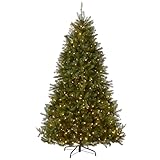

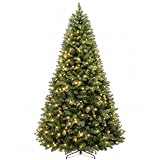
| Tree type | Typical height | Branch profile | Light type and service | Approx. setup | Storage footprint | Room fit |
|---|---|---|---|---|---|---|
| Slim LED | 6.5–7.5 ft | Narrow; 24–36 in. wide | Warm-white LEDs; look for replaceable bulbs or labeled sections | 20–40 min | About 12–18 × 12–18 in. boxed | Small living rooms, apartments, corners |
| Full LED | 7.5–9 ft | Dense; 48–60 in. wide | Warm white or multicolor; bulb access varies | 30–60 min | About 18–24 × 18–24 in. boxed | Open living rooms with room for presents |
| Full incandescent | 6.5–7.5 ft | Moderate to dense; 45–55 in. wide | Usually replaceable mini bulbs; spare bulbs may be included | 30–60 min | About 18–24 × 18–24 in. boxed | Buyers who prefer traditional light color and can maintain bulbs |
| Premium hinged LED | 7.5–9 ft | Dense; often 50–65 in. wide | Integrated LED strings; section-level troubleshooting is important | 20–45 min | About 20–26 × 20–26 in. boxed | Large rooms where quick annual setup is valuable |
Storage measurements are approximate carton footprints, not universal standards. Most artificial trees are stored in long cartons, bags, or separate section boxes; measure the actual storage location’s narrowest opening and available length before ordering.
Choose by room and routine
- For a narrow room or apartment: Choose a 6.5- to 7.5-foot slim tree, and verify its maximum width—not just the “slim” label. A tree 30 inches across can still block a walkway when its stand and lower branches are included.
- For a family room and a traditional focal point: A full 7.5-foot tree usually offers a useful balance of height and branch volume. Pick hinged branches to reduce assembly, and check that the bottom tier leaves space for gifts.
- For a ceiling under 8 feet: A 6.5-foot tree often leaves enough clearance for a topper and room to shape the top branches. For a 7.5-foot tree, measure from floor to ceiling and account for the stand and topper; listed tree height may not include your chosen decoration.
- For low-effort setup: A hinged, sectioned tree with built-in connectors is usually quicker than a model with many individually inserted branches. “Easy assembly” still involves fluffing—separating and bending branch tips is what makes the tree look full.
- For traditional, repairable lighting: Look for replaceable bulbs, spare bulbs, and a clear fuse or wiring diagram. Incandescent mini lights can be straightforward to service, but a failed or loose bulb may affect part of a string.
- For less routine bulb upkeep: LED trees generally use less electricity than comparable incandescent lighting and tend to run cooler. Some use replaceable bulbs; others have integrated strings where a failed section may require troubleshooting or manufacturer service. Confirm the policy before purchase.
Measure before choosing height or width
Use this quick fit check rather than relying on the room’s overall square footage:
- Measure floor-to-ceiling height. Subtract the stand height and the space needed for a topper.
- Mark the tree’s stated maximum width on the floor, or use a tape measure to outline its diameter.
- Add clearance for walking paths, doors, heating vents, and nearby furniture. Avoid placing a tree where branches press against a heater or obstruct an exit.
- Measure the storage area separately. A tall tree may break into sections that fit a closet, while a wider model can still require a long carton that will not turn through a doorway.
Example: A room with an 8-foot ceiling may appear to accommodate a 7.5-foot tree, but a 6-inch topper plus stand and measurement differences can leave little or no clearance. A 6.5-foot model is the safer choice unless the manufacturer’s listed assembled height includes the exact stand and topper arrangement you plan to use.
What the price difference usually buys
As a broad market guide, smaller or simpler prelit trees may fall around $100–$250, midrange models around $250–$600, and larger or more detailed premium trees around $600–$1,500 or more. These are general ranges, not price quotes; height, branch material, light count, realism, warranty, and seasonal availability all affect cost.
Spend extra where it solves a real problem: stronger hinges for annual setup, fuller branches if you dislike visible gaps, or a narrower profile for a tight room. A larger light count is not automatically better if you prefer a subdued look or will add your own ornaments and light strings.
Ownership details that matter after the holidays
Branch tips are the first parts to look sparse when a tree is rushed into shape. Allow roughly 30–60 minutes to fluff a typical 7.5-foot model the first year; later setup may be faster once you know how the sections fit. Spread tips outward and toward gaps rather than pulling hard on them, which can loosen branch attachments.
For lights, inspect the cords and plugs before each season, and follow the maker’s limits for connecting strings. Unplug the tree before changing bulbs or investigating a dark section. Keep the original instructions and any spare bulbs or fuses in a labeled bag with the tree. If the manufacturer does not identify replaceable parts or explain how to diagnose a failed section, assume lighting repairs could be more involved.
Before storing, remove ornaments and let the tree cool if it has been lit. Compress branches gently in their natural direction; forcing them against the hinges can bend or break them. A fitted storage bag can make handling easier, but it does not eliminate the need to check the bag’s length and width against the storage space.
Bottom line
For most homes, a 7.5-foot hinged LED tree is the practical middle ground—but only if the ceiling, width, and storage space all work. Choose a slim model for tight rooms, a full model for a spacious focal point, and a bulb-serviceable design if repairability matters more to you than the simplest possible lighting setup. The best prelit Christmas trees are the ones that fit the room when displayed and the closet when the season ends.