What's inside
As an Amazon Associate I earn from qualifying purchases. This post may contain affiliate links at no extra cost to you.
What we cover
Best Sciatica Seat Cushions for Car and Office: Choose One Shape That Fits Both
The best sciatica seat cushions for car and office are usually portable, medium-firm cushions about 17–18 inches wide, with a non-slip base and a removable, washable cover; choose a U-shaped cutout if you want less pressure at the tailbone, or a wedge if you need a simpler cushion that works across different seat shapes. Fit matters as much as the label: a thick cushion that raises you too high in a car can make driving posture and visibility less comfortable.
Compare the main cushion types
“Sciatica cushion” is a broad product label, not a guarantee that a cushion will ease pain. Designs differ in how they distribute pressure and how well they fit a bucket seat, desk chair, or both. The figures below are typical buying ranges, not specifications for every model; check the exact product dimensions before ordering.
As an Amazon Associate we earn from qualifying purchases at no extra cost to you.


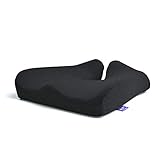
| Shape or type | Typical size | Common materials | Best fit | Trade-off |
|---|---|---|---|---|
| U-shaped cutout | 17–18 in wide × 16–18 in deep; 2–3 in thick | Medium- or high-density memory foam, sometimes layered | Office chairs and roomy vehicle seats | Cutout can sit in the wrong place on narrow or strongly contoured seats |
| Wedge | 16–18 in wide × 15–18 in deep; about 2–3 in at the rear | High-density foam or molded polyurethane foam | Seats where a modest forward tilt feels more comfortable | May change hip position and reach to pedals; test cautiously in a parked car |
| Contoured or coccyx cushion | 16–18 in wide × 16–18 in deep; 2–4 in thick | Memory foam, molded foam, or layered foam | People who want a shaped surface without a steep wedge | Deep contours may not suit every body or seat |
| Inflatable cushion | Often 15–18 in wide; thickness varies with inflation | Air bladder with fabric cover | Travelers prioritizing packability and adjustable firmness | Needs inflation adjustment and can feel less stable than foam |
Pick by where you sit most
For frequent switching between car and office
Start with a medium-firm foam cushion around 17 inches wide and 16–18 inches deep. A flatter U-shaped or lightly contoured design is usually easier to transfer than a tall wedge. Look for a carry handle, a grippy underside, and a cover that unzips for washing. If your car has deeply bolstered sides, a cushion with a wide, flat base is more likely to sit securely than one with a broad, rigid outline.
For long desk sessions
A U-shaped or coccyx-style cushion may be worth considering if you prefer a surface with a rear cutout. Check that the opening lines up with your body when you sit naturally, rather than choosing by the product photo alone. Medium-firm foam is a sensible starting point: very soft foam can compress substantially, while very firm foam may feel harsh. A height-adjustable office chair helps compensate for the extra cushion thickness.
For a compact car or low roofline
Prioritize a low-profile cushion—roughly 2 inches thick when loaded—and confirm it does not interfere with your driving position. A wedge can tilt your pelvis and shift your reach to the pedals, so it may be less convenient for a car-and-office combination. Set the cushion on the seat while parked, adjust the seat and mirrors, and make sure you can operate the pedals fully and comfortably before driving.
For occasional travel or a tight budget
A basic foam cushion with a washable cover is often a practical choice. General market prices vary by construction and brand, but simple foam models commonly fall around $20–$40, while layered, contoured, or more specialized designs may run roughly $40–$80 or more. Paying extra for a carrying case is less useful than paying for the right dimensions, a stable base, and a cover you can clean.
What the specifications actually tell you
- Foam density: Density is usually measured in pounds per cubic foot (lb/ft³), but sellers do not always publish it. When available, a density around 3–5 lb/ft³ is common for memory-foam layers; denser foam often weighs more and may resist early compression better, but density alone does not determine comfort or durability.
- Firmness: There is no consistent firmness scale across cushion brands. Look for a return window and assess whether the cushion bottoms out under your weight. A cushion should feel supportive, not like a hard board.
- Cover: Polyester mesh can breathe well; velour or plush fabric may feel softer but can retain more heat. A removable cover with clear washing instructions is a practical advantage for daily commuting.
- Dimensions: Measure the usable flat area of both seats. A cushion that overhangs a car seat’s side bolsters may rock or slide; one that is too short may not support the area you intend.
- Weight and portability: Many foam cushions weigh about 1.5–3 lb. A handle helps, but a bulky cushion can still be awkward to carry between a parking lot and office.
A quick fit check before you buy
Measure your office chair and car seat where your body actually rests, not across the outermost edges. If the smaller usable seat area is 18 inches wide, a 17-inch cushion leaves about half an inch of clearance on each side. That is generally a more secure starting fit than a 19-inch cushion that spills over the edges. Also compare thickness: if a cushion raises you 2.5 inches, your office chair should have enough adjustment range to keep your feet supported and your desk reachable.
For the car, check the cushion against the seat’s contours and confirm it stays put during normal entry and exit. Avoid adding a loose cushion if it can shift under you or obstruct controls. A cushion should never compromise safe pedal operation, seat-belt fit, or visibility.
Ownership: cleaning, compression, and common mistakes
Foam cushions gradually compress, especially under daily use. The first signs may be a flattened sitting area, a cover that bunches, or a cushion that no longer springs back after being left unused. Rotate the cushion periodically if its shape permits, and follow the maker’s cleaning directions. Most foam cores should not be machine-washed; clean spills from the cover promptly and let the foam dry fully before replacing it. Sunlight and high heat can damage some foam materials.
Common buying mistakes include choosing the thickest model without checking car fit, assuming “orthopedic” or “sciatica” on a label means a particular medical benefit, and overlooking cover care. Give a new cushion short trial periods at first, and stop using it if it makes you feel less stable or noticeably less comfortable.
Bottom line
For one cushion that moves between a car and an office, choose a medium-firm, roughly 17-inch-wide foam model with a washable cover and non-slip base; favor a shallow U-shaped or gently contoured design unless you already know a wedge suits you. Match the dimensions to the smaller of your two seats, then confirm that the cushion does not alter your safe driving position. Cushion preferences vary, and persistent, worsening, or concerning symptoms are a reason to consult a qualified health professional rather than relying on a seat accessory.