What's inside
- Quick comparison of the models Reddit keeps recommending
- Best overall: the FoodSaver V4400 class
- Best budget: the $40–80 manual-latch class
- Best for wet food and sous vide: Anova Precision Vacuum Sealer Pro
- Best for volume, hunters and gardeners: chamber vacuum sealers
- Best if you don’t want bags at all: Zwilling Fresh & Save
- How to choose: the numbers that separate these machines
- Frequently Asked Questions
- Quick comparison of the models Reddit keeps recommending
- Best overall: the FoodSaver V4400 class
- Best budget: the $40–80 manual-latch class
- Best for wet food and sous vide: Anova Precision Vacuum Sealer Pro
- Best for volume, hunters and gardeners: chamber vacuum sealers
- Best if you don’t want bags at all: Zwilling Fresh & Save
- How to choose: the numbers that separate these machines
- Frequently Asked Questions
As an Amazon Associate I earn from qualifying purchases. This post may contain affiliate links at no extra cost to you.
For most kitchens, the food vacuum sealer that Reddit threads land on again and again is the automatic suction-sealer class best represented by the FoodSaver V4400 — roughly $150–200, an 11–12 inch seal bar, automatic bag detection and built-in roll storage. If you regularly seal wet foods, marinades or more than a few bags a week, the recommendation flips to a chamber vacuum sealer such as the VacMaster VP215 or Avid Armor USV32, because no suction machine can pull a clean seal on liquid. Budget threads consistently point to the $40–80 GERYON E2900 / Mueller class, which seals dry goods and frozen portions perfectly well as long as you accept manual lid latching and slower cycles.
As an Amazon Associate we earn from qualifying purchases at no extra cost to you.


What we cover
- Quick comparison of the models Reddit keeps recommending
- Best overall: the FoodSaver V4400 class
- Best budget: the $40–80 manual-latch class
- Best for wet food and sous vide: Anova Precision Vacuum Sealer Pro
- Best for volume, hunters and gardeners: chamber vacuum sealers
- Best if you don’t want bags at all: Zwilling Fresh & Save
- How to choose: the numbers that separate these machines
- Frequently Asked Questions
Our Top Picks
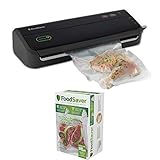
 FoodSaver FM2000 Vacuum Sealer System with Starter Bag/Roll5.8 pounds24.3 x 16.4 x 13.1 inches12.9 PoundsCheck on Amazon
 FoodSaver FM2435 Vacuum Sealer Machine with Bonus HandheldPack of 117 x 4 x 9.2 inches5 poundsCheck on Amazon
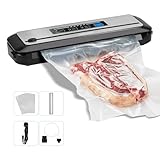
 Inkbird Vacuum Sealer Machine with Starter KitINK-VS0114.17 x 3.93 x 1.57 inches3.3 poundsCheck on Amazon

Quick comparison of the models Reddit keeps recommending
| Pick | Best for | Key specs | Typical price range |
|---|---|---|---|
| FoodSaver V4400-class automatic sealer | Best overall for everyday kitchens | ~11–12 in seal bar, automatic bag detection, retractable handheld sealer, roll storage and cutter, accessory port | $150–200 |
| GERYON E2900 / Mueller / Bonsenkitchen class | Best budget | Manual lid latch, 11–12 in seal bar, dry and frozen food focus, 3–6 lb | $40–80 |
| Anova Precision Vacuum Sealer Pro | Best for sous vide and moist foods | 12 in seal bar, pulse vacuum, marinade mode, wet/dry settings, double seal | $180–220 |
| VacMaster VP215 / Avid Armor USV32 (chamber) | Best for volume, hunters, gardeners | Rotary-vane pump, 10–12 in seal bar, smooth 3-mil bags, 20–40 lb, ~-0.95 bar vacuum | $700–1,100 |
| Zwilling Fresh & Save | Best if you don’t want bags | Hand pump, borosilicate glass and BPA-free containers, dishwasher-safe, no electricity needed | $100–200 for starter sets |
One caveat before the picks: model numbers in this category rotate every year or two, and “FoodSaver” is used generically online for any vacuum sealer. When a specific SKU disappears, the closest current unit from the same product line usually keeps the same seal bar, pump class and bag format.
Best overall: the FoodSaver V4400 class
This is the recurring answer in r/sousvide, r/MealPrepSunday and general kitchen threads because it removes the two things people hate about cheap sealers: guessing where to place the bag, and holding the lid down. The automatic bag-detection system clamps and starts the cycle on its own, the roll storage and built-in cutter keep bag material on the machine instead of in a drawer, and the retractable handheld attachment handles jars and reusable containers through the accessory port. According to FoodSaver’s own spec sheet, the full-size units take 11-inch rolls, which is the standard width for pre-cut quart and gallon bags from most brands.
Trade-off: it’s a suction sealer, so anything wet gets pulled toward the pump. You still have to freeze sauces and soups before sealing, and the foam lid gasket is the part that eventually fails. It also takes up real counter space — plan on 6–10 lb of machine.
Best budget: the $40–80 manual-latch class
GERYON, Mueller, Bonsenkitchen, Potane and Inkbird all sell variants of the same design: a manual latch you press down, one or two seal buttons, and an accessory port. For dry goods, coffee, cheese, frozen chicken portions and garden seeds, the result is indistinguishable from a $200 machine in blind kitchen use — the pump class is similar and the seal bar is the same 11–12 inches.
Who it suits: first-time buyers, small households, and anyone sealing fewer than five bags a week. Main trade-off: manual pressure means uneven seals if you’re sloppy, the duty cycle is short (most manuals in this class advise a 20–60 second pause between seals), and the pump is the first thing to weaken after a year or two of heavy use. Buy this class to find out whether you’ll actually use a sealer at all.
Best for wet food and sous vide: Anova Precision Vacuum Sealer Pro
Anova’s sealer is the one that shows up in sous vide threads specifically because of pulse vacuum and a marinade cycle. Pulse lets you stop the pump mid-pull when liquid starts creeping toward the seal bar, then finish the seal — the single biggest failure mode for anyone sealing braised meat, fish in oil, or marinated vegetables. It uses a 12-inch seal bar and a double seal, and Anova specs wet and dry modes separately so the machine runs a longer, gentler cycle for moist bags.
Trade-off: it costs more than a budget unit and still can’t handle a bag of soup. It’s a bridge product: better moisture handling than a $60 sealer, not chamber-sealer performance.
Best for volume, hunters and gardeners: chamber vacuum sealers
This is where the Reddit advice gets genuinely different from a product listing. A chamber machine puts the entire bag inside a vacuum chamber, so the pressure on the outside of the bag equals the pressure inside — liquid simply cannot get sucked out. That means you can seal a bag of chili, a marinade, or a whole fish with wet scales, and the vacuum level reaches roughly -0.95 bar instead of the ~-0.8 bar a suction sealer manages.
The recurring names are VacMaster VP215 and Avid Armor USV32, both with rotary-vane pumps and 10–12 inch seal bars; Weston’s Pro 2300-class stainless units sit in the same tier with a wider bar for long cuts. Expect 20–40 lb of machine, a warm-up period, and oil changes on the pump for some models.
Trade-off: price and footprint. It only makes sense if you process a deer, a garden harvest, or bulk meat buys — or if you seal wet food weekly. See the cost math below.
Best if you don’t want bags at all: Zwilling Fresh & Save
A hand pump and reusable glass or BPA-free plastic containers, all dishwasher-safe. It’s the answer for people who vacuum-seal leftovers and cut produce rather than freezer portions, and it avoids the ongoing bag cost entirely. The vacuum is weaker than a bag sealer’s, so it’s a freshness extender for the fridge, not a long-term freezer solution.
How to choose: the numbers that separate these machines
| Spec | Budget suction ($40–80) | Mid-range suction ($120–220) | Chamber ($350–1,100) |
|---|---|---|---|
| Seal bar width | 11–12 in | 11–12 in | 10–12 in (up to 15 in on wide units) |
| Vacuum level | ~-0.8 bar | ~-0.8 bar | ~-0.95 bar |
| Bag type required | Embossed/channel, 3–4 mil | Embossed/channel, 3–4 mil | Smooth, 3 mil (channel bags also work) |
| Wet or liquid food | No — freeze first | Partly, with pulse/moist mode | Yes, liquids directly |
| Typical cycle time | 30–60 s | 20–40 s | 15–30 s |
| Noise | ~65–75 dB | ~65–75 dB | ~65–70 dB, shorter duration |
| Weight | 3–6 lb | 6–10 lb | 20–40 lb |
| Bag cost per seal | ~$0.15–0.50 | ~$0.15–0.50 | ~$0.06–0.12 |
The bag math that decides the chamber question
Say you seal 10 bags a week — 520 a year. At roughly $0.25 per pre-cut or roll-made channel bag, that’s about $130 a year. Chamber-compatible smooth bags bought in 1,000-count cases run closer to $0.08 each, or about $42 a year. The saving is roughly $88 annually, which means a $800 chamber machine pays for itself in bag savings alone in about nine years. In other words: buy a chamber sealer for the wet-food capability and throughput, not for the bags.
What wears out first
- The lid gasket (foam or silicone). Usually the first failure, often within 6–18 months of regular use, and it shows up as a machine that runs but never pulls a tight vacuum. Replacements are cheap; a gasket that’s lost its shape cannot be fixed by pressing harder.
- The heat-seal strip and its PTFE tape. Repeated sealing burns through the tape, leaving wrinkled or partial seals. If seals look stringy or open at one end, this is the culprit far more often than the pump.
- The drip tray and vacuum channel. Liquid drawn into the machine clogs the channel and corrodes the pump over time. Empty and rinse the tray every session.
- The pump. On budget units, this is the end of the machine’s life, not a serviceable part.
Common mistakes
- Using smooth bags in a suction sealer — they have no air channel and will not vacuum at all.
- Sealing wet food without freezing it first, or without a drip tray, which is the fastest route to a dead pump.
- Running 20 seals back to back on a budget machine and overheating the seal bar.
- Treating vacuum sealing as a substitute for canning. For low-acid moist foods stored at room temperature, vacuum packaging creates the oxygen-free conditions that support Clostridium botulinum. Follow USDA / National Center for Home Food Preservation guidance for those foods, and keep vacuum-sealed moist items refrigerated or frozen.
Frequently Asked Questions
Do I have to use FoodSaver-brand bags?
No. Any embossed or channel-style bag works in a suction sealer, and third-party rolls are typically cheaper than the branded ones. The bag needs a textured air channel on at least one side; smooth vacuum bags are only for chamber machines. Bag width matters more than brand — 11-inch rolls fit the full-size machines, 8-inch rolls fit compact units.
Is a chamber vacuum sealer worth it for home use?
Only if you seal liquids, process game or garden harvests in bulk, or go through hundreds of bags a year. The bag savings alone take roughly nine years to repay an $800 machine at 10 bags a week, so the justification is capability and speed, not bag price. For a household sealing dry goods and frozen portions, a $150–200 suction sealer does the job.
Can I vacuum seal soup, stew or marinade?
Not in a suction sealer unless you freeze the liquid solid first, or use a machine with a pulse and moist mode and stop the pump before liquid reaches the seal bar. A chamber vacuum sealer handles liquids directly with no workaround, which is the main reason cooks who meal-prep a lot of sauces end up buying one.
Why did my vacuum sealer stop pulling a tight seal?
In order of likelihood: a deformed lid gasket, a worn or wrinkled seal strip, moisture or debris in the vacuum channel, or a bag that isn’t textured. Test with a fresh bag from a different roll before assuming the pump has failed. If the machine runs, the motor sounds normal, and the bag never tightens, the gasket is the usual answer.
How long does vacuum-sealed food keep in the freezer?
Vacuum sealing mainly protects quality — it prevents freezer burn and oxidation, which typically extends usable freezer storage to roughly two to three times what a zip-top bag gives for the same item. It does not reset food-safety timelines; frozen storage limits and refrigerator limits for the same food still apply.
Are reusable systems like Zwilling Fresh & Save a replacement for a bag sealer?
For fridge storage of leftovers, cut vegetables and cheese, yes — and they eliminate the ongoing bag cost. For long-term freezer storage of meat, fish or stock, no. The vacuum is weaker, the containers take up more space than a flat bag, and they don’t stack as efficiently in a freezer.