What's inside
As an Amazon Associate I earn from qualifying purchases. This post may contain affiliate links at no extra cost to you.
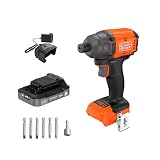
If your projects involve driving deck screws, lag bolts, and long construction screws — but you don’t build for a living — the Black+Decker 20V MAX BDCI20 is the right black and decker impact driver for you. Its rated 1,375 in-lbs of torque covers nearly every fastening job in common lumber short of oversized structural screws, and it costs roughly half of a pro-platform equivalent. The main confusion in the lineup is that the compact tools people search for as the “Black & Decker pivot driver” are low-voltage screwdrivers, not impact drivers at all. Here’s how the real numbers sort out.
As an Amazon Associate we earn from qualifying purchases at no extra cost to you.


What we cover
Black+Decker fastening lineup at a glance
| Model | Chuck | Max torque | Speed / impacts | Weight | Typical price |
|---|---|---|---|---|---|
| BDCI20C (20V MAX kit with 1.5Ah battery and charger) | 1/4 in. hex, quick release | 1,375 in-lbs | 0–3,000 RPM / 0–3,900 IPM | ~2.3 lb bare, ~3.2 lb with battery | $70–$90 |
| BDCI20B (20V MAX bare tool) | 1/4 in. hex, quick release | 1,375 in-lbs | 0–3,000 RPM / 0–3,900 IPM | ~2.3 lb | $45–$60 |
| BDCMTI MATRIX impact attachment (requires MATRIX base unit) | 1/4 in. hex | ~1,300 in-lbs rated | Comparable to BDCI20 | Adds ~1.5 lb to MATRIX base | $30–$45 (attachment only) |
| 4V MAX pivoting screwdriver class (BDCS-series, older PivotDriver models) | 1/4 in. hex magnetic holder | ~35–70 in-lbs | ~180 RPM / no impacts | Under 1 lb | $15–$30 |
What 1,375 in-lbs actually means in lumber
Torque numbers are easier to judge in foot-pounds: 1,375 in-lbs ÷ 12 = about 115 ft-lbs, or roughly 156 Nm. That puts the BDCI20 at the entry end of the 18V/20V impact class — pro-grade models now advertise 1,800–2,200+ in-lbs — but still well above any drill/driver, which typically tops out at 300–400 in-lbs with no impact mechanism to push through resistance.
Translated into common fasteners and lumber, that output looks like this:
-
#8 x 2 in. construction screws into SPF framing or plywood: sinks flush in a second or two. This is the tool’s comfort zone.
-
#10 x 3 in. deck screws into pressure-treated 2x material: driven confidently all day, exactly the job this driver was built for.
-
1/4 in. x 3 in. lag screws into studs: handled, but it slows noticeably on the last inch. Drilling a pilot hole roughly 60–70% of the bolt’s shank diameter makes the drive far cleaner and protects the bit.
-
5/16 in. lags or 4 in.+ structural screws into dense stock (LVL, hardwood, doubled PT): the edge of its range. Expect occasional stalls — this is where you’d want a mid-torque pro model.
-
Cabinet screws, pocket screws, hardware in hardwood (oak, maple): plenty of power — the risk is overdriving and stripping, since there’s no clutch or speed mode to soften the hit.
-
Automotive lug nuts (spec’d at ~80–100 ft-lbs, often higher to break loose): not the right tool, despite the on-paper number. Rated peak torque is a momentary marketing figure, and 1/4 in. hex adapters aren’t meant for that load.
Which model fits which DIY situation
| Your situation | Best pick | Why |
|---|---|---|
| Decks, fences, shelving, framing — regular weekend projects | BDCI20C kit | Full fastening power plus battery and charger in one box; lowest cost of entry into the 20V MAX system |
| Already own Black+Decker 20V MAX batteries (drill, sander, string trimmer) | BDCI20B bare tool | Saves $25–$35; every 20V MAX pack slides on, including 2Ah and 4Ah sizes |
| Own a MATRIX base unit, need impact function a few times a year | BDCMTI attachment | Cheapest path to near-identical torque; bulkier to hold, so less pleasant for a full day of driving |
| Furniture assembly, cabinet hardware, switch plates, RV/boat interior screws | 4V MAX pivoting screwdriver | Light, pivoting head reaches awkward angles, won’t snap small screws — but it’s a screwdriver, not an impact driver |
| Lug nuts, big structural screws, ledger boards, daily use | Step outside this lineup | You need a mid/high-torque impact wrench or a pro 18V–20V impact driver with 1,800+ in-lbs and speed modes |
Runtime math and cost per project
The bundled 1.5Ah battery is the kit’s real limitation. Expect on the order of 150–250 #8 x 2 in. screws into soft lumber per charge — fine for a shelf build, thin for a deck. A 12×12 deck can take 1,200–1,500 fasteners, so plan on a spare pack. A 4Ah battery roughly triples that runtime and adds $50–$70; the stock charger needs a few hours to refill a depleted pack, which is the other argument for owning two batteries.
Cost per use works out favorably. Assume a kit at $80, one replacement battery at $40 around year three, and 20 project-days per year over four years: ($80 + $40) ÷ 80 project-days = $1.50 per day of use. That’s hard to beat — pro platforms run three to four times that figure for capability most homeowners never touch.
Where the Black & Decker pivot driver fits
The pivot driver name goes back to Black+Decker’s classic PD-series screwdrivers, and the idea lives on in today’s 4V MAX pivoting screwdrivers: a compact inline tool whose head or handle pivots to reach into corners and cabinets. These run internal lithium cells (USB or wall charging), spin around 180 RPM, and deliver roughly 35–70 in-lbs depending on the clutch setting — about 5% of the BDCI20’s torque.
That’s a feature, not a flaw. Low torque plus a clutch means you can drive #6 hinge screws without stripping them, something an impact driver will gleefully destroy. If your work is furniture assembly, cabinet doors, and outlet covers, buy the pivot screwdriver. If it’s deck screws and lag bolts, buy the BDCI20. Owning both costs under $100 and covers nearly every household fastening task.
Ownership realities
-
What wears first: the 1.5Ah battery, typically fading noticeably after two to four years of regular use. The brushed motor is a close second on heavy use — brushes eventually wear, and on a $50 tool that usually means replacement rather than rebuild.
-
Consumables that matter: use impact-rated bits only. Standard Phillips bits twist and snap under impact loads, and cam-out destroys both bit and screw head. T25 Torx/star screws cam out far less and pair well with this driver.
-
The single-speed limitation: there’s one variable-speed trigger and no clutch or speed modes. Feather the trigger on small screws, or finish delicate hardware by hand with the last few turns.
-
Common mistakes: skipping pilot holes in hardwood (causes cam-out and snapped screws), using hex-shank drill bits as a substitute for a drill (they wobble and cut poorly — keep a drill/driver for holes), and storing the battery fully discharged, which shortens its life.
-
Simple maintenance: blow sawdust out of the vents occasionally, keep the 1/4 in. collet clean so bits seat fully, and store batteries at partial charge off the charger.
FAQ
What’s the difference between the BDCI20, BDCI20B, and BDCI20C?
Same tool. The suffix tells you what’s in the box: BDCI20B is the bare tool, BDCI20C is the kit with a 1.5Ah battery and charger.
Is the BDCI20 brushless?
No — it uses a brushed motor. At DIY duty cycles that’s acceptable and keeps the price low; brushless matters most for all-day professional use and squeezing more runtime per charge.
Can it replace a drill?
No. Impact drivers have no clutch and no three-jaw chuck, so they’re poor at drilling clean holes or controlling small fasteners. It complements a drill/driver; it doesn’t replace one.
Will my other 20V MAX batteries fit?
Yes. Every Black+Decker 20V MAX pack — 1.5Ah through 4Ah — works across the platform, so a bigger battery from your drill or outdoor tools drops straight on.
The bottom line: for a typical homeowner, the BDCI20C kit is the value buy — real impact-driver torque for lumber fastening at a budget price. Add a spare battery if you’re decking, keep a 4V pivoting screwdriver for the delicate stuff, and look to a pro platform only when lag bolts and structural screws become a weekly habit.