What's inside
As an Amazon Associate I earn from qualifying purchases. This post may contain affiliate links at no extra cost to you.
At the 2026 drill machine price levels, under $50 usually buys a corded drill or a basic cordless tool, $50–$150 is the practical range for occasional home repairs, and $150–$300+ buys a stronger cordless platform, better batteries, or a complete kit—not automatically a drill that is worth the extra cost for every user.
The useful comparison is what your money adds: a more reliable chuck, sustained power, battery capacity, and parts of a tool system you can use again. Prices below are broad U.S. market ranges before tax; sales, battery bundles, and regional availability change them.
As an Amazon Associate we earn from qualifying purchases at no extra cost to you.



What we cover
What each budget typically buys
| Price range | Typical configuration | What improves | Best fit |
|---|---|---|---|
| Under $50 | Basic corded drill, or entry-level cordless tool with a small battery | Enough speed for light drilling; chuck and speed control may be less consistent | Occasional small holes, assembly, and jobs near an outlet |
| $50–$100 | Entry-level 12V or 18V/20V cordless drill; bare tool or modest kit | More useful clutch settings and control; battery may still be limited | Repairs and light woodworking a few times a month |
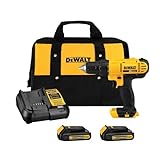
| $100–$150 | Midrange cordless drill kit, often with two batteries and a charger | Better balance of runtime, chuck grip, speed control, and support | Regular DIY use and a first cordless-tool purchase |
| $150–$300 | Higher-output drill or hammer drill; brushless models and larger batteries are common | More work per charge and less motor wear from brushes; added power may mean more weight | Frequent projects, larger holes, or joining an existing battery system |
| $300+ | Premium tool bundle, multiple batteries, charger, or specialized drill | Often pays for a system or accessories as much as for the drill itself | Heavy use, multiple tools on one platform, or a specific demanding task |
These ranges describe common configurations, not guaranteed specifications. Check whether a listed price is for a bare tool, a tool with one battery, or a kit; those are not like-for-like prices.
Choose by the work, not the price tag
- For a few small repairs a year: A basic corded drill can be sensible if you work near an outlet. If portability matters, look for an entry-level cordless kit rather than a bare tool that leaves you needing a battery and charger.
- For shelves, furniture, and regular home projects: A midrange cordless kit is often the most balanced buy. A second battery lets one charge while you work, and a clutch helps prevent driving screws too far into wood.
- For repeated drilling or larger holes: Consider a brushless drill with a battery platform you expect to keep using. Its advantages matter most during sustained or frequent work, not just because “brushless” appears on the label.
- For masonry: A hammer-drill function can help with occasional holes in brick or block when paired with the right masonry bit. For repeated work in concrete, a rotary hammer is generally the more appropriate tool.
- For cramped storage or overhead work: Compare tool weight and length, not just voltage. A compact 12V drill may be easier to control than a heavier high-output model.
Where the extra money goes
Chuck quality and control
Most general-purpose drills use a 3/8-inch or 1/2-inch chuck. A 3/8-inch chuck suits many small household bits; a 1/2-inch chuck accepts larger shanks and is common on more capable drills. Neither size guarantees a better chuck. A well-made keyless chuck should tighten securely and hold a round bit without noticeable wobble. For woodworking, that affects clean starts and consistent holes as much as the drill’s headline power.
Two speed ranges and a useful clutch are practical upgrades. Low speed gives more control when driving screws or using larger bits; high speed suits smaller twist bits. A clutch helps limit torque, but it is not a substitute for setting the correct depth or using a pilot hole where the wood may split.
Brushed versus brushless
Brushed motors use replaceable carbon brushes that wear with use. Brushless motors eliminate those brushes and can use power more efficiently, which may improve runtime or sustained output in comparable tools. The real benefit depends on the drill, battery, and workload. For a few short jobs each year, spending extra for brushless may not repay itself; for regular drilling, it can be a worthwhile durability and runtime upgrade.
Batteries and kits
Battery voltage alone does not tell you how long a drill will run. Capacity, measured in amp-hours (Ah), and the load both matter. A 2.0Ah battery is lighter and often suits quick household jobs; a larger battery can run longer but adds weight. Battery platforms also create switching costs: a bare tool can be a bargain if you already own compatible batteries, but a poor deal if you need to buy the battery and charger separately.
When a kit beats a bare tool
Compare the total cost of getting a usable setup, not the drill-only price. For example, suppose a bare tool costs $110, while the battery and charger you need would add $90 if purchased separately. The usable setup costs $200. If a kit with the same drill, one battery, and charger is available for $160, the kit saves $40—provided its battery capacity meets your needs.
A kit is especially attractive when it includes a second battery, a charger you can use with future tools, or batteries compatible with tools you already own. A bare tool makes more sense when you already have the right platform, want a lighter battery than the bundle includes, or are replacing a drill without needing another charger. Check compatibility by platform and battery generation rather than assuming that tools from the same brand all share batteries.
Ownership costs that listings don’t show
- Bits wear out: Dull bits cut slowly, create heat, and make the drill seem weak. Keep bits sharp and use the type intended for wood, metal, or masonry.
- Chucks need care: Brush away dust and tighten bits properly. A loose bit can slip, mark its shank, or damage the workpiece. Avoid holding the chuck while the motor runs.
- Dust and heat shorten life: Clear vents with a dry brush or compressed air used cautiously. Let a hot drill or battery cool before charging or returning to storage.
- Cheap kits may hide the real limitation: A low kit price can include a small battery that runs down quickly under demanding work. Look at included battery capacity and replacement cost.
- More power can be harder to manage: A strong drill can twist suddenly if a large bit binds. Use the side handle if supplied, secure the work, and choose low gear for high-torque tasks.
For most people buying their first cordless drill for woodworking and household jobs, a complete midrange kit is the safest value: enough control and runtime without paying a premium for power they may rarely use. Spend more when you drill often, need sustained output, or will use the batteries across several tools. Spend less when the work is light, infrequent, and a cord or existing battery platform already solves the practical problem.