What's inside
As an Amazon Associate I earn from qualifying purchases. This post may contain affiliate links at no extra cost to you.
What we cover
Impact Driver vs Cordless Drill for Driving Lag Screws
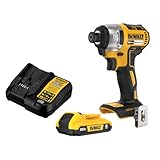
For most lag-screw work, an impact driver is faster and easier to control than a cordless drill. Its pulsing hammer action produces high twisting force without requiring you to lean heavily on the tool. A cordless drill is still the better choice when you need careful control, smooth operation, or the ability to drill large pilot holes with standard round-shank bits.
The right choice depends on the screw size, the material, and how many fasteners you need to install. Driving four 1/4-inch lag screws into softwood is not the same job as installing twenty 3/8-inch screws into pressure-treated lumber.
As an Amazon Associate we earn from qualifying purchases at no extra cost to you.


What Counts as a Lag Screw?
Traditional lag screws have a hex head and coarse threads. Modern packaging often calls similar fasteners “structural screws,” which may have a washer head or Torx drive instead of a hex head. Both types are designed to carry substantial loads in wood when installed correctly.
Lag screws are not self-drilling structural members. They usually need a clearance hole through the top board and a pilot hole into the receiving wood. Skipping those holes can split the wood, snap the screw, or leave the threads unable to develop their rated holding power.
For a conventional lag screw, the clearance hole should be approximately the diameter of the screw’s unthreaded shank through the first board. The pilot hole in the second piece should match the screw’s core diameter, not the outside diameter of the threads. Follow the screw manufacturer’s chart when one is provided.
Impact Driver vs. Cordless Drill
| Feature | Impact driver | Cordless drill |
|---|---|---|
| Best use | Driving many lag screws and structural fasteners | Drilling pilot holes and controlled fastening |
| Chuck or holder | 1/4-inch hex quick-change holder | Keyless chuck for round and hex-shank bits |
| Driving feel | Pulsing, loud, high torque | Smooth and quieter |
| Stripping risk | Low with the correct bit, but high on small screws at full power | Moderate; clutch helps prevent overdriving |
| Drilling versatility | Good with impact-rated hex bits | Better for large wood bits, spade bits, and hole saws |
An impact driver’s hammering happens in the direction of rotation. That repeated impact helps overcome friction as the lag screw enters dense lumber. It also reduces the tendency for the tool to twist your wrist. For 1/4-inch and 5/16-inch lag screws, a compact 18V or 20V cordless impact driver is normally more than capable.
A drill applies steady torque. That makes it easier to stop at a precise depth and use a clutch, but it can require more pushing force. A high-torque drill may also twist suddenly if the bit binds. For occasional household projects, a drill is often the cheaper option if you already own one.
When an Impact Driver Is the Better Choice
Choose an impact driver when you are installing a run of lag screws, fastening ledger boards, building a deck, or working with dense pressure-treated lumber. The tool is particularly useful when screws are 3 inches or longer and the pilot holes are deep.
Use a socket adapter and the correct impact-rated socket for hex-head lag screws. For structural screws with a star drive, use a properly sized impact-rated bit. Ordinary chrome sockets and cheap screwdriver bits can shatter under impact. A set of impact-rated nut drivers and sockets is a sensible purchase if you regularly install hex-head fasteners.
Do not assume more torque is always better. A powerful impact driver can bury the head below the surface, crush soft wood, shear the screw, or strip the drive recess. Start on the lowest speed or trigger setting and finish slowly. Stop when the washer or head is seated; do not keep hammering after that point.
When a Cordless Drill Is the Better Choice
A drill is preferable when the job involves as much drilling as driving. Its chuck accepts auger bits, long twist drills, Forstner bits, and hole saws without special adapters. That matters when you need a 3/8-inch pilot hole several inches deep or a large clearance hole through a beam.
The drill’s clutch is also useful for smaller lag screws, cabinet hardware, and situations where appearance matters. Set the clutch low, drive a test screw into scrap, and increase the setting only as needed. The clutch is not a reliable substitute for correct pilot holes, but it can prevent overdriving once the screw is nearly seated.
A standard drill is fine for a handful of 1/4-inch lag screws in softwood. If you already own a 1/2-inch chuck drill and the fasteners are not binding, buying an impact driver solely for that task may not save money or time.
How to Drive Lag Screws Without Breaking Them
First, mark the location and confirm that the screw will enter solid wood. A lag screw driven into the edge of a thin board or into end grain has much less reliable holding strength. Check for wiring and plumbing before drilling into framing or finished walls.
Drill the clearance hole through the outer material, then drill the pilot hole into the supporting member. For a 3/8-inch lag screw, a common starting point is a 3/8-inch clearance hole and a pilot hole around 1/4 inch in softwood, but wood species, screw design, and manufacturer instructions can change those dimensions.
Wax or dry lubricant can reduce driving resistance, especially in hardwood. Do not use excessive lubricant on structural connections where the manufacturer prohibits it. Drive the screw straight, keep the bit fully engaged, and use a washer under a conventional hex head.
If the impact driver stalls, stop rather than holding the trigger. The pilot hole may be too small, the screw may be too long for the available depth, or the bit may be damaged. Back the screw out, clear the hole, and inspect the threads. A snapped lag screw is difficult to remove and may require drilling out the remaining shaft.
What to Buy
If you are starting from scratch, a drill-and-impact-driver kit offers the most useful combination: drill pilot holes with the drill and drive fasteners with the impact driver. Look for brushless tools, two speed ranges, a variable-speed trigger, and at least one compact battery. A brushless drill and impact-driver combo kit is usually better value than buying two bare tools separately.
If your work is occasional, buy neither automatically. Your existing cordless drill, a sharp pilot bit, and the correct socket adapter may handle the job. Buy an impact driver when repeated lag-screw work, dense lumber, or wrist fatigue makes the drill inconvenient. Buy a better drill instead when drilling capacity and precise control matter more than maximum driving speed.