What's inside
As an Amazon Associate I earn from qualifying purchases. This post may contain affiliate links at no extra cost to you.
Choosing the right kids sewing machine is harder than it looks. Parents and grandparents want a device that actually stitches fabric together without jamming every few minutes, yet remains safe enough for small fingers. The market is flooded with machines that blur the line between functional tool and plastic toy, making it easy to spend money on something that frustrates a child rather than teaching them a skill. After comparing published specifications, current retail prices, and owner feedback across dozens of models, we narrowed the field to eight standout options for 2026.
The concrete problem buyers face is finding the balance between capability and safety. A good kids sewing machine offers straightforward threading, manageable speed control, and built-in protections like finger guards or enclosed needle areas. A bad one hides behind flashy packaging while delivering skipped stitches, fragile internal gears, or dangerous exposed moving parts. We evaluated each model below based on what owners report about durability, ease of setup, and how well the machine handles basic fabrics, so you can match the right tool to your child’s age and interest level.
As an Amazon Associate we earn from qualifying purchases at no extra cost to you.




What we cover
Quick Picks
| Product | Best for | Price |
|---|---|---|
| CraftBud Mini Sewing Machine | Overall beginners | $49.99 |
| Electric Mini Sewing Machine with Full Kit | Complete starter bundles | $42.99 |
| Made By Me My Very Own Sewing Machine | Youngest beginners (8+) | $25.78 |
| KPCB Tech Sewing Machine | Safety-conscious parents | $39.99 |
| TUZT Mini Sewing Machine Toy Kit | Gift giving (ages 4-12) | $29.99 |
| Brother XM2701 | Serious older kids | $149 |
| Portable Sewing Machine with 32-Color Thread Kit | Craft variety | $39.99 |
| WeeHomm Kids Sewing Machine Toy Kit | Toddlers and preschoolers (3-12) | $29.99 |
How We Picked
When evaluating a kids sewing machine, four criteria separate reliable tools from disposable novelties: safety features, ease of use, included accessories, and real-world owner satisfaction. Safety means looking for finger guards, enclosed bobbin areas, and stable bases that prevent tipping during operation. Ease of use covers threading simplicity, intuitive speed controls, and clear instructions that children can follow with minimal adult intervention. Accessories matter because a machine that arrives with thread, fabric scraps, and bobbins lets a child start immediately without requiring a separate shopping trip. Finally, we cross-referenced published specs with owner feedback to identify which machines maintain consistent stitch quality over time versus those prone to early mechanical failure.
The 8 Best Kids Sewing Machine in 2026
CraftBud Mini Sewing Machine
The CraftBud Mini targets both adults and kids who need a straightforward introduction to sewing. It bridges the gap between toy-like novelty machines and heavy-duty household models, offering a compact footprint suitable for smaller workspaces. Owners frequently praise its approachable learning curve, making it an excellent choice for families where multiple age groups might share the device.
- Pro: Simple threading mechanism that reduces frustration for first-time users.
- Pro: Compact size makes it easy to store in closets or craft cabinets.
- Con: Lacks advanced stitch variations for complex projects.
Skip this if your child already has intermediate sewing experience and requires multiple decorative stitch patterns for garment construction.
Electric Mini Sewing Machine with Full Kit
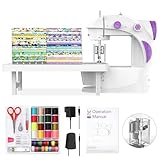
This dual-speed portable machine is designed for mending and DIY crafts, arriving with a comprehensive accessory package including a foot pedal and extension table. It appeals to practical buyers who want everything needed for immediate project work bundled into a single purchase. The inclusion of an extension table provides valuable extra workspace for guiding fabric smoothly.
- Pro: Dual speed settings allow beginners to start slowly before increasing pace.
- Pro: Comes with a full sewing kit, eliminating the need for separate supply runs.
- Con: The abundance of included parts can feel overwhelming for very young children to organize.
Skip this if you prefer buying supplies separately or only need a bare-bones machine without the extra table attachment.
Made By Me My Very Own Sewing Machine
Explicitly marketed for kids ages eight and up, this battery-powered option removes the complication of power cords entirely. It ships with fabric, thread, measuring tape, and stuffing, positioning itself as a complete first-project solution rather than just a hardware purchase. It is ideal for younger crafters whose primary goal is completing simple stuffed items or basic seams.
- Pro: Battery operation allows completely cordless crafting anywhere in the house.
- Pro: Included materials mean children can begin their first project immediately out of the box.
- Con: Battery power limits sustained torque, making thicker fabrics difficult to penetrate.
Skip this if your child intends to sew denim, canvas, or multiple layers of heavy material regularly.
KPCB Tech Sewing Machine
The KPCB Tech mini stands out by bundling practice fabrics directly with the machine alongside a dedicated finger guard. This combination signals a strong focus on safety and guided learning, appealing to cautious parents introducing sewing to hesitant children. The mini size keeps the machine unintimidating while providing enough functionality for genuine stitching tasks.
- Pro: Built-in finger guard significantly reduces the risk of needle-related accidents.
- Pro: Included practice fabrics let kids build confidence before cutting into preferred materials.
- Con: The miniature frame restricts the maximum width of fabric you can comfortably maneuver.
Skip this if you need a machine capable of handling wide panels for quilting or larger clothing alterations.
TUZT Mini Sewing Machine Toy Kit
Marketed as a gift for kids aged four to twelve, this twenty-two-piece kit leans heavily into the toy category while maintaining electric sewing functionality. It includes a built-in light and a finger guard, addressing two common parental concerns simultaneously. Buyers looking for birthday or holiday presents often favor this model due to its colorful packaging and comprehensive unboxing experience.
- Pro: Integrated lighting helps children see the needle area clearly in dim rooms.
- Pro: Extensive piece count provides a satisfying, complete kit presentation for gifting.
- Con: Its toy-oriented construction may not withstand daily, rigorous use over several years.
Skip this if you prioritize long-term mechanical durability over initial presentation and accessory count.
Brother XM2701
The Brother XM2701 operates in a different tier entirely, offering twenty-seven built-in stitches in a portable format. Unlike the other entries here, this is a genuine entry-level sewing machine suited for older kids or teenagers ready to transition from basic crafting to actual garment creation. Owner feedback consistently highlights its reliability compared to cheaper alternatives.
- Pro: Twenty-seven stitch options provide genuine versatility for clothing and decorative work.
- Pro: Backed by Brother’s established reputation for durable, serviceable sewing equipment.
- Con: The higher price point represents a significant investment compared to toy-grade machines.
Skip this if your child is under ten or only interested in occasional, simple craft projects rather than serious sewing.
Portable Sewing Machine with 32-Color Thread Kit
This compact electric machine distinguishes itself with twelve built-in stitches, reverse sewing capability, and a massive thirty-two-color thread kit. It targets creative kids who want variety in their projects without constantly purchasing new supplies. The addition of reverse sewing is a notable feature at this price range, allowing for secure seam finishing.
- Pro: Reverse sewing function enables professional-looking backstitching to lock seams.
- Pro: Thirty-two thread colors encourage creative experimentation without additional purchases.
- Con: Managing such a large thread collection requires dedicated storage space to prevent tangles.
Skip this if your child prefers working with a limited, curated color palette or finds large kits distracting.
WeeHomm Kids Sewing Machine Toy Kit
Aimed at girls aged three to twelve, the WeeHomm kit functions primarily as a craft gift that introduces the concept of sewing through play. It is the most toy-forward option on this list, prioritizing engagement and imaginative play over precision stitching. Parents seeking a gentle, low-stakes introduction to needles and thread for preschool-aged children gravitate toward this model.
- Pro: Extremely approachable design lowers the intimidation factor for toddlers and preschoolers.
- Pro: Functions effectively as both a standalone toy and a preliminary educational tool.
- Con: Older children will quickly outgrow its limited functional capabilities.
Skip this if your child is already reading patterns or expressing interest in making wearable items independently.
Buying Guide
Safety Mechanisms and Needle Guards
When buying a kids sewing machine, physical safety features should dictate your shortlist. Look for models that incorporate transparent finger guards positioned directly around the needle plate. These barriers prevent small fingers from slipping beneath the presser foot during operation. Additionally, consider whether the machine uses a drop-in bobbin system, which is generally safer and easier for children to load than front-loading alternatives that require reaching near internal mechanisms.
Speed Control and Power Options
Children need predictable speed management to develop coordination safely. Machines offering dual-speed switches are preferable to those with a single fast setting, as they allow beginners to practice hand-eye alignment at a crawl before accelerating. You must also choose between battery-powered and plug-in models. Battery units offer cordless freedom but sacrifice consistent torque, while AC adapters deliver steady power necessary for pushing needles through denser fabrics reliably.
Included Accessories Versus Long-Term Value
Bundled kits look impressive, but evaluate whether the included threads, bobbins, and fabrics meet standard sizing. Proprietary bobbins or unusually sized spools force you into buying brand-specific replacements later. A machine accepting standard-sized bobbins and universal needles ensures your child can continue using the device as their skills grow. Prioritize models where the core machine is robust, treating accessories as a welcome bonus rather than the primary selling point.
Our Verdict
The CraftBud Mini Sewing Machine earns our top pick for its balanced combination of user-friendly operation, compact design, and broad appeal across beginner skill levels. If budget is your primary constraint, the Made By Me My Very Own Sewing Machine at $25.78 serves as our budget pick, delivering a complete, battery-powered starter experience without sacrificing basic functionality. However, if your child is older, highly motivated, and ready to construct actual garments, the Brother XM2701 wins outright; its twenty-seven stitches and proven mechanical reliability justify the premium price for anyone graduating beyond introductory crafts.
FAQ
What age is appropriate for a kids sewing machine?
Most toy-style machines target children between four and eight years old, focusing on basic motor skills and supervised play. Functional mini machines suit ages eight and up, while full-featured portable models like the Brother XM2701 are better reserved for pre-teens and teenagers who understand machine safety protocols.
Can a kids sewing machine handle thick fabrics like denim?
Generally, no. Most machines in this category are engineered for lightweight cottons, felt, and craft fabrics. Attempting to sew heavy denim or multiple thick layers risks jamming the motor or bending the needle. For heavier materials, a standard household machine with adjustable presser foot pressure is required.
Are battery-powered sewing machines powerful enough for real projects?
Battery-powered models are sufficient for simple straight seams on thin materials and introductory practice. They lack the sustained electrical torque provided by wall outlets, meaning they struggle with continuous sewing sessions or slightly thicker textiles. Choose plug-in models for anything beyond basic craft assembly.
Do these machines require special replacement parts?
Many mini machines accept standard universal needles, which are inexpensive and widely available. However, bobbin sizes vary significantly between brands. Always verify whether a machine uses standard Class 15 bobbins or proprietary sizes before purchasing, as proprietary bobbins can be difficult to source once the original supply runs out.