What's inside
As an Amazon Associate I earn from qualifying purchases. This post may contain affiliate links at no extra cost to you.
Molly bolts and toggle bolts both anchor fixtures in hollow walls by opening behind the wall surface. The difference is how they spread the load. A molly has a metal sleeve that expands against the back of the wall as you tighten its screw. A toggle uses a bar, wings, or strap-backed mechanism that opens behind the wall and bears on a wider area.
For light fixtures and small shelves, a properly sized molly is often simpler and easier to reuse. For heavier loads, especially where the wall material is weak or the fixture stands away from the wall, a toggle usually offers more support. Neither is a substitute for fastening into a stud when the fixture is heavy, safety-critical, or subject to repeated movement.
As an Amazon Associate we earn from qualifying purchases at no extra cost to you.


What we cover
How each anchor works
A molly bolt is a metal sleeve with a screw inside. As you tighten the screw, the sleeve folds or expands behind the drywall. Some versions need a setting tool to form the sleeve before the fixture goes on; others set as you tighten them. Once installed, the sleeve stays in the hole, and you can remove and replace the screw.
A traditional toggle bolt has a spring-loaded metal bar that folds to pass through a drilled hole, then opens behind the wall. You tighten the screw to pull the bar against the back of the drywall. The screw and fixture must usually be removed together: once the screw is out, the toggle bar can fall into the wall cavity.
Strap toggles use a plastic strap and a metal channel instead of a loose winged bar. They are easier to position and can be convenient in tight spaces, but the plastic parts and required hole size vary by product. Follow the package rating and instructions rather than treating all toggles as interchangeable.
Molly bolts vs. toggle bolts
| Feature | Molly bolt | Toggle bolt |
|---|---|---|
| Wall opening | Usually a smaller, close-fitting hole | Often a larger hole to pass the folded bar or channel |
| Best advantage | Neat installation and a screw that can be removed and replaced | Wide bearing area behind the wall |
| Main drawback | Can crush or pull out of weak drywall if overtightened or overloaded | Can fall into the cavity when the screw is removed; needs clearance behind the wall |
| Typical use | Light-to-medium fixtures that sit close to the wall | Heavier loads or fixtures needing a stronger spread across the wall back |
| Reuse | Remove and reinstall the screw, if the anchor remains sound | Usually keep the screw and toggle together; a loose toggle may be lost in the wall |
Published load ratings depend on anchor size, wall thickness, drywall condition, installation, and whether the load pulls straight down or away from the wall. Treat package ratings as best-case guidance, not a promise for an old, damp, cracked, or patched wall. For a pair of anchors, do not assume the combined rating is simply twice one anchor’s rating: a poorly placed hole or uneven load can make one do most of the work.
Which one should you buy?
Choose a molly when the fixture is relatively light, sits flat against sound drywall, and you expect to remove its screw later—for example, a small wall bracket or a modest towel hook. A metal molly is generally a better choice than a plastic expansion plug for a load-bearing fixture in hollow drywall. Buy an assortment that matches the wall thickness and screw size, and use a setting tool if the anchor instructions call for one.
Choose a toggle when the load is heavier, the fixture has a broad bracket with multiple mounting points, or you want the anchor to bear over a wider area behind the drywall. A toggle may also be the better option when a molly’s sleeve would be close to the edge of a thin or somewhat weak hole. You still need enough space behind the wall for the bar to open; pipes, wiring, insulation, or a stud can block it.
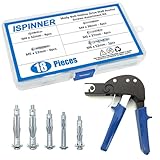
If you are buying for occasional home repairs, a small selection of metal molly anchors is inexpensive and covers many light-duty jobs. For a stronger hollow-wall fastening system, compare strap toggle anchors for drywall. For standard winged versions, look at metal toggle bolts in several sizes. Buy by the wall thickness and screw diameter the job needs, not by the largest load figure on the package.
Install without damaging the wall
First, check for a stud, pipe, and wiring. A stud finder helps, but it is not infallible; avoid drilling where plumbing or electrical runs are likely. If you can hit a stud with a suitable screw, that is usually a more dependable choice than either hollow-wall anchor.
Use the drill-bit diameter specified on the anchor package. A hole that is too small can deform a molly or prevent a toggle from passing through. A hole that is too large leaves the anchor loose and makes pullout more likely. Hold the drill perpendicular to the wall and use steady pressure. For drywall, a standard drill is normally enough; hammer mode can tear the paper face and enlarge the hole. A cordless drill with a clutch is useful for driving screws because it helps prevent over-tightening.
For a molly, seat the sleeve straight and set it as directed. If you are using a setting tool, stop when the sleeve is firmly expanded; excessive force can crush the drywall core. For a toggle, fold the bar fully, push it through the hole, and pull it back against the wall before tightening. Keep the screw engaged as you position the fixture so the toggle does not disappear into the cavity. Tighten until the bracket is snug, not until the drywall dimples.
Failure signs and when to choose something else
A spinning anchor, a screw that will not tighten, a growing hole, crushed drywall, or a fixture that moves when pushed are reasons to stop and reassess. Do not solve a loose anchor by forcing in a larger screw unless the anchor is designed for it. The wall material may already be damaged. Move the fastener to fresh material, use a backing board secured to studs, or repair the wall before reinstalling.
For cabinets, grab bars, ceiling fixtures, or anything that could injure someone if it falls, use framing or a properly installed structural backing rather than relying on drywall alone. For a heavy shelf, fix a rail or cleat into studs and use hollow-wall anchors only for additional support between them. A toggle is stronger than a small molly in many hollow-wall situations, but neither turns a weak wall into a solid one.