What's inside
As an Amazon Associate I earn from qualifying purchases. This post may contain affiliate links at no extra cost to you.
There is a specific frustration that drives people to search “open sd card on computer” at eleven at night: you shoot all day, come home, plug your camera card into the built-in reader, and nothing happens. Sometimes the card is simply not formatted for your machine. Sometimes the slot is USB 2.0 and chokes on a 256GB card full of 4K footage. The solution usually requires one of two things—a faster card reader or a memory card that actually matches what your system can handle.
This roundup covers both sides of that equation. Some entries are storage cards designed to be pulled from a camera and read on a desktop or laptop. Others are readers and adapters that solve the “why can’t my computer see this card” problem. After comparing published specs, street prices, and what owners report across several retail sites, the distinction between a worthwhile purchase and a frustrating one comes down to interface speed, capacity match, and whether the hardware plays nice with the operating system you already use.
As an Amazon Associate we earn from qualifying purchases at no extra cost to you. Product prices and availability are accurate as of the date shown and are subject to change.




Quick Picks
| Product | Best for | Price |
|---|---|---|
| SanDisk 128GB Ultra (140MB/s) | Reliable mid-range capture and transfer | $34.70 |
| Acer USB 3.0 Card Reader | Plug-and-play simplicity on any PC | $12.99 |
| 7-in-1 Multi Card Reader | Photographers juggling multiple card formats | $16.99 |
| INDMEM 2GB Class 4 SD Card | Legacy devices and old camera bodies | $11.49 |
| VIENON 8-in-1 USB Hub | Adding a card slot to a laptop with none | $7.99 |
| USB-C Type C SD/TF Reader | iPhone, iPad, and modern laptop users | $9.99 |
| SanDisk 128GB Ultra (100MB/s) | Budget-conscious capture in 2026 | $32.41 |
| SanDisk 256GB Extreme PRO | High-volume 4K and burst photography | $88.99 |
How We Picked
We weighted three criteria: interface throughput (whether the card or reader can sustain speeds that matter for real files), compatibility across the operating systems people actually run, and value at the listed street price. A card that reads at 200MB/s but costs nearly three times a 140MB/s alternative only wins if your workflow justifies the delta. Similarly, a reader priced under ten dollars earns a spot if owners confirm it mounts cards without driver headaches.
The 8 Best Open SD Card On Computer in 2026
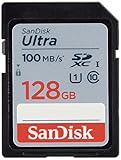
SanDisk 128GB Ultra (140MB/s)
- UHS-I bus with up to 140MB/s read keeps transfer times short even on modest USB 3.0 ports
- Widely available and consistently recognized by Windows, macOS, and most camera firmware
- Write speeds lag noticeably behind the read spec during sustained bursts
This is the card most people should reach for when their priority is getting footage off a camera and onto a computer quickly. Owners praise the out-of-box compatibility; you pop it in a reader and the drive mounts. The main trade-off is that write performance is closer to UHS-I’s real-world ceiling than the headline read number suggests. If you shoot long continuous bursts or record high-bitrate video, the 100MB/s version below is not the same card—this one handles it better. Skip it if you need more than 128GB per shoot.
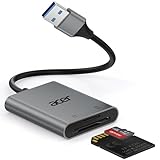
Acer USB 3.0 Card Reader
- Aluminum shell dissipates heat during long transfers, something plastic readers struggle with
- USB-A 3.0 connector works on virtually any desktop or laptop without a dongle
- Only supports standard SD and microSD, no CF or XQD fallback
If your problem is that your computer simply cannot open an SD card—no built-in slot, dead slot, or wrong format—this reader solves it for under thirteen dollars. The metal housing is a tangible upgrade over the flimsy plastic units bundled with cameras, and owners report fewer disconnects during large transfers. It is not a multi-format tool, so photographers who also handle CF or Memory Stick cards will need something broader. Skip it if your ports are all USB-C and you have no adapters handy.
7-in-1 Multi Card Reader
- Reads seven cards simultaneously, letting you offload an entire shoot without swapping slots
- Includes both USB-A and USB-C cables plus a Micro-B connector for broad compatibility
- Bulkier on a desk than single-slot readers; not ideal for tight workspaces
This is the answer for studio shooters and wedding photographers who fill multiple cards in a single day. Five gigabits per second over USB 3.0 means the aggregate throughput stays high even when several slots are active. The included cables remove the usual “where’s the right dongle” friction. Owners note the footprint is larger than expected, so it sits best on a dedicated edit desk rather than a laptop tray. Skip it if you only ever carry one card at a time.
INDMEM 2GB Class 4 SD Card
- SLC architecture gives it a longer write-cycle endurance than cheaper TLC alternatives
- Works in older cameras, industrial controllers, and embedded systems that reject larger or faster cards
- 2GB capacity is a severe limitation for any modern digital workflow
This card exists for a narrow but real reason: some devices simply will not recognize anything above 2GB or slower than Class 4. Owners buying it for old camcorders, point-and-shoots, or industrial equipment consistently confirm it solves the “card not detected” problem that modern high-capacity cards create on legacy hardware. It is not a recommendation for anyone with a current camera. Skip it entirely if your goal is to open an SD card on a computer for storage or backup.
VIENON 8-in-1 USB Hub with Card Reader
- Combines six USB 2.0 expansion ports with SD and microSD readers in a single $7.99 unit
- Three-foot cable reaches across a desk, letting you keep the hub in a convenient position
- USB 2.0 throughput caps read and write speed at roughly 480Mbps regardless of card class
For anyone whose primary need is “my laptop has no card slot and only two USB ports,” this hub eliminates the problem at the lowest cost in this roundup. The card-reading function works reliably for SDHC and SDXC formats. The limitation is bandwidth: USB 2.0 will take noticeably longer to dump a 128GB card than a USB 3.0 path. Owners accept the trade-off because of the price. Skip it if you transfer large files frequently and speed matters more than port count.
USB-C Type C SD/TF Card Reader
- Native USB-C connector drops straight into modern phones, iPads, and MacBooks without an adapter
- USB 3.0 data path gives real speed on devices that support it
- White plastic housing can look mismatched on darker device setups
Apple’s shift to USB-C across iPhones and iPads created a sudden demand for readers that let you open an SD card on a computer or tablet without iTunes or a camera app. This unit fills that gap with minimal friction—plug in, mount, browse. Owners confirm it works on iPadOS and macOS out of the box. The extra USB-A port on the side adds utility when you also need to connect a flash drive. Skip it if your ecosystem is entirely older USB-A hardware.
SanDisk 128GB Ultra (100MB/s)
- Class 10 and U1 rating covers Full HD video recording without dropped frames
- Often sits a few dollars below the 140MB/s sibling, making it the value entry in SanDisk’s lineup
- Lower sustained write ceiling means 4K footage may stutter on demanding bodies
If your camera records 1080p and your main priority is cost per gigabyte, this card does the job. Owners moving from generic no-name cards consistently report fewer corruption events and cleaner mounts on their computers. It is the same form factor as the 140MB/s version, so swapping between them requires no new reader or slot. Skip it if you record anything above Full HD or need burst-mode reliability.
SanDisk 256GB Extreme PRO
- Up to 200MB/s read is the fastest spec in this group, cutting large-file transfers meaningfully
- 256GB capacity holds a full day of 4K shooting without mid-session card swaps
- Priced at nearly triple the 128GB Ultra, and the speed gain is invisible on USB 2.0 paths
This is the card for professionals whose time is worth more than the price delta. Shooting RAW stills or 4K video in volume, the extra throughput and capacity compound into fewer transfers and less waiting. Owners with compatible UHS-II-capable readers report the speed claims hold up in real sessions. The catch is that pairing it with a cheap USB 2.0 hub wastes the performance. Skip it if your camera caps out well below UHS-II and your computer only has legacy ports.
Buying Guide
Match Interface Speed to Your Actual Ports
A 200MB/s card plugged into a USB 2.0 reader is functionally identical to a 48Mbps card. Before buying, check what your computer’s ports support. USB 3.0 (sometimes labeled 3.1 Gen 1 or SuperSpeed) gives you the 5Gbps ceiling needed to approach the read speeds on modern SanDisk cards. USB-C is the connector shape; the protocol behind it determines actual throughput. If your machine only has USB-A 2.0, a multi-port hub or a new laptop is a higher-leverage purchase than a faster card.
Choose Capacity Based on File Size, Not Headline Number
Owners who overbuy capacity report the extra cost sits unused; owners who underbuy describe interrupted sessions and card swaps mid-shoot. Estimate your file sizes: a 24-megapixel RAW is roughly 25-30MB per frame, while a minute of 4K All-Intra can exceed 500MB. Multiply by your typical session length and add a safety margin. For most hobbyists, 128GB covers a full weekend trip. Working photographers who shoot all-day events will feel the difference at 256GB.
Verify Format Compatibility Before Opening the Card
The most common reason someone searches how to open an SD card on a computer is a file system mismatch. Cameras typically format to FAT32 (cards up to 32GB) or exFAT (larger cards). Older Windows systems and embedded Linux controllers may not read exFAT natively. If your card mounts as “unreadable” or shows zero bytes, reformatting on the computer to the file system your camera expects will fix it—but only after you recover any data. Buy cards pre-formatted to exFAT if your device supports it, and keep a reader handy for emergency reformatting.
Our Verdict
Top pick: the SanDisk 128GB Ultra at 140MB/s. It hits the sweet spot of price, capacity, and real-world transfer speed for the widest range of users. Budget pick: the VIENON 8-in-1 USB Hub at $7.99. It is the cheapest reliable way to add a card slot to a machine that lacks one, and the extra USB ports justify it even if you never touch the card reader again. Condition where another product wins: if you shoot 4K video or high-volume RAW on a camera with a UHS-II slot, the SanDisk 256GB Extreme PRO pays for itself in time saved per transfer.
FAQ
Why won’t my computer open my SD card?
The most frequent causes are a corrupted or incompatible file system, a faulty or underpowered reader, or a physical slot that has lost contact. Try a different USB port, a different reader, or formatting the card after backing up data if the computer detects it but cannot mount it.
Can I use a USB hub to read an SD card?
Yes, as long as the hub supports the protocol speed your card requires. A USB 2.0 hub will mount the card but will transfer large files slowly. USB 3.0 hubs handle high-speed cards without a bottleneck, though bus-powered models may struggle with multiple high-draw devices simultaneously.
Is a card reader faster than the built-in slot on my laptop?
Frequently yes, especially on older laptops where the built-in reader is USB 2.0 or a proprietary implementation with limited driver support. A dedicated USB 3.0 reader in the $10-17 range typically matches or exceeds what a laptop slot delivers, and it is easier to replace if it fails.
Do SD cards expire or wear out?
Flash memory cells have a finite write-erase cycle count, so heavy re-use over several years can degrade a card. Most consumer cards last well beyond the camera’s practical lifespan under normal use, but keeping backups on a computer or external drive removes the risk of total data loss when a card does fail.