What's inside
As an Amazon Associate I earn from qualifying purchases. This post may contain affiliate links at no extra cost to you.
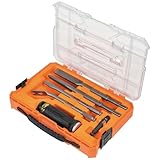
A good SDS-plus drill bit set for most homeowners and remodelers covers 3/16, 1/4, 5/16, 3/8 and 1/2 inch (or 5–12 mm) in roughly 6-inch overall length, with a 4-cutter carbide head if you expect to hit rebar or aggregate, and a plain 2-cutter head if you mostly drill brick and block. That covers almost every concrete screw, wedge anchor and wall plug you will install. The brand matters less than three things: the size mix, the tip design and whether the lengths match your anchor depths.
As an Amazon Associate we earn from qualifying purchases at no extra cost to you.


What we cover
What “SDS-plus” means and why the shank matters
SDS-plus is a standard 10 mm shank with two open grooves, where the chuck’s locking balls ride, and two closed slots, which drive rotation. The bit slides back and forth in the chuck, so the rotary hammer’s piston hits the shank end directly. That is why an SDS-plus rotary hammer drills concrete several times faster than a hammer drill with a three-jaw chuck. Every SDS-plus bit fits every SDS-plus rotary hammer, whatever the brand. A Bosch, Makita, DeWalt or Milwaukee bit works in any of their tools, so you can buy the set and the hammer separately.
SDS-plus is not SDS-max. SDS-max uses an 18 mm shank for large rotary hammers and bits from about 1/2 inch up. If your tool is a compact or mid-size rotary hammer, which covers most cordless 18V/20V models, you need SDS-plus.
Sizes: match the set to the anchors you actually use
Most set buyers end up with sizes they never touch and wear out the two they use daily. Start from your fasteners:
| Fastener | Fastener diameter | Bit diameter needed | Typical embedment | Bit length that works |
|---|---|---|---|---|
| Blue concrete screw (Tapcon-style) | 3/16″ | 5/32″ | 1″–1-3/4″ | 4″–6″ overall |
| Blue concrete screw (Tapcon-style) | 1/4″ | 3/16″ | 1″–1-3/4″ | 4″–6″ overall |
| Plastic wall plug (6 mm) | about #8–#10 screw | 1/4″ or 6 mm | 1″–1-1/2″ | 6″ overall |
| Wedge anchor | 3/8″ | 3/8″ | 1-5/8″ minimum + 1/2″ | 6″ overall |
| Sleeve anchor | 3/8″ | 3/8″ | 1-1/2″ or more | 6″–8″ overall |
| Wedge anchor | 1/2″ | 1/2″ | 2-1/4″ minimum + 1/2″ | 6″–10″ overall |
| Drop-in anchor | 3/8″ (internal thread) | 1/2″ | 1-9/16″ | 6″ overall |
Always check the anchor maker’s data sheet for exact embedment and hole depth. Drilling about 1/2 inch deeper than the anchor’s length gives the dust somewhere to go. In practice, 5/32, 3/16 and 3/8 inch get the most use, so a set with only one bit of each size runs out at the worst moment. Plenty of pros buy a modest set and then add spare 3/16 and 3/8 inch bits.
2-cutter vs. 4-cutter heads
| Feature | 2-cutter (single carbide plate) | 4-cutter (cross-shaped carbide head) |
|---|---|---|
| Hole roundness | Good in brick and block, can go oval in hard aggregate | Rounder holes, which matters for wedge anchor holding |
| Rebar contact | Tends to snag and bind | Rides over rebar better, less kickback |
| Speed in soft masonry | Fast | Similar, slightly slower in some sizes |
| Price per bit | Lower | Often 1.5–2x the 2-cutter price |
| Best fit | Brick, block, mortar, occasional slab | Poured concrete, slabs, foundations, commercial work |
Most brands sell both levels. Bosch’s Bulldog line covers the general-use tier in North America, and Bosch’s Expert SDS-plus line is the premium multi-cutter tier sold in Europe. Milwaukee’s MX4 bits are 4-cutter, and DeWalt and Makita each sell both value sets and premium 4-cutter bits. Within one brand, the premium tier usually lasts noticeably longer in poured concrete. In brick it rarely makes a difference.
Makita vs. Bosch SDS drill bit sets
Buyers often compare Makita and Bosch sets because both sell many count and length combinations:
- Bosch SDS-plus sets come in many sizes, from 5-piece starter sets to larger cases with chisels. Spare single bits are sold everywhere, so replacing your most-used sizes is easy. The Bulldog general tier carries a wide size range in both inch and metric.
- Makita SDS-plus sets are often bundled in a hard case sized to fit next to a Makita rotary hammer. The brand offers both general and premium 4-cutter options. Inch sizes in the US are somewhat less common in single-bit form than Bosch.
Either works in any SDS-plus tool. Choose by size mix and by how easy it is to buy single replacement bits locally, not by matching the logo on your rotary hammer.
Decision matrix: which set to buy
| Your situation | Set to look for | Rough price range |
|---|---|---|
| Homeowner, a few anchors a year in block or brick | 5–7 piece 2-cutter set, 5/32″–1/2″, 6″ length | $20–$45 |
| Remodeler mounting ledger boards, railings and sill plates | 4-cutter 5-piece set + extra 3/16″ and 3/8″ bits | $50–$110 |
| Electrician or plumber drilling through walls | Set with 12″–18″ long bits in 3/8″–3/4″ | $60–$150 |
| Tile removal and demo, plus drilling | Combo set with flat and point chisels | $40–$90 |
| Metric anchors (European plugs) | 5, 6, 8, 10, 12 mm set | $20–$60 |
Durability and what wears first
- Carbide corners wear first. Once the outer edges round off, holes come out undersized and concrete screws spin in place. If a 3/16-inch bit starts producing loose-fitting holes, compare its tip with a new bit. A worn bit is visibly narrower at the corners.
- Shank ends mushroom on cheap bits after long use. Grease the shank lightly with SDS grease or the tube that came with the hammer, and clean the grooves so the bit slides freely.
- Heat kills carbide brazing on older 2-cutter designs. Let the hammer do the work, and do not lean on the tool with full body weight.
- Flutes clog in deep holes. Pull the bit out every inch or so in deep holes to clear dust, and vacuum the hole before setting anchors. Dust left behind cuts the holding power of wedge and sleeve anchors.
Common buying mistakes
- Buying a 17-piece set full of sizes that do not match any anchor you own.
- Picking lengths too short to pass through drywall or furring strips and still reach full embedment.
- Assuming SDS-plus bits fit a regular hammer drill. They do not without an adapter, and that adapter wastes most of the rotary hammer’s advantage.
- Using SDS-plus bits on hammer-only (chisel) mode. That breaks bits fast. Drilling needs rotation plus hammer.
Pick the set by anchor sizes first, cutter design second and brand last. Then buy spares of the two sizes you use most.