What's inside
As an Amazon Associate I earn from qualifying purchases. This post may contain affiliate links at no extra cost to you.
Old brick often looks hard from the outside but can be fragile, soft, or uneven inside. For small holes, a cordless hammer drill is usually a better choice than a rotary hammer: it is lighter, easier to control, and less likely to break out the edges of a mortar joint. The right setup matters more than maximum power. Use a sharp masonry bit, start slowly, and stop if the mortar crumbles or the brick begins to crack.
As an Amazon Associate we earn from qualifying purchases at no extra cost to you.



What we cover
Choose the right drill for the job
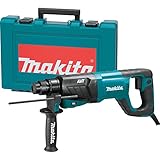
A standard drill can make a small hole in soft mortar, but it may stall or overheat in hard material. A hammer drill adds a rapid forward tapping action while the bit rotates. That helps it cut masonry faster, but it also makes the tool noisier and more prone to wandering. For holes roughly 1/8 to 3/8 inch wide, a good cordless hammer drill is generally the practical choice.
A rotary hammer uses a different, more forceful hammering mechanism. It is useful for repeated holes, larger anchors, or hard concrete, but it can be too aggressive for old mortar. If the joint is crumbling, no drill will make it sound; a low-speed drill setting or hand tool may preserve more material. For occasional small holes, a basic cordless hammer drill kit is usually enough. Pay for a rotary hammer only if the work calls for it.
What to look for when buying
For mortar-joint work, prioritize controllable speed, a clutch, a side handle, and a hammer mode that can be switched off. A two-speed gearbox is useful: the low range gives better control when starting a hole, while the high range speeds up drilling once the bit is seated. A 1/2-inch chuck is common and accepts a broad range of bits, though the chuck size does not mean you should make a half-inch hole in old masonry.
Battery size is a trade-off, not a power rating. A compact 2.0 Ah battery keeps the drill lighter and is plenty for a few small holes. A 4.0 or 5.0 Ah pack lasts longer, but adds weight and can make overhead work tiring. Brushless models tend to run more efficiently and last longer per charge, but a brushed drill is a reasonable buy for occasional home use. Compare tools by feel and control, not by advertised torque alone; high torque can make a bit bind harder if it catches.
Drill types at a glance
| Tool | Best use | Trade-off for old mortar |
|---|---|---|
| Standard drill | Small holes in soft mortar; light household use | May drill slowly or stall in hard joints |
| Cordless hammer drill | Occasional small anchor and masonry holes | More control than a rotary hammer, but can still damage weak joints |
| Rotary hammer | Frequent, larger holes in concrete or sound masonry | Often too forceful for fragile mortar; heavier and costlier |
Use a bit and anchor that fit
Choose a carbide-tipped masonry bit sized for the anchor, not one selected by guesswork. A worn bit rubs instead of cutting, which creates heat and encourages you to push too hard. Keep a spare if you have several holes to make. A carbide-tipped masonry bit set is useful for common small diameters, but check that the shank fits your drill’s chuck.
Match the fixing to the material. A plastic masonry plug needs a snug hole in sound material; in a soft, crumbly joint it may spin or pull out. For light items, consider a fixing designed for masonry or use a nearby sound brick if the item can be repositioned. Heavy shelves, gates, or overhead loads need a fixing rated for the actual substrate and load. Do not assume an anchor is safe just because it fits the hole.
How to drill without wrecking the joint
First, inspect the joint and brush away loose grit. If a screwdriver or awl easily digs deep into the mortar, stop and reassess: the joint may need repair rather than drilling. Check for pipes and wiring, mark the hole, and hold the drill square to the wall. A small piece of masking tape can help mark the bit depth; set the depth stop if the drill has one. For a typical small plug, drill only as deep as its specified hole, often around 1 1/2 to 2 inches, rather than drilling extra depth by habit.
Start with the drill in ordinary rotation mode at low speed and light pressure to keep the bit from skating. Once it has started a shallow pilot, switch to hammer mode if the mortar is resisting. Let the bit do the work. Heavy pressure can make the bit overheat, widen the hole, or punch through the back of a thin joint. Withdraw the bit every few seconds to clear dust, especially in a deep hole. If the bit stops cutting, gets hot, or the hole begins to enlarge, stop; continuing usually makes the result worse.
Wear eye protection and a suitable dust mask. Masonry dust is harmful to breathe, and drilling overhead makes it more likely to fall into your face. Keep both hands on the drill when using hammer mode. If it binds, release the trigger rather than twisting your wrist to free it.
When to stop or change plans
Mortar that powders, flakes, or falls away around the hole is not a dependable anchor base. Move to sound brick only if the fixing instructions allow it and the hole can be placed safely; drilling close to a brick edge can split it. If the bit wanders into the brick, stop and check alignment rather than forcing it back toward the joint. Old walls can also contain hidden voids, soft patches, or previous repairs, so expect that a hole may not behave like the next one.
For one or two small holes in soft joints, a standard drill and a sharp masonry bit may be the cheaper, perfectly adequate option. Choose a hammer drill when ordinary drilling struggles, but leave hammer mode off until you need it. If the mortar is visibly deteriorated or the fixing will carry a significant load, repair the joint or consult a qualified installer instead of relying on a stronger drill.