What's inside
As an Amazon Associate I earn from qualifying purchases. This post may contain affiliate links at no extra cost to you.
What we cover
What Makes a Good Structural Screw Bit?
Long Torx structural screws put more stress on a driver bit than ordinary wood screws. A 6-inch or 8-inch screw may require several seconds of driving, substantial torque, and repeated starts if the tip slips. The right bit is an impact-rated Torx bit with a precise tip, a strong 1/4-inch hex shank, and enough length to reach the screw without putting a flexible extension between the driver and fastener.
Use bits marked for impact drivers, not standard chrome-vanadium drill-driver bits. Impact-rated bits are made to tolerate the repeated twisting and shock pulses produced by an impact driver. A regular bit may work for a few screws, but it can twist, chip at the tip, or break suddenly under a long structural fastener.
As an Amazon Associate we earn from qualifying purchases at no extra cost to you.
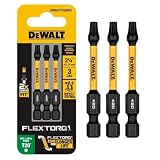

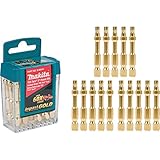

For most structural screws, a set of impact-rated Torx bits covering T25, T30, T40, and sometimes T50 is the most practical choice. Check the screw manufacturer’s packaging or head marking before buying. Torx size is not interchangeable: a T25 bit in a T30 recess will round the fastener or spin out under load.
The Best Bit Types for Long Torx Screws
| Bit type | Best use | Main advantage | Main drawback |
|---|---|---|---|
| 2-inch impact Torx bit | Most framing and structural work | Good control and low flex | May be too short for recessed holes |
| 3- to 6-inch impact Torx bit | Deep pockets and awkward joints | Reaches without a separate holder | More flex and easier to bend |
| Impact bit with magnetic holder | General-purpose screw driving | Quick bit changes and extra reach | Holder can wobble or add torsional flex |
| One-piece extended Torx bit | Repeated long screws in open access | Fewer connection points and less play | Costs more and takes up more space |
A 2-inch bit is usually the best starting point. It keeps the bit close to the impact driver’s chuck, where there is less bending. If the screw is set inside a joist hanger, a pocket, or a narrow corner, use a longer bit or an impact-rated extension. For very deep access, a long impact-rated Torx bit set is cleaner than stacking several adapters.
Choosing Length and Shank Design
Long bits are convenient, but they are not automatically stronger. A 6-inch bit can flex noticeably when the driver is tilted only a few degrees. That flex increases cam-out, which damages both the bit and the screw recess. Use the shortest bit that gives you safe access to the fastener.
For most work, choose bits with a 1/4-inch hex shank and a visible impact collar or other indication that they are designed for impact use. A bit holder is acceptable when you need to switch between Torx sizes, but avoid cheap holders with excessive radial play. If the holder allows the bit to wobble, the driver will strike the screw off-center and accelerate wear.
One-piece extended bits have fewer moving parts and generally give better control. They are useful when installing dozens of structural screws at the same depth. A holder-and-bit setup is more economical for occasional projects and is easier to replace if one short bit wears out.
Get the Torx Fit Exactly Right
Insert the bit fully into the screw head before pulling the trigger. The bit should sit squarely with very little side-to-side movement. If it rocks, feels shallow, or climbs out as torque rises, stop and verify the size. Structural screw heads often have a deeper recess than ordinary deck screws, but the correct bit should still engage all the way.
Do not use a worn bit just because it still turns screws. Rounded corners may be hard to see, but they cause immediate slipping when the screw meets dense wood or a knot. Keep a new bit nearby and replace the old one when the tip no longer seats firmly. A damaged screw head is harder to remove and may prevent the screw from reaching its required depth.
How to Drive Long Structural Screws
Set the impact driver to a lower speed or power setting if it has one. Start slowly while holding the driver directly in line with the screw. Once the threads have started, increase speed while maintaining firm forward pressure. The bit needs pressure against the recess; an impact driver cannot compensate for a crooked tool.
Predrilling is often worthwhile near board ends, in dense hardwood, and when installing screws larger than about 1/4 inch in diameter. Use a drill bit sized according to the screw manufacturer’s instructions. A pilot hole reduces splitting and lowers the peak torque required from the driver. It also makes it less likely that the bit will jump out during the first few rotations.
Stop when the head is seated at the specified depth. Driving farther can crush the wood, bury the head too deeply, or reduce the connection’s holding performance. Many structural screws are approved for particular installation depths and materials, so follow the instructions rather than treating the screw like a conventional wood fastener.
Common Failures and Better Fixes
Bit breaks at the shank: The bit may not be impact-rated, or it may be bent from side loading. Replace it with an impact bit and keep the driver aligned.
Torx recess strips: The bit is probably the wrong size, worn, or not fully seated. Clean sawdust from the recess and use a fresh, correctly sized bit.
Screw stops halfway: The wood may be unusually dense, the pilot hole may be too small, or the driver may be underpowered. Do not keep hammering until the bit overheats. Back the screw out, inspect the threads, and drill the recommended pilot hole.
Long bit bends: Switch to a shorter bit if access allows. If reach is unavoidable, slow down and keep both hands controlling the driver. For occasional repairs, a quality impact-rated magnetic bit holder is usually cheaper than buying every Torx size in multiple lengths.
What to Buy
For a typical deck, pergola, or framing project, buy a small impact-rated Torx set with T25, T30, and T40 bits, plus at least one 2-inch bit in the size your screws require. Add a 6-inch bit only if the work demands it. The cheapest option is fine when the bits are genuinely impact-rated, fit the screws precisely, and you are driving only a few dozen fasteners. For hundreds of long screws, buy spare bits and replace them as soon as the tip shows wear.