What's inside
As an Amazon Associate I earn from qualifying purchases. This post may contain affiliate links at no extra cost to you.
What we cover
The right anchor for a towel hook
A small towel hook is a light-duty fixture, but it gets tugged sideways when someone grabs a towel. That makes a weak drywall attachment more likely to loosen than its weight alone suggests. For a typical hook holding a hand towel, a properly installed self-drilling drywall anchor is usually enough. If the hook will hold a heavy, wet bath towel or get pulled often, use a toggle-style anchor or fasten directly to a stud.
First check whether the hook’s mounting plate lines up with a stud. A stud-mounted screw is the simplest, strongest choice; drywall anchors are for locations where the screw holes miss framing. Avoid placing a hook where a failed anchor could damage plumbing or electrical wiring. In a bathroom, also check the wall for tile: drilling tile calls for a suitable tile bit and a slower, more careful approach, not a hammer drill.
As an Amazon Associate we earn from qualifying purchases at no extra cost to you.



Anchor types compared
| Anchor type | Best use | Trade-off |
|---|---|---|
| Plastic expansion anchor | Light hook on a firm, snug-fitting hole | Cheap, but can spin or pull out if the hole is oversized or the hook is tugged repeatedly |
| Self-drilling drywall anchor | Most small towel hooks in ordinary drywall | Quick to install; the larger hole and plastic body still limit strength |
| Metal self-drilling anchor | Light-to-medium loads where a compact, firm bite is useful | Can damage drywall if overtightened; not automatically stronger in every wall |
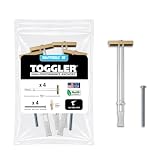
| Toggle or strap-toggle anchor | Heavier loads or frequent pulling when no stud is available | Needs a larger hole and space behind the wall; installation takes longer |
| Screw into a stud | Best available support for a frequently used hook | Only works where the mounting holes align with framing |
What to buy
For a basic hook carrying one hand towel, a small pack of self-drilling drywall anchors is a sensible starting point. Choose anchors whose package lists a drywall thickness and load rating that match your wall and intended use. Ratings vary by product and test conditions; don’t treat a printed maximum as a safe working load for a hook that gets jerked regularly.
Plastic expansion anchors are fine when the hook is very light, the wall is sound, and you can drill the exact hole size the package specifies. They cost less, but they are less forgiving: an oversized hole or soft, crumbling drywall can let the anchor rotate or pull out. For heavier towels or a hook used by several people, consider a toggle-style drywall anchor. Check that there is enough open space behind the wall for its toggle to unfold, and that the hook’s mounting holes can accommodate the required screw.
A stud is preferable when available. A stud finder with wire detection can help locate framing, though no detector is a guarantee that a drilling spot is clear. Confirm the mounting location and be cautious near switches, outlets, plumbing fixtures, and pipe routes.
Tools and drill settings
You’ll usually need a pencil, tape measure, level, screwdriver, and a cordless drill with a suitable bit. Match the bit to the anchor instructions rather than guessing. A self-drilling anchor may need no pilot hole; predrilling one can stop its tip from biting. Expansion anchors normally do require a hole of a specified diameter. For a small hook, a standard drill is easier to control than an impact driver. An impact driver can overdrive an anchor or strip its head before you notice.
Use a regular drill setting and low speed. Hammer mode is for masonry, not drywall; it can break up the gypsum around the hole. If the wall is tiled, turn hammer mode off and use a tile-appropriate bit. Keep the drill perpendicular to the wall. A crooked hole can make the hook sit unevenly and reduce the anchor’s grip.
Installation steps
Hold the hook at a comfortable height, mark the screw locations, and check that the mounting plate is level. Many towel hooks sit roughly 48 to 60 inches above the floor, but use nearby fixtures and the user’s reach as a guide. Before drilling, check both the area behind the wall and the mounting hardware supplied with the hook.
Install each anchor straight and flush, following its package directions. For a self-drilling type, turn it in slowly with a screwdriver or drill on a gentle setting. Stop if it spins without advancing: forcing it can enlarge the hole and ruin the grip. For a toggle, enlarge the hole only to the specified size, insert the toggle, and draw it snug against the back of the drywall before attaching the hook.
Fasten the hook until its plate is secure, not until the screw strains or the drywall dimples. If the plate shifts, tighten slightly; if the anchor turns with the screw, stop and reassess rather than continuing to spin it. Once installed, pull the hook gently in the direction towels will load it. A loose hook, cracking paper, or a soft, crumbling hole is a warning that the anchor is not holding.
When to replace or upgrade
Do not reuse a stripped hole for a new anchor of the same size. Move the hook far enough to reach fresh drywall, use a larger anchor only if the mounting plate and wall condition allow it, or open the wall and repair it properly. If the drywall is damp, soft, or damaged, repair the moisture problem before mounting anything. Bathroom humidity alone should not make sound drywall fail, but a leak can weaken the paper and gypsum enough that even a well-rated anchor will pull out.
For an occasional hand towel, a correctly installed self-drilling anchor is often the inexpensive, practical choice. For a heavier towel, repeated hard pulls, or uncertain drywall, a stud screw or toggle gives more margin. Choose based on how the hook will actually be used, not just the number printed on the anchor package.