What's inside
As an Amazon Associate I earn from qualifying purchases. This post may contain affiliate links at no extra cost to you.
For fastening a metal strap to a concrete foundation wall, the right fastener depends on the strap’s holes, the load it carries, and the condition of the concrete. For a light-duty strap with clearance holes, a concrete screw is often the simplest choice. For a structural connection, follow the strap or retrofit design’s specified anchor type, diameter, embedment, spacing, and edge distances. A stronger-looking fastener is not automatically a safer one: cracked or weak concrete can fail around an oversized anchor.
As an Amazon Associate we earn from qualifying purchases at no extra cost to you.


What we cover
Choose the fastener for the job
Concrete screws cut threads into a correctly sized pilot hole. They’re removable, easy to inspect, and a good fit for many straps with holes around 1/4 inch or larger. Common diameters are 3/16 and 1/4 inch, but use the diameter and length specified for the connection. A screw that is too short may not achieve the required embedment; one that is too long can hit buried services or protrude where it causes trouble.
For a higher-demand connection, a listed mechanical or adhesive anchor may be required. Wedge anchors need enough sound concrete and are generally a poor choice close to an edge or in thin concrete. Adhesive anchors can work in applications designed for them, but hole cleaning, temperature, cure time, and installation procedure matter. Don’t substitute either type for a specified structural fastener.
Fastener comparison
| Fastener | Best fit | Trade-offs |
|---|---|---|
| Concrete screw | Light to moderate connections in sound concrete; straps with clearance holes | Needs an exact pilot-hole size and careful driving. Can strip or spin in an oversized, dusty hole. |
| Wedge anchor | Connections specifically designed for expansion anchors in adequate concrete | Expansion force makes edge distance and concrete thickness important. Usually not removable without leaving an obstruction. |
| Adhesive anchor | Engineered applications where an adhesive system is specified | More sensitive to hole cleaning, temperature, and cure time; not a quick swap-in for a screw. |
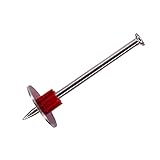
| Powder-actuated pin | Approved light-duty fastening to suitable concrete, where the tool and application allow it | Not interchangeable with an anchor designed for a structural strap; can spall concrete and requires appropriate training and eye protection. |
What to buy
For a typical nonstructural strap, start with a corrosion-resistant concrete screw whose manufacturer approves it for the concrete and load. Match the screw diameter to the strap’s hole: the shank should pass through freely, while the head or washer should retain the strap without pulling through. If the strap hole is too large, use a suitable washer or choose a fastener with a compatible head; don’t let the screw bear on just one edge of the hole.
Buy the specified pilot-hole bit or a compatible masonry bit, plus a depth stop or tape mark if you need to control drilling depth. A concrete screw assortment can be useful for small repairs, but for a load-bearing connection, avoid guessing from a mixed assortment. Check the packaging or technical data for approved base material, embedment, and installation instructions.
For structural work, use the anchor called for by the connection design or local requirements. If the plans specify a diameter, embedment, washer, or anchor type, keep those details. When there are no plans and the strap is meant to resist significant movement, get qualified guidance rather than picking a larger screw by eye.
Install it without weakening the connection
First check the strap manufacturer’s layout and the fastener instructions. Locate the strap flat against sound concrete, mark the holes, and check for wiring, pipes, or other embedded services before drilling. Keep holes away from corners, wall edges, cracks, and damaged concrete unless the approved design gives a suitable distance. There is no universal safe edge distance: it depends on anchor type, diameter, embedment, concrete condition, and load.
Use a hammer drill with a masonry bit when the fastener instructions call for it. A cordless hammer drill makes pilot holes faster than a regular drill in cured concrete. Set the bit to the specified diameter, drill perpendicular to the wall, and make the hole to the required depth. A hole that is too shallow leaves debris at the bottom or prevents full embedment; one that is too wide can make a concrete screw spin without gripping.
Clean each hole as directed by the anchor manufacturer. For screw anchors, remove drilling dust with the specified method; for adhesive anchors, cleaning is especially critical and often requires a prescribed sequence of blowing and brushing. Seat the strap, start the fastener by hand if possible, and drive it steadily with a drill or impact driver only if the manufacturer permits that tool. Stop if it spins, binds early, or crushes the strap. Forcing it harder can strip the concrete threads or damage the anchor.
Common failures and when to stop
A screw that spins usually points to an oversized, damaged, or dusty hole, or weak concrete. Don’t move to a larger screw in the same hole unless the fastener manufacturer provides a repair method; the larger anchor may not have adequate edge distance or embedment. Drill a new hole only if the required spacing and layout permit it.
Cracked, crumbling, or hollow-sounding concrete is a warning, not a reason to use a more aggressive drill setting. Expansion anchors can worsen a crack, while even a concrete screw may not hold reliably in deteriorated material. If the strap is structural, or if multiple holes fail to hold, stop and have the connection and substrate assessed.
A cheaper concrete screw is fine for a low-load strap on sound concrete when its published ratings and installation directions fit the job. For a foundation connection that affects a building’s structural performance, the design—not price, convenience, or a general-purpose anchor kit—should determine the fastener.