What's inside
As an Amazon Associate I earn from qualifying purchases. This post may contain affiliate links at no extra cost to you.
What we cover
What matters when driving screws into fence posts
Fence-post screws are a tougher job than ordinary deck screws. Posts are often pressure-treated, damp, knotty, or split-prone, and structural fasteners may be 3 to 6 inches long. An impact driver delivers short bursts of rotational force that help turn long screws without the steady wrist-twisting of a drill. For most fence repairs and new builds, a compact 18V or 20V cordless impact driver is the practical choice; a 12V model can work for lighter jobs but has less reserve when a screw meets a knot.
Look for a 1/4-inch hex collet, variable-speed trigger, and a quoted maximum torque around 1,500 inch-pounds or higher. Published torque figures are not directly comparable between brands, and maximum torque is not a useful target for every screw. Control matters more: a slow mode can reduce snapped heads, stripped drive recesses, and overdriven fasteners.
As an Amazon Associate we earn from qualifying purchases at no extra cost to you.


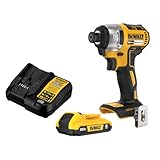

For a homeowner doing a few repairs, a bare tool is often the least expensive route if a compatible battery platform is already in the shed. If you need a battery and charger too, compare the kit price rather than assuming the tool-only deal is cheaper overall. Browse 18V cordless impact-driver kits by battery size, speed settings, and included accessories.
Which type is right for the job?
| Type | Best for | Trade-off |
|---|---|---|
| 12V impact driver | Small repairs, lighter screws, overhead or one-handed work | Less power reserve on long structural screws or dense knots |
| 18V/20V impact driver | Most fence construction and repair | Heavier than a compact 12V tool; battery and charger add cost |
| Drill/driver | Careful pilot holes and jobs needing a clutch | Can twist the wrist or stall on long screws; slower under heavy load |
| High-torque impact wrench | Large bolts and heavy mechanical work | Usually excessive for fence screws, bulkier, and may use a different drive |
A basic 18V driver is enough for most fence posts; premium features are useful mainly if you drive fasteners all day. Multiple speed modes, a belt hook, a work light, and a brushless motor are worthwhile conveniences, but they do not replace the right screw and a pilot hole. For occasional maintenance, a brushed model can be a sensible cheaper buy. For repeated work, a brushless tool generally runs longer per charge and has no motor brushes to replace.
Choose the fastener and bit first
Use exterior-rated structural or timber screws intended for the connection, not drywall screws or generic brittle multipurpose screws. Check the screw manufacturer’s instructions for the required length, coating, and installation method. For pressure-treated lumber, choose a coating approved for treated wood; ordinary zinc plating can corrode. Near the coast or in persistently wet conditions, stainless steel may be justified, though it costs more and can have lower strength than some structural steel fasteners.
Match the bit exactly to the screw’s drive—commonly Torx or another star drive—and replace worn bits. A loose or rounded bit slips, damages the recess, and can leave a screw only partly seated. Keep the bit square to the surface and press firmly enough to keep it engaged without forcing the tool. A set of impact-rated driver bits is a useful purchase if the job involves several sizes; ordinary bits may break under repeated impact loading.
Pilot holes, splitting, and depth
Even a strong impact driver cannot prevent every split. Posts with dry ends, narrow edges, or knots are especially vulnerable. Pre-drill near the end of a board or close to an edge, and whenever a screw is large relative to the timber. As a practical starting point, a pilot hole around the screw’s core diameter—not its thread diameter—reduces splitting while leaving the threads material to bite. Follow the fastener maker’s guidance where available. A drill/driver is often better than an impact driver for this step because it gives steadier control.
For a typical 3/8-inch-diameter structural screw, a pilot hole near 1/4 inch may be appropriate in some species, but wood density and screw design vary; do not treat that as a universal size. If the screw starts to squeal, stalls, or drives unevenly, stop and check for a knot, a misaligned hole, or an unsuitable fastener. Continuing at full trigger can snap the screw or strip its head. A cordless drill/driver with a clutch is a good companion for drilling pilots and for small screws that need gentle control.
Do not bury the head far below the wood surface. Overdriving can crush fibers, weaken the connection, and create a pocket that holds water. Use the driver’s low-speed setting or ease off the trigger as the head approaches the surface. If a screw must sit flush, stop when the shoulder or head reaches the intended position rather than relying on a high-torque tool to stop itself.
Battery, comfort, and buying decision
For a handful of screws, a compact battery around 2.0Ah is usually adequate and keeps the tool light. For a long fence line, a 4.0Ah battery reduces interruptions, though it adds weight. A larger battery does not make the driver more powerful by itself; it mainly increases runtime, and some platforms pair it with cells that can sustain heavy loads better. Check whether the battery platform is already shared with your drill, saw, or other tools before buying into a new system.
Hold the tool if possible. A heavy driver can tire your wrist when working above shoulder height, while a very small grip may feel cramped with gloves. Keep spare bits and the correct pilot bit close by, and use eye protection: damaged bits and fastener fragments can fly. If the work involves a structural connection such as a gate hinge or post base, follow the hardware and fastener instructions rather than substituting a longer screw simply because the driver can handle it.
For occasional fence work, choose a reasonably priced 18V/20V impact-driver kit with a variable-speed trigger and one battery, then spend the savings on quality exterior screws and sharp bits. If you already own compatible batteries, a bare tool is fine. Pay extra for brushless construction or more speed modes only when you expect frequent use or need finer control across a wide range of fasteners.