What's inside
As an Amazon Associate I earn from qualifying purchases. This post may contain affiliate links at no extra cost to you.
Driving long structural screws into hardwood floor joists is a demanding job for a drill. Dense oak or maple, large screw diameters and repeated fastening can stall a compact tool, overheat a bit or twist a wrist. The right setup depends less on a drill’s advertised voltage than on screw size, pilot holes and whether you need controlled torque or speed.
For most joist work, a quality 18V or 20V cordless drill with a two-speed gearbox is the best all-around choice. An impact driver can be faster on long screws, but it is noisier and gives you less feel as the screw seats. Neither tool makes pilot holes optional in hardwood.
As an Amazon Associate we earn from qualifying purchases at no extra cost to you.


What we cover
What to look for in a cordless drill
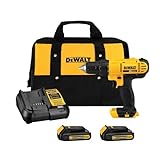
Choose a drill with a low-speed range around 0–500 RPM and a high range around 0–2,000 RPM. The low range provides better control and is useful for driving larger fasteners; high speed is for drilling pilot holes. A variable-speed trigger helps you start a screw without skating the bit across the work.
A 1/2-inch chuck accepts common large-diameter bits and is preferable to a 3/8-inch chuck for this task. A side handle is valuable when drilling with larger bits or driving long structural screws: it gives you a second grip if the bit catches. Look for a battery platform you already own if possible. A 2.0Ah battery is lighter and often adequate for occasional repairs; a 4.0Ah or larger pack runs longer for a day of fastening but adds weight.
Clutch settings are useful for ordinary screws, but they are not a reliable way to control the final depth of a large structural screw. Use the trigger carefully, stop when the head seats, and follow the screw maker’s instructions. A screw driven too far can crush the wood fibers or damage the connection.
Drill or impact driver?
A drill is the safer default if you have to make pilot holes and drive screws with the same tool. It offers smoother control, quieter operation and a chuck that holds drill bits directly. An impact driver delivers rotational blows, which can help with long fasteners, but those blows make it easier to miss the moment the screw head seats. It also needs impact-rated bits and can be loud enough to warrant hearing protection.
If you already own an impact driver, it can be a good driver for structural screws, paired with a drill for pilot holes. For a one-tool purchase, choose an 18V/20V drill unless you expect to drive many long screws and are comfortable controlling an impact driver. Compare 1/2-inch cordless drills and cordless impact drivers by chuck or bit compatibility, speed control and battery cost, not just peak torque claims.
Tool comparison for joist fastening
| Tool | Best use | Trade-off |
|---|---|---|
| 18V/20V drill, 1/2-inch chuck | Pilot holes and controlled driving | Can bog down on large screws without a pilot hole |
| Impact driver | Repeated driving of long structural screws | Less feedback at seating; requires impact-rated bits |
| 12V drill | Occasional small screws and light pilot holes | May struggle with large bits or dense hardwood |
| Corded drill | Long drilling sessions near an outlet | Cord limits movement; less convenient under floors |
Pilot holes, bits and screw choice
Hardwood is more likely than softwood to split, especially near a joist edge, and it takes more force to drive a screw. Drill a pilot hole sized to the screw maker’s guidance and the wood species. For a typical structural screw around 1/4 inch in diameter, the manufacturer may specify a pilot hole around 3/16 inch in hardwood, but check the packaging: screw design and required connection vary. Keep the hole straight and deep enough for the screw’s unthreaded shank and tip.
Use a sharp, appropriately sized bit. A dull bit makes the drill work harder and can wander; a loose or worn driver bit can strip the screw recess. For a countersunk head, use the specified drive bit and keep it fully engaged. If drilling a larger pilot hole overhead or in a cramped space, clear chips periodically rather than forcing the bit until it binds. A side handle and two-handed grip reduce the chance of wrist injury from a sudden catch.
Use structural screws rated for the connection, not drywall screws. Drywall screws are brittle and are not intended to carry structural loads. If the work is part of a repair or alteration, confirm the screw type, length, spacing and edge distances against the product instructions or a qualified professional. Floor joists can contain wiring, plumbing or other hidden services, so locate them before drilling.
Choosing a setup that fits the job
For a few screws in a home repair, a budget 18V/20V drill is usually enough if it has a 1/2-inch chuck, a low gear and a sound battery. You do not need the most powerful premium drill to install a handful of properly piloted screws. A smaller 12V drill may also be fine for light work and small pilot holes, but it is a poor choice for repeatedly driving large screws into oak without predrilling.
For frequent fastening, a brushless drill can run more efficiently and may last longer under sustained use, though it costs more. A drill-and-impact-driver kit is practical when you need to drill pilots and drive dozens of screws; the drill handles holes and the impact tool handles repetitive driving. If you buy only one tool, prioritize a comfortable grip, low-speed control and a 1/2-inch chuck over a headline torque number. Search for a brushless drill kit with a 1/2-inch chuck if sustained use justifies the extra cost.
A controlled driving sequence
Mark the screw location and drill the pilot hole square to the joist. Set the drill to low gear, hold it in line with the screw, and start at low trigger speed. Increase speed only once the threads have engaged. Ease off as the head approaches the surface; if the bit starts slipping, stop and reseat it rather than pressing harder.
Pause if the battery, motor or bit becomes hot. Repeated stalls are a sign to check the pilot-hole size, screw specification, bit condition and gear setting—not to lean harder on the tool. A correctly sized pilot and sharp bit make more difference than buying a larger battery or chasing a higher torque rating.