What's inside
As an Amazon Associate I earn from qualifying purchases. This post may contain affiliate links at no extra cost to you.
Particleboard furniture is easy to assemble until a screw strips, spins without biting, or blows through the finished panel. The right cordless drill helps, but technique matters just as much. For most flat-pack cabinets, bookcases, desks, and shelving, a compact drill/driver with a clutch is the best choice. An impact driver is useful for long screws and repeated fastening, but it is easier to overdrive and damage particleboard.
As an Amazon Associate we earn from qualifying purchases at no extra cost to you.


What we cover
The best drill type for particleboard furniture
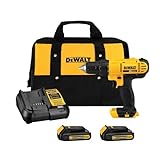
Choose a 12V or 18V/20V cordless drill/driver with an adjustable clutch, two-speed gearbox, and a keyless chuck. A compact drill is usually easier to control than a large hammer drill, and it puts less strain on your wrist during a long assembly job.
A 12V cordless drill/driver is enough for most furniture screws. It is lighter, generally less expensive, and less likely to overpower a small screw. An 18V or 20V drill makes more sense if you also drill into hardwood, install wall anchors, or use the tool for general home repair.
| Tool | Best use | Advantages | Drawbacks |
|---|---|---|---|
| 12V drill/driver | Flat-pack furniture and small screws | Light, controllable, usually inexpensive | Less runtime and drilling capacity |
| 18V/20V drill/driver | Furniture plus general household work | More power, larger battery options | Heavier and easier to overdrive screws |
| Impact driver | Long screws, dense wood, repeated fastening | High driving force and low wrist torque | No normal clutch; can strip or crush particleboard |
| Hammer drill | Masonry drilling with the hammer mode switched on | Useful for concrete and brick | Unnecessary bulk for furniture assembly |
Features that matter more than maximum torque
The clutch is the most important feature. It allows the drill to stop applying force when a screw reaches a selected resistance. Start at a low setting, such as 3 or 4, and increase it only if the screw stops before the head is seated. The correct setting varies by screw size, panel thickness, and the condition of the particleboard.
Use the drill’s low-speed range for driving screws. High speed is useful for drilling pilot holes, but it can strip a screw head or burn through a melamine surface before you react. A variable-speed trigger is also valuable: begin slowly until the bit is fully engaged in the screw recess.
A 1/4-inch hex quick-change chuck is convenient, but a regular 3/8-inch or 1/2-inch chuck is more versatile because it accepts both driver bits and drill bits. A built-in work light, belt hook, and battery fuel gauge are useful but should not outweigh good control and a comfortable grip.
For occasional furniture assembly, a basic cordless drill kit with a clutch is usually the sensible purchase. You do not need brushless electronics, a large battery, or extreme torque just to install confirmat screws and cam-lock fasteners.
When an impact driver helps—and when it hurts
An impact driver is a good choice for driving long screws into solid wood, attaching furniture to studs, or doing repeated construction fastening. Its hammering action makes it less likely to twist your wrist, but most impact drivers do not have a conventional adjustable clutch.
That makes it risky on thin particleboard. The driver can bury the head below the laminate, crack the surface, or spin the screw until the surrounding fibers are destroyed. If you use one, select the lowest available speed or assist mode, use a short bit extension only when necessary, and release the trigger as soon as the head is flush.
A compact cordless impact driver is worth considering as a second tool, not usually as the only tool for assembling particleboard furniture. It becomes more useful when the same tool will also handle deck screws, cabinet installation, or structural wood screws.
Bits and pilot holes
Use a correctly sized Phillips, Pozidriv, square, or Torx bit according to the screw head. Many European furniture screws use Pozidriv, which looks similar to Phillips but fits poorly with a Phillips bit. The wrong bit cams out, rounds the recess, and leaves you with a damaged screw before the screw is fully seated.
Replace worn driver bits. A new bit costs little compared with repairing a stripped fastener or a damaged cabinet panel. Magnetic bit holders are convenient, but a short driver bit placed directly in the chuck gives better control when space allows.
Drill a pilot hole when installing a screw near an edge, using a screw longer than about 30 mm (1-1/4 inches), or working with a narrow strip of particleboard. The pilot hole should be roughly the diameter of the screw’s solid shaft, not the outside diameter of its threads. For a typical 4 mm furniture screw, a 2.5 to 3 mm pilot hole is a useful starting point; test on scrap whenever possible.
Do not assume a pilot hole prevents every failure. Particleboard has weak edges, and repeated removal of a screw enlarges the hole. If a hole is already loose, move the fastener to fresh material, use a larger-diameter screw, or repair the hole with epoxy or a suitable wood-fiber repair product before refastening.
How to install screws without damaging the panel
Clamp or hold the panels square before driving anything. Misaligned panels make the screw enter at an angle, which increases splitting and leaves the joint loose. Keep the drill aligned with the screw; leaning on the tool is a common cause of cam-out.
Set the clutch low and drive at slow speed. Stop when the head is flush with the surface or when the supplied washer contacts the hardware. Do not countersink ordinary furniture screws into melamine unless the design specifically calls for it. Once a screw spins freely, stop immediately. More trigger time will not create more holding power.
For cam-lock fittings, install the dowels and cam hardware by hand or at very low speed. These fittings need alignment rather than high torque. Tighten until the joint closes, then stop; crushing the chipboard around a cam weakens the connection.
What to buy for different jobs
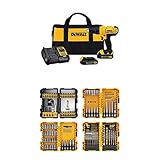
For one bookcase or desk, buy the cheapest reputable 12V drill/driver with a clutch, a two-piece driver-bit set, and a small set of brad-point or standard twist bits. For frequent assembly or mixed home repair, step up to an 18V/20V drill from a battery platform with reasonably priced replacement batteries.
If you already own compatible batteries, buying a bare tool can save money. If you do not, compare the kit price, battery capacity, charger, and future tool options—not just the advertised voltage. A 1.5 Ah battery is light and adequate for furniture; a 4.0 or 5.0 Ah pack lasts longer but adds noticeable weight.
For driving into wall studs after the furniture is assembled, use the drill’s clutch for small screws or an impact driver for larger structural screws. Use an appropriate wall anchor when there is no stud; the drill does not make an unsuitable anchor safe. Particleboard furniture should be fastened to walls wherever the manufacturer recommends it, especially tall or top-heavy units.