What's inside
As an Amazon Associate I earn from qualifying purchases. This post may contain affiliate links at no extra cost to you.
What we cover
What the job requires
Cedar is relatively soft, so drilling ordinary fence-rail holes doesn’t call for a hammer drill or a high-torque impact driver. A basic cordless drill with a working clutch and a variable-speed trigger is usually enough. The more useful buying question is whether the drill stays comfortable and controlled when you make a series of holes, and whether its battery and chuck suit the bit sizes you need.
For many fence repairs, holes are for screws or bolts rather than large-diameter plumbing. A 3/16- or 1/4-inch pilot hole is typical for common fasteners, though the right size depends on the screw and the wood. Larger holes for carriage bolts or cable need more torque and a suitable bit. If you’re drilling near a rail end, keep the hole centered and leave enough wood around it: a fastener too close to an edge can split even soft cedar.
As an Amazon Associate we earn from qualifying purchases at no extra cost to you.



Drill types to consider
A compact 12-volt drill is a good fit for occasional repairs and small pilot holes. It is lighter and easier to handle overhead or at awkward angles. Its limits show up with large spade bits, repeated deep holes, or a battery that has aged and no longer holds much charge.
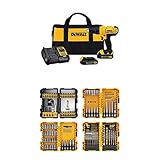
An 18- or 20-volt drill is the more flexible choice if you also build gates, drive longer screws, or drill larger holes. Look for two speed ranges, a keyless chuck that accepts the bits you own, and a clutch with clear settings. A side handle is useful with larger bits, but isn’t necessary for routine pilot holes. A cordless drill-driver kit often costs less than buying the drill and battery separately, especially if you don’t already own batteries in that platform.
Don’t choose a hammer drill for this job just because it sounds more powerful. Hammer mode is for masonry, and its pulsing action can make a rough hole in wood. Turn that mode off for cedar. An impact driver is excellent for driving screws, but it isn’t the best tool for accurately starting a clean hole. Use a drill for drilling and an impact driver for fastening if you have both.
Quick comparison
| Type | Best for | Main trade-off |
|---|---|---|
| 12-volt drill-driver | Occasional pilot holes and light repairs | Lighter, but less suitable for large bits or long sessions |
| 18/20-volt drill-driver | Mixed fence work, larger holes, and general home use | More weight and cost than a small drill |
| Hammer drill-driver | Wood drilling plus occasional masonry | Extra features add little for cedar; hammer mode must be off |
| Impact driver | Driving screws after holes are drilled | Less control for clean, accurately placed holes |
Bits and hole quality
Use a sharp wood bit suited to the hole. A brad-point bit helps locate small holes accurately; a standard twist bit is fine for common pilot holes. For wider holes, a sharp spade bit is inexpensive and quick, while an auger bit can clear chips effectively in deeper holes. A dull bit generates heat, wanders, and can tear the cedar at the exit. If the hole looks ragged or the drill needs heavy pressure, stop and inspect the bit rather than forcing it.
For holes close to the end of a rail, a pilot hole reduces the chance of splitting. Match the pilot diameter to the screw’s shank and wood conditions; a pilot that is too small can still split the rail, while one that is too large weakens the screw’s grip. Clamp the rail if possible, especially when drilling a loose replacement piece. A scrap board behind the exit face helps reduce tear-out when a clean through-hole matters.
Choose a drill with a half-inch chuck if you expect to use larger bits with standard 1/2-inch shanks. Many compact drills have a 3/8-inch chuck, which is plenty for small pilots but limits bit choice. Check the shank size before buying a large bit. A wood bit set with brad-point bits is useful for accurate smaller holes, but a set is not automatically a bargain if it includes sizes you won’t use.
Battery and control matter
For a handful of holes, a small battery is generally adequate. For a long run of rails, an extra battery saves interruptions, especially if you’re also driving screws. Battery capacity is measured in amp-hours: a higher number generally means longer runtime, but also more weight. A 2.0-Ah pack is a reasonable balance for light work; a larger pack makes sense when the drill will be used continuously or with demanding bits.
Use the lower speed range for larger bits and the higher range for small pilots, following the bit maker’s guidance. Start slowly to keep the bit on your mark, then apply steady pressure. Let the bit cut; leaning hard on it can bind the bit or twist the drill in your wrist. Set the clutch low enough to avoid stripping screws if you’re using the drill to fasten hardware. For consistently driven fence screws, a separate cordless impact driver can be more convenient, but it’s an optional second tool.
What to buy for your fence
If you already own a compatible cordless drill and it can hold your intended bit, use it; cedar rails don’t justify replacing a serviceable tool. If you’re buying specifically for occasional repair, a basic 12-volt drill-driver is enough for pilot holes and small fasteners. Pay for an 18- or 20-volt kit when you also need larger holes, longer screw driving, or broader household use. Prioritize a comfortable grip, a clutch, two speeds, and a chuck sized for your bits over a high torque claim.
Before drilling, mark the hole, check the rail for cracks, and confirm that no screw or nail is already in the bit’s path. Wear eye protection, keep hands clear of the bit, and support the work securely. Those simple checks prevent the common failures: a wandering hole, a split rail, a jammed bit, or a drill that twists when the bit catches.