What's inside
As an Amazon Associate I earn from qualifying purchases. This post may contain affiliate links at no extra cost to you.
What we cover
What hardwood stair stringers demand from a drill
Drilling into a stair stringer is not the same as driving deck screws into softwood. Hardwood such as oak or maple can put a steady load on a drill, especially when the hole is large, the bit is dull, or you’re drilling near an edge. A drill that stalls, overheats, or twists your wrist is the wrong tool for the job, even if it has a high advertised torque number.
For ordinary holes up to about 1/2 inch, a good 18V or 20V cordless drill with a two-speed gearbox is usually enough. For larger holes, repeated drilling, or hardwood stringers several inches thick, prioritize a side handle, a low-speed setting, and a battery with enough capacity to maintain power. Use sharp bits intended for wood, clamp the work where possible, and drill straight. A hammer-drill setting is for masonry; leave it off when drilling wood.
As an Amazon Associate we earn from qualifying purchases at no extra cost to you.


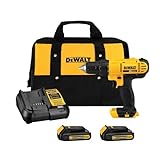

What to look for when buying
Check the drill’s chuck capacity, low-speed range, weight, and whether a side handle is included or available. A 1/2-inch chuck accepts common large wood bits; a 3/8-inch chuck can be limiting for this work. Low speed gives better control with large bits and reduces the chance of scorching the hole. Many drills have a clutch, but set it high enough that it doesn’t slip while drilling. The clutch is not a substitute for a firm grip.
Battery size affects both runtime and balance. A compact 2.0Ah pack is lighter and can handle a few holes, but a 4.0Ah or larger pack is more comfortable for a run of holes in dense stock. Bigger batteries add weight, so don’t buy the largest pack if you mainly do occasional repairs.
Cordless drill types compared
| Drill type | Best fit | Trade-off |
|---|---|---|
| Compact 18V/20V drill | Small pilot holes and occasional holes up to roughly 1/2 inch | Can bog down with large bits or sustained hardwood work |
| Full-size 18V/20V drill with side handle | Repeated holes, larger bits, and better control under load | Heavier and usually more expensive |
| Right-angle drill | Restricted access where a standard drill body will not fit | Specialty purchase; not usually the best first drill for open work |
For most stair work, a full-size drill with a side handle is the safer buy if you expect to drill several large holes. A compact drill is a sensible, cheaper choice for a handful of pilot holes. If you already own a compatible cordless platform, compare the bare tool with a kit; buying another battery and charger makes little sense when your current ones fit.
A sensible drill choice
Look for a full-size 18V or 20V drill with a 1/2-inch chuck and side handle if you’ll be drilling several holes in hardwood. The side handle gives you a second point of control if the bit catches. It matters most with large auger or spade bits, where a sudden bind can rotate the drill body. Keep both hands on the drill and stand so a twist will not pull you off balance.
For a small job, a compact cordless drill with a 1/2-inch chuck may be enough. It is easier to handle overhead or in tight spaces, but do not force it through a large hole if the motor slows sharply. Stop, clear chips, and let the tool cool rather than holding the trigger until the battery or motor gets hot.
Bits and technique that prevent trouble
Choose the bit for the hole, not just the material. A brad-point bit is useful for clean, accurate holes in wood at smaller diameters. A sharp auger bit removes chips efficiently in deeper holes, but can grab hard if it hits a knot or you apply too much pressure. Spade bits are inexpensive and fast, but often leave rougher edges and are more prone to catching. For a clean finish, drill from one face until the point just emerges, then finish from the opposite face if you can access it.
Mark the hole carefully and use a square or guide to keep the drill perpendicular. Clamp the stringer if it is loose; do not rely on one hand to hold the stock while the other runs the drill. Start slowly so the bit does not skate. With a large bit, select low gear and let the cutting edges work. Excessive pressure can stall the drill, overheat the bit, or cause the bit to bind. If you smell scorched wood, withdraw the bit, clear the chips, and inspect the cutting edges.
Common mistakes and when to step up
A drill that repeatedly stalls is often being asked to do too much: the bit may be dull, the hole may be too large for the drill, or packed chips may be adding friction. Back the bit out periodically to clear chips, particularly in deep holes. Keep the battery charged; a nearly empty pack may lose power under load. Do not use an impact driver for ordinary wood drilling unless the bit is specifically designed for it. Impact drivers excel at driving fasteners, but their impacts make controlled, straight boring harder.
If your work involves frequent holes larger than 1/2 inch, a side-handled drill is a worthwhile upgrade. For a few small holes, spending more for maximum torque is not necessary. If access is the real problem, a right-angle drill may solve it better than buying a heavier standard drill. In every case, follow the stringer plans and hardware instructions for hole diameter, edge distance, and placement; an oversized or misplaced hole can weaken a structural member, and a more powerful drill will not fix that.