What's inside
As an Amazon Associate I earn from qualifying purchases. This post may contain affiliate links at no extra cost to you.
What we cover
The quick answer
For a few deck screws or occasional repairs, a cordless drill can do the job. For building a deck or driving dozens or hundreds of long screws, an impact driver is usually faster and puts less twisting force into your wrist. It is also less likely to stall on a long fastener. Neither tool makes poor screw placement, unsuitable screws, or overdriving disappear.
If you own neither, choose based on the work you expect to do. A cordless impact driver is the more comfortable choice for repeated deck fastening. A cordless drill-driver is the more versatile first tool for drilling holes and occasional screwdriving.
As an Amazon Associate we earn from qualifying purchases at no extra cost to you.


How the tools differ
A drill-driver turns its chuck continuously and applies steady rotation. You can adjust the clutch to stop driving when resistance reaches a set level, which helps with smaller screws and repeatable work. With a long deck screw, though, the drill may slow or stop as the screw meets dense wood. The sudden reaction can twist your wrist or the tool.
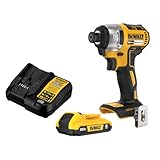
An impact driver uses a quick series of rotational blows when it encounters resistance. That action helps it keep turning long screws without the same sustained torque reaction at your hand. Most impact drivers use a 1/4-inch hex collet rather than a conventional drill chuck, so use impact-rated bits and a suitable bit holder. A standard bit can wear or snap under repeated impacts.
Drill or impact driver for deck screws?
| Factor | Cordless drill-driver | Impact driver |
|---|---|---|
| Best fit | Small jobs, drilling, and occasional screws | Repeated driving of long deck screws |
| Control | Clutch and variable speed give a gentle start | Strong driving action; takes practice to stop at the right depth |
| Wrist reaction | Can twist sharply if a long screw stalls | Usually less sustained twist at the grip |
| Bit connection | Chuck accepts a wider range of bits | Typically needs 1/4-inch hex-shank accessories |
| Noise | Quieter | Louder; hearing protection is sensible during extended use |
For a handful of screws into softwood, the difference may not justify buying another tool. For a full deck, the impact driver’s faster driving and reduced wrist strain are useful, but its noise and tendency to drive aggressively are real trade-offs.
Choose for the amount and type of work
Use the drill you already own if it can drive the screws without overheating, stalling repeatedly, or making you fight the handle. Start in low gear for better control, use a sharp, correctly sized driver bit, and set the clutch conservatively. If the clutch slips before the screw is seated, increase it gradually rather than immediately switching to maximum. A drill’s clutch can help avoid burying the head, though it is not a guarantee.
For a new deck or a large repair, an impact driver is generally the better dedicated screw-driving tool. Check its speed trigger by practicing on scrap of the same decking and framing material. If you also need to drill pilot holes, use a drill for that work or change accessories as needed. A drill-driver is better suited to regular drilling and has a chuck that holds round-shank bits; an impact driver can drill with compatible hex-shank bits, but it is not an equivalent all-purpose drill.
Do not buy based on a high torque figure alone. Battery condition, screw type, wood species, bit fit, and your ability to control depth matter more. A compact tool may be easier to handle between joists, while a larger battery can add runtime but also weight.
Use the right screw and prepare the boards
Use exterior-rated deck screws made for the material and exposure. Coated or stainless fasteners may be appropriate depending on the lumber and environment; follow the screw and decking manufacturers’ guidance. Ordinary interior drywall screws are brittle and are not a substitute for structural or deck screws.
Choose a screw length that gives the required holding in the framing without risking a protruding point or striking something below. Follow the decking maker’s fastening pattern and spacing. Near board ends, pilot holes can reduce splitting, especially in dense hardwood or dry lumber. Do not assume every composite deck board uses the same screws or fastening method: check its installation instructions.
Drive screws cleanly
Set the board firmly against the joist before driving. Hold the driver in line with the screw, press the bit squarely into the head, and begin slowly. A bit that is not fully seated can cam out, chewing up the screw head and making the fastener difficult to remove. Replace worn bits rather than pushing harder.
Stop when the head is flush or reaches the depth specified for the decking. Overdriving can crush wood fibers, leave a pocket that collects water, or damage a composite board’s surface. With an impact driver, release the trigger as the head approaches the surface and finish carefully; the tool can bury a screw in a moment. If a screw stalls, back it out, inspect for a knot, misalignment, or damaged bit, and pilot the hole if appropriate. Repeatedly forcing it risks a snapped screw or damaged head.
Work safely and avoid common failures
Wear eye protection, keep your free hand away from the bit, and support the workpiece. Secure loose boards before fastening. On a long job, take breaks if your grip or control is fading; fatigue leads to crooked screws and stripped heads. Keep the battery and tool within their operating limits, and stop if the tool becomes unusually hot.
Choose a drill if budget and versatility matter most and your deck work is limited. Choose an impact driver if you will repeatedly install long deck screws and want less wrist-twisting effort. In either case, the right exterior fastener, a well-fitting bit, and controlled depth make more difference than simply choosing the more powerful tool.