What's inside
As an Amazon Associate I earn from qualifying purchases. This post may contain affiliate links at no extra cost to you.
What we cover
Short answer: use the right bit before buying a new drill
For a few small holes in sound mortar, a standard cordless drill with a sharp masonry bit can be enough. For repeated holes, dense mortar, or a job that stalls with a standard drill, a hammer drill is faster and takes less steady pressure. In either case, drill into the mortar joint rather than the brick if the anchor location allows it: mortar is usually easier to drill and easier to repair.
Mortar is abrasive, and its hardness varies. A hammer setting cannot make a blunt bit effective, and excessive force can widen a hole or damage a joint. Start with a suitable masonry bit and low speed; switch tools only if progress is poor.
As an Amazon Associate we earn from qualifying purchases at no extra cost to you.

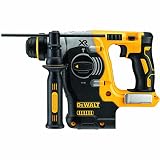


What the two drills do differently
A standard drill rotates the bit without striking it. The cutting edges grind into the mortar, so drilling depends on bit quality, rotation, and a steady hand. This is a good choice for occasional holes in softer mortar, especially when you want more control and less vibration.
A hammer drill rotates while delivering rapid forward-and-back blows. Those blows help a masonry bit break up hard material, so a hammer drill can make holes faster with less pushing. Its hammer action is for drilling masonry, not for driving screws. Turn that mode off when drilling wood or metal, and use a separate driver setting for fasteners.
Quick comparison
| Factor | Standard drill | Hammer drill |
|---|---|---|
| Best fit | A few holes in soft or sound mortar | Repeated holes or harder mortar |
| Speed in masonry | Slower; may need pauses | Usually faster when hammer mode is on |
| Control and vibration | Less vibration and easier to control | More vibration; keep a firm, balanced grip |
| Risk of poor results | Bit can rub, overheat, or stop cutting | Too much force or a loose grip can enlarge or damage the hole |
| Cost decision | Often the cheaper option if you already own one | Worth considering for regular masonry work |
Which should you buy?
If you already own a standard drill and need perhaps two or three small holes in mortar, try it first. Use a sharp masonry bit, keep the drill straight, and stop if the bit is only polishing the surface or making little progress. Buying a hammer drill for one small hanging job may not be worthwhile.
If you regularly install wall anchors, shelves, or fixtures in masonry, a cordless hammer drill is a practical step up. Check that it has a switchable hammer mode and a chuck that accepts the bit sizes you need. Battery voltage alone does not tell you how well a drill will perform; bit quality, the drill’s mechanism, and the material all matter.
For a single job, borrowing or renting is another sensible option. If your existing drill is struggling, a new bit may solve the problem more cheaply than a new tool.
Choose the bit and anchor together
Use a carbide-tipped masonry drill bit sized to the anchor instructions. A bit that is too small makes installation difficult; one that is too large can leave the anchor loose. Do not assume that an anchor’s nominal diameter is the drill size—check the packaging.
For ordinary light-duty loads, choose an anchor rated for the material and the expected load, and follow its specified hole diameter and depth. Mortar joints can be softer or more crumbly than brick, so a plastic expansion anchor may not hold as securely there as it would in sound masonry. If the joint is cracked, powdery, or badly eroded, shift to sound brick when suitable for the fixture, or choose a fastening method intended for the actual substrate. Do not rely on a generic load rating without accounting for the wall and installation.
A careful way to drill the hole
First check for wiring and plumbing, then mark the spot. Avoid drilling close to the edge of a brick or into a visibly damaged joint. Fit the correct bit securely, wear eye protection, and hold the drill perpendicular to the wall. If using a hammer drill, start with its hammer function off to make a small pilot mark; switch it on only if the bit needs the extra action and the joint is sound.
Use low to moderate speed and light, steady pressure. Let the bit do the work rather than leaning hard on the drill. Pull the bit out occasionally to clear dust, especially in a deeper hole, and stop if the bit becomes very hot. Drill only as deep as the anchor instructions require. Before inserting the anchor, remove loose dust from the hole; debris can prevent it seating properly.
A standard drill’s main failure mode is prolonged rubbing: the hole takes a long time, the bit overheats, or the drill stops making progress. Pause, let the bit cool, clear dust, and inspect its carbide tip. If the bit is dull or damaged, replace it. If a good bit still stalls in hard mortar, a hammer drill is the more suitable tool.
When hammer mode is the wrong choice
Hammer action is not automatically better. On old, weak, or crumbly mortar it can break away material and leave an oversized hole that will not hold an anchor. Stop if the joint cracks, flakes, or opens around the bit. Use a standard drill with less pressure, relocate to sound material if the installation permits, or reassess the fastening method.
Also distinguish a hammer drill from a rotary hammer. A hammer drill is a general-purpose drill with a lighter striking action; a rotary hammer is designed for heavier concrete and masonry work and typically uses specialized bits. For small holes in mortar, a rotary hammer is usually unnecessary and can be too aggressive.