What's inside
As an Amazon Associate I earn from qualifying purchases. This post may contain affiliate links at no extra cost to you.
What we cover
What this job demands
Installing hinges in a solid wood door is a drilling-and-fastening job, not a reason to buy the most powerful drill on the shelf. You need controlled low-speed drilling for pilot holes, enough torque to drive hinge screws, and a clutch that can stop before it buries a screw head or strips the wood. A hammer function is unnecessary for the door itself; it is intended for masonry.
Most residential hinges use screws around 1 inch long, though the exact length varies. Check the hinge and door before drilling, and use the screw size specified for the hardware. A pilot hole that is too small can split hardwood or snap a screw; one that is too large gives the threads less wood to grip. For many hinge screws, a pilot hole in the neighborhood of 3/32 to 7/64 inch is a useful starting point, but match the bit to the screw’s core diameter and the wood. Test on scrap of similar material if you can.
As an Amazon Associate we earn from qualifying purchases at no extra cost to you.
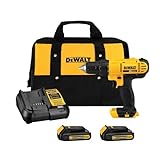

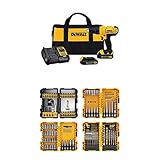

Which cordless drill to buy
A standard 12V or 18V/20V cordless drill-driver is the right tool for most doors. A compact 12V drill is lighter and easier to control while working at the edge of a door. It is generally sufficient for hinge pilots and ordinary screws, provided its chuck accepts your bits and its clutch works properly. An 18V/20V drill offers more reserve for dense hardwood, long screws, or other jobs around the house, but that extra power does not improve accuracy by itself.
For a one-off hinge installation, a basic drill-driver with variable speed, a two-speed gearbox, and an adjustable clutch is enough. Spending more for brushless motors, high torque, or a large battery makes sense if you expect frequent use or need the drill for tougher work. A hammer drill adds weight and cost without helping in wood. An impact driver can drive screws quickly, but its hammering action makes it easier to overdrive or damage a small hinge screw. If choosing one tool, start with a drill-driver; consider an 12V cordless drill-driver for light, controlled work or an 18V/20V cordless drill-driver if you also need a general-purpose tool.
Quick comparison
| Tool type | Hinge-installation fit | Main trade-off |
|---|---|---|
| 12V drill-driver | Good for pilot holes and ordinary hinge screws | Less reserve for very dense wood or repeated heavy work |
| 18V/20V drill-driver | Good all-round choice, especially for multiple doors | Usually heavier and more power than this single job requires |
| Hammer drill | Works with hammer mode off | Extra weight and features that do not help in wood |
| Impact driver | Useful for some long screws, but use cautiously | Harder to control on small screws; can strip heads or overdrive them |
Features that matter more than peak torque
Look for a variable-speed trigger, a low-speed gear, a clutch with several settings, and a comfortable grip. A 3/8-inch chuck is adequate for common pilot bits; a 1/2-inch chuck is more useful if you own larger bits for other projects. A belt hook and work light are conveniences, not requirements. For one door, battery capacity is also secondary: a charged small battery is usually enough. If you already own a compatible battery platform, buying a bare tool may be the sensible, cheaper choice.
Choose a sharp, correctly sized bit, not a high-torque drill, to prevent wandering and splitting. A stop collar or tape wrapped around the bit can help limit drilling depth. For repeatable, clean holes, a brad-point wood bit set is useful, though a sharp standard twist bit can do the job if held steady. Keep the bit straight and drill only as deep as the screw needs; drilling through the door edge can create a much bigger repair.
A controlled installation method
First, support the door so it cannot shift. If it is already hung, have someone hold it steady or wedge it securely; do not let the hinge bear the full weight while its screws are loose. Align the hinge leaf in its mortise, mark the holes, then make a small dimple at each mark with an awl or nail. This helps the bit start accurately. Drill pilot holes perpendicular to the surface, using light pressure and a depth stop or tape marker.
Drive each screw with the drill on low speed and a clutch setting that is deliberately conservative. Start low, then raise the setting only if the screw stops before the hinge leaf is snug. Finish the last turn by hand with a screwdriver if alignment or feel is uncertain. Screws should seat the hinge firmly without crushing the wood or deforming the hinge. If a screw spins without tightening, stop: the hole may be oversized or stripped. A properly fitted wood sliver and glue can repair a small stripped hole; for a badly damaged hole, use a suitable wood repair rather than forcing in a larger screw that may not fit the hinge.
Common mistakes and when to spend more
Skipping pilot holes is the most common way to split a door edge, especially near the end of a rail or in hardwood. Driving screws at high speed can cam out the bit, damage the screw head, or pull the hinge out of alignment. Make sure the driver bit fully matches the screw head—many hinge screws are Phillips, but hardware varies. If the bit repeatedly slips, stop and check its size and condition rather than pressing harder.
The cheaper drill is fine if it has a sound chuck, adjustable clutch, and enough battery for your project. Pay more when you need better balance, longer runtime, more durable construction, or one platform to cover frequent household work. For a single solid-wood door, careful layout, a sharp bit, and controlled screw driving matter more than a high torque rating.