What's inside
As an Amazon Associate I earn from qualifying purchases. This post may contain affiliate links at no extra cost to you.
Particleboard is easy to split, strip, and crush if you drive screws with too much speed or torque. For most furniture assembly and cabinet repairs, a compact cordless drill/driver with a clutch is the best first choice: it gives you control and can drill pilot holes with the same tool. An impact driver is useful for repeated fastening or longer screws, but its hammering action makes it easier to overdrive small fasteners into particleboard.
As an Amazon Associate we earn from qualifying purchases at no extra cost to you.


What we cover
What to buy for particleboard
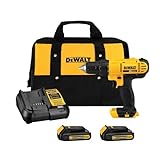
Look for a 12V or 18V/20V-class cordless drill/driver with a variable-speed trigger, a clutch with multiple settings, and a low-speed gear. A 12V drill is usually lighter and plenty capable for cabinet hardware, flat-pack furniture, and screws around 1½ inches long. Choose an 18V/20V drill if you also expect to drill larger holes or drive screws in denser materials.
A basic drill/driver is the better value for occasional work. A cordless drill/driver with a clutch lets you stop driving before the screw head sinks too far. A brushless motor can improve runtime and tool life, but it is not essential for assembling a bookcase or making a few repairs.
Drill/driver or impact driver?
| Tool | Best use | Particleboard trade-off |
|---|---|---|
| Drill/driver with clutch | Furniture, cabinet hardware, pilot holes, occasional repairs | More control; slower for many long screws |
| Impact driver | Repeated fastening and longer screws | Fast, but can strip or bury screws before you react |
| Compact 12V drill | Light assembly and tight spaces | Usually enough power; less suited to large bits or sustained heavy work |
Buy an impact driver if you regularly drive dozens of screws or work with longer fasteners. It delivers torque in short rotational blows, reducing wrist twist, but the impacts make it less forgiving in crumbly board. Use a low trigger speed and stop as soon as the head seats. For a few screws in flat-pack furniture, the cheaper drill/driver is fine.
Choose the right screws and bits
Use a sharp bit that fits the screw head closely. A loose Phillips or Pozidriv bit cams out and damages both the head and the board; match the drive type rather than assuming the bits are interchangeable. Keep the drill square to the surface, and press firmly enough to keep the bit engaged without leaning hard on the tool.
For a new hole near an edge, or for screws roughly 1½ inches and longer, drill a pilot hole. A practical starting point is a pilot bit close to the screw’s solid core diameter, not the full outside diameter of its threads. Check the screw or bit guidance where available, and test on an offcut if you have one. Particleboard screws with coarse threads often hold better than ordinary fine-thread screws. Avoid using drywall screws for structural fastening: they are brittle and may snap under load.
Do not reuse a stripped hole by simply driving a larger screw into loose material. The threads may spin without gripping, leaving a weak joint. For furniture repairs, a purpose-made particleboard screw or a suitable wood repair insert can help; if the joint carries weight, replace damaged material or use a fastening method designed for the load.
Set the clutch and drive carefully
Start with the drill in low gear and a low clutch setting. Drive a test screw into scrap of similar thickness, then raise the clutch one step at a time until the head seats flush without crushing the surface. Clutch numbers are not standardized between brands, so a setting such as 5 on one drill may not match 5 on another.
Hold the boards tightly together while fastening. A gap between pieces can let the screw pull the top board away from the lower one; where needed, clamp the pieces or drill a clearance hole through the top piece so the screw can draw the joint closed. Release the trigger as the head reaches the surface, then finish with a hand screwdriver if you need precise seating. Countersink only enough to make the head flush. A deep countersink removes the thin surface layer and weakens the connection.
Common failures and how to avoid them
Spinning screw: The hole is stripped or the clutch is too high. Stop immediately; continued driving makes the damage worse. Move to sound material if the layout allows, or repair the hole before refastening.
Bulged or cracked edge: The screw is too close to the edge, too large, or missing a pilot hole. Keep screws several screw diameters from an edge when possible, and drill pilots near edges. Particleboard quality and thickness vary, so there is no single safe edge distance for every panel.
Head buried below the surface: Speed or torque was excessive. Use the drill’s low gear, ease off the trigger near the end, and let the clutch do its job. An impact driver needs extra restraint because it may continue tightening rapidly.
Joint still feels loose: The screw may be too short, the board may be damaged, or the fastener may not be designed for particleboard. Do not assume a longer screw is automatically better; it must not break through the far face or hit hidden hardware.
Useful accessories
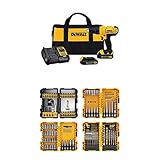
A small set of quality driver bits and a drill-bit set with common pilot sizes are more useful for this job than a large assortment of specialty accessories. If you already own a drill without a clutch, use a light trigger and finish by hand rather than buying another tool for one small repair. For repeated furniture assembly, a compact 12V drill/driver kit is a sensible, easy-to-control choice. Use an impact driver when speed matters, but keep the drill/driver for delicate work and pilot holes.