What's inside
As an Amazon Associate I earn from qualifying purchases. This post may contain affiliate links at no extra cost to you.
What we cover
What matters when mixing a small batch
For a small repair or a few replacement tiles, a cordless drill can mix thinset or grout without the hassle of a corded mixer. The key is matching the drill to the material and batch size. Thinset gets heavy quickly as it hydrates, and a drill that handles ordinary holes may overheat, stall, or twist out of your hands if you ask it to churn a full bucket.
For occasional batches around 1–2 quarts, look for a 1/2-inch chuck, a two-speed gearbox, and a side handle. A brushless motor is useful for repeated mixing because it tends to run more efficiently, but it is not essential for a brief, light job. Use low gear and keep the speed controlled; high speed can whip air into the mix and make a mess.
As an Amazon Associate we earn from qualifying purchases at no extra cost to you.
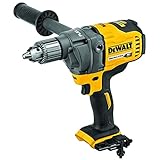

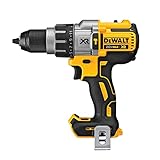
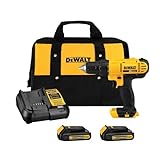
Which drill type to buy
A sturdy 18V or 20V-class drill-driver is the sensible choice for small batches. A hammer-drill/driver can also work, but switch hammer mode off. The hammer mechanism contributes nothing to mixing and can make the tool harder to control. If you already own a capable drill, try it with a small batch before buying another tool.
Choose a brushless 1/2-inch drill-driver with a side handle if you expect to mix regularly or drill larger holes as well. A less expensive brushed drill is fine for occasional grout or a small patch of thinset, provided it has a low-speed setting, a sound battery, and enough torque to avoid laboring.
Skip an impact driver. Its pulsing rotational action is designed for driving fasteners, not smooth mixing. It can splatter material, stress the paddle connection, and give you poor control. A compact drill with a small battery may be easy to handle, but it can run hot or drain quickly under a sustained load.
Quick comparison
| Tool setup | Good fit | Main limitation |
|---|---|---|
| Compact 12V drill-driver | Small grout batches and very light mixing | Limited runtime and reserve torque |
| 18V/20V drill-driver, 1/2-inch chuck | Small thinset batches and regular DIY use | Can still overheat if pushed continuously |
| 18V/20V hammer drill/driver | Mixing plus masonry drilling | Use drill mode only; added weight may tire your wrist |
| Impact driver | Fasteners, not mixing | Pulsing action and poor control in a bucket |
| Dedicated mud mixer | Large or frequent batches | More cost and storage space than a small repair warrants |
Pick a paddle and control the speed
Use a mixing paddle intended for tile mortar or grout, with a shank that fits your drill chuck. Match paddle size to the bucket and batch: a large paddle creates more drag and can overload a drill even if it fits physically. For a small bucket, a compact paddle is easier to control. A small tile-mortar mixing paddle with a 1/2-inch shank is a better starting point than a large drywall-mud paddle.
Put the drill in low gear and begin at a slow trigger speed. Follow the product’s water ratio and mixing instructions; thinset and grout formulas differ, and guessing at water can weaken the finished material. Keep the paddle submerged before starting, and stop occasionally to scrape the bucket sides by hand. Don’t run the drill at full speed to make the mixture look smoother.
Use a side handle and hold the bucket steady on the floor. If the drill twists hard, slows sharply, or smells hot, stop. Reduce the batch or use a smaller paddle rather than forcing it. A clutch setting intended for driving screws may slip during mixing, so check the tool instructions and use drill mode if the manufacturer permits it.
Battery, runtime, and heat
Mixing puts a steadier load on a battery than driving a few screws. A small 1.5- or 2-Ah pack may finish a tiny grout batch, but a 4- or 5-Ah pack usually gives more breathing room for thinset and repeated batches. Battery size does not turn an undersized drill into a mixer; the motor and gearbox still have limits.
Let the tool rest if the housing gets unusually hot, the motor slows, or the battery protection cuts power. Long continuous runs are harder on a drill than several short mixes with pauses. If you regularly mix more than a few quarts at a time, or need to mix several batches back-to-back, step up to a dedicated cordless mud mixer. It costs more and is less versatile for drilling, but its handle and gearing are made for sustained mixing.
A practical buying decision
For one bathroom repair, an existing 18V drill-driver with a 1/2-inch chuck is often enough. Buy a small paddle, mix a conservative batch, and stop if the drill struggles. If you are buying a tool specifically for this job, a brushless 18V/20V drill-driver with a side handle is a useful middle ground; avoid paying extra for hammer action unless you also need masonry drilling.
Spend more only when the work justifies it. A basic drill is adequate for occasional grout or a small amount of thinset. A stronger drill and larger battery make sense for repeated mixing, while a dedicated mixer is the safer, more comfortable choice for larger or frequent batches. In every case, the batch size—not the maximum torque printed on the box—is what determines whether the tool will feel controlled and finish the job without overheating.