What's inside
As an Amazon Associate I earn from qualifying purchases. This post may contain affiliate links at no extra cost to you.
What we cover
Quick answer: choose control over speed
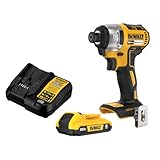
For hanging drywall, a screw gun is the better tool if you have a room or several sheets to install. Its depth-setting nosepiece helps drive screws just below the paper without tearing it. An impact driver can do the job, especially for a small repair, but it takes a steadier hand and more practice to get consistent depth.
If you already own an impact driver, you do not need to buy another tool to hang a few sheets. Use a drywall dimpler bit, work at a moderate pace, and check each screw. For regular drywall work, a corded or cordless screw gun with an adjustable nose is worth considering.
As an Amazon Associate we earn from qualifying purchases at no extra cost to you.


Why screw depth matters
A drywall screw should sit in a shallow dimple, with the paper face intact. The dimple lets joint compound cover the head, while the unbroken paper helps hold the board in place. A screw that stops proud can show through the finish. One driven too deep may tear the paper and weaken its grip on the gypsum core.
This is the main difference between drywall fastening and ordinary driving: the target is not simply “tight.” You need repeatable depth across many screws. Common guidance is to space screws about 12 inches apart on wall framing and about 7 inches apart on ceiling framing, though board thickness, framing layout, and local requirements can affect the pattern. Check the board manufacturer’s instructions and applicable code.
Impact driver vs. screw gun
| Feature | Impact driver | Drywall screw gun |
|---|---|---|
| Depth control | Mostly depends on trigger control or a dimpler bit | Adjustable nosepiece sets a repeatable stopping depth |
| Speed on a large job | Fast, but each screw needs attention | Fast and consistent; collated models reduce reloads |
| Learning curve | Moderate; easy to overdrive screws | Low once the depth is set correctly |
| Other uses | Useful for many general fastening jobs | Primarily suited to drywall and similar repetitive fastening |
| Best fit | Repairs, occasional sheets, and existing-tool users | Room-size projects and frequent drywall installation |
Using an impact driver
An impact driver turns the bit in short bursts of rotational force. That makes it effective at driving screws, but the bursts can make the last part of a drywall screw’s travel difficult to judge. A screw that looks nearly flush can suddenly sink too far when the driver impacts.
For occasional work, fit a drywall dimpler bit. Its shoulder is designed to stop the screw at a set depth. Start with a scrap of the same board and framing material, then adjust your pressure and speed until the head makes a shallow dimple without breaking the paper. Keep the driver square to the surface; an angled screw can leave a raised edge or tear the face.
Use a regular Phillips drywall bit or dimpler intended for the screw head, not a generic driver bit that slips. If the bit cams out repeatedly, stop and inspect it, the screw head, and your alignment. Continuing can damage the head and leave a screw that is hard to remove or finish.
An impact driver is a practical choice if you already own one and are fastening a few sheets. Buying an impact-driver drywall dimpler bit is usually a smaller expense than buying a dedicated tool. It is less appealing for a full room, where small variations in depth add up and repeated checking slows the job.
Using a drywall screw gun
A dedicated drywall screw gun has a nosepiece that limits how far the screw can travel. Set the depth on a scrap first: the head should sit just under the surface, and the surrounding paper should remain intact. Make a few test drives before working on installed board, then recheck the setting if you change screw length or board thickness.
Some screw guns accept collated screw strips. A collated model feeds screws one at a time, which can speed up overhead work and reduce the pauses needed to reload. The trade-off is extra cost and bulk; for a small patch, a standard screw gun or an impact driver is usually enough. A cordless drywall screw gun makes sense when portability matters and you expect to use it regularly. For a one-time room, renting or using a suitable tool you already own may be better value.
Common mistakes and fixes
Paper torn around the head: The screw is overdriven, or the bit is tilted. Back it out and place a replacement roughly 1 to 2 inches away in sound board and framing. Do not rely on a torn-paper screw to hold the sheet.
Head left proud: Drive it slightly deeper without breaking the paper. A head that stands above the surface can catch a taping knife and remain visible under compound.
Screw spins without tightening: It may have missed the stud or stripped its grip in the wood. Remove it and install a screw into the stud. Do not keep spinning a fastener that has lost purchase.
Crushed or cracked board: Too much pressure, an unsuitable fastener, or a screw placed too close to an edge may be responsible. Keep screws far enough from board edges to avoid breaking them; follow the board maker’s guidance, and use a screw length suited to the board and framing. For common 1/2-inch drywall on wood framing, 1 1/4-inch drywall screws are often used, but verify the materials in your assembly.
Which should you buy?
For one repair or a few sheets, use your impact driver with a dimpler and practice on scrap. The cheaper option is fine if you check depth and accept a slower pace. For repeated installs or a full room, choose a screw gun for more consistent seating and less fatigue from correcting mistakes. If you expect to hang large areas regularly, consider whether a collated screw gun will save enough reload time to justify its added cost; for occasional DIY work, it often will not.