What's inside
- Makita hammer drills compared
- 1. Best overall: Makita XPH14Z
- 2. Best value and lighter option: Makita XPH12Z
- 3. Fastest and most powerful platform choice: Makita HP001GZ
- Choose by material and workload
- Battery choice, runtime, and value
- How to get better results in concrete, masonry, and wood
- Durability and ownership realities
- Related Guides
- Makita hammer drills compared
- 1. Best overall: Makita XPH14Z
- 2. Best value and lighter option: Makita XPH12Z
- 3. Fastest and most powerful platform choice: Makita HP001GZ
- Choose by material and workload
- Battery choice, runtime, and value
- How to get better results in concrete, masonry, and wood
- Durability and ownership realities
- Related Guides
As an Amazon Associate I earn from qualifying purchases. This post may contain affiliate links at no extra cost to you.
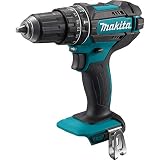
The best Makita hammer drill for most people is the 18V LXT XPH14Z: it delivers enough torque and speed for demanding masonry, concrete anchors, and large wood holes without requiring Makita’s heavier 40V XGT battery platform. Choose the 18V LXT XPH12Z for a lighter, lower-cost makita hammer drill, or the 40V XGT HP001G when maximum drilling speed and sustained power matter more than compactness.
As an Amazon Associate we earn from qualifying purchases at no extra cost to you.



What we cover
- Makita hammer drills compared
- 1. Best overall: Makita XPH14Z
- 2. Best value and lighter option: Makita XPH12Z
- 3. Fastest and most powerful platform choice: Makita HP001GZ
- Choose by material and workload
- Battery choice, runtime, and value
- How to get better results in concrete, masonry, and wood
- Durability and ownership realities
- Related Guides
Makita hammer drills compared
Makita’s hammer drills are combination tools: they drill, drive screws, and use a hammering mode for brick, block, and light-to-moderate concrete. They are not substitutes for an SDS-Plus rotary hammer when you need deep holes, large diameters, or repeated drilling into reinforced concrete.
| Model | Battery platform | Chuck | Speed range | Maximum torque | Approx. tool weight | Best use |
|---|---|---|---|---|---|---|
| Makita XPH12Z | 18V LXT | 1/2 in. keyless | 0–500 / 0–2,000 rpm | 530 in-lb | 4.2 lb | General repairs, wood, occasional masonry |
| Makita XPH14Z | 18V LXT | 1/2 in. keyless | 0–550 / 0–2,100 rpm | 1,250 in-lb | 4.9 lb | Best all-around heavy-duty choice |
| Makita HP001GZ | 40V max XGT | 1/2 in. keyless | 0–650 / 0–2,600 rpm | 1,250 in-lb | 5.1 lb | Fast drilling and demanding jobsite use |
Weights are approximate bare-tool figures and can vary by market configuration. Adding a battery, side handle, and belt hook increases carrying weight. Torque figures are manufacturer ratings rather than a direct prediction of how quickly a particular hole will be drilled.
1. Best overall: Makita XPH14Z
The XPH14Z is the strongest balance of power, control, and ownership cost in Makita’s 18V LXT range. Its 1,250 in-lb maximum torque rating and two-speed gearbox give it substantially more reserve than the XPH12Z when using large twist bits, hole saws, self-feed bits, or masonry bits.
In wood, the XPH14Z is well suited to construction drilling and larger holes, although a dedicated drill or impact driver may be more comfortable for repetitive screwdriving. In brick and block, its hammer mode handles common anchor holes effectively. It can also drill concrete, but progress depends heavily on aggregate, bit quality, hole depth, and whether the concrete contains reinforcing steel.
The XPH14Z’s electronic controls include a mechanical clutch, variable-speed trigger, and built-in protection against overload, overheating, and over-discharge. That protection is useful when a bit binds, but it does not eliminate the need to select the correct gear. Use low gear for large bits and high gear for smaller holes and faster drilling.
Why choose it
- Strong performance without moving to the 40V XGT system.
- Broad compatibility with Makita’s extensive 18V LXT battery range.
- Good fit for homeowners who renovate, remodel, or maintain property regularly.
- Side handle and depth gauge improve control during masonry work.
2. Best value and lighter option: Makita XPH12Z
The XPH12Z is the better makita hammer drill machine for occasional users who value lower weight and lower purchase cost over maximum drilling speed. At about 4.2 lb bare, it is easier to hold overhead and less tiring for installing shelves, curtain hardware, cabinets, and light framing components.
Its 530 in-lb torque rating is adequate for normal wood drilling and small masonry holes. It is a sensible choice for plastic wall anchors, light-duty concrete fasteners, and routine household work. The limitation appears when you use large-diameter bits, drill many holes consecutively, or encounter dense concrete. The tool will generally slow sooner than the XPH14Z, and the operator may need to reduce pressure to prevent overheating.
For a homeowner who expects perhaps a few masonry holes per month, the XPH12Z can be the economical choice. For a contractor or serious remodeler already working with large bits, the additional capability of the XPH14Z is more valuable than the modest weight savings.
3. Fastest and most powerful platform choice: Makita HP001GZ
The 40V max XGT HP001GZ is aimed at users who already own XGT batteries or need the highest speed and sustained output among these three tools. Its no-load high speed reaches 2,600 rpm, compared with 2,100 rpm for the XPH14Z, which can make a noticeable difference with smaller wood and metal bits.
The XGT model is particularly attractive for frequent jobsite drilling, large wood bits, and repeated masonry work. Its 40V battery system provides a larger power reserve, but the complete setup is usually heavier and more expensive than an 18V LXT kit. It also does not accept LXT batteries, so buying the tool means considering the cost of chargers and batteries if you are not already invested in XGT.
Its hammer-drill mode is useful for lighter concrete and masonry applications, but it remains a chuck-style hammer drill. If your routine involves dozens of deep anchor holes, hard concrete, or holes larger than typical hammer-drill capacities, an SDS-Plus rotary hammer such as Makita’s 18V LXT or 40V XGT rotary-hammer range is the more appropriate machine.
Choose by material and workload
| Your situation | Recommended choice | Reason |
|---|---|---|
| Occasional home repairs and small wall anchors | XPH12Z | Lowest weight and sufficient everyday capability |
| Frequent remodeling, framing, and mixed materials | XPH14Z | More torque and a stronger all-around performance margin |
| Already own several LXT batteries | XPH14Z or XPH12Z | No need to buy into another battery ecosystem |
| Already own XGT batteries or drill all day | HP001GZ | Higher speed and greater sustained power |
| Many deep holes in hard concrete | Makita SDS-Plus rotary hammer | Dedicated impact mechanism is faster and more suitable |
Battery choice, runtime, and value
For the 18V models, a 3.0Ah battery keeps the tool relatively light for overhead work. A 5.0Ah or 6.0Ah LXT battery is a better choice for large wood holes and repeated masonry drilling because it provides more usable energy and tends to maintain performance longer under load. The trade-off is additional weight at the base of the handle.
A simple ownership calculation illustrates the decision. Suppose an LXT owner needs 20 masonry holes per month. If an existing 5.0Ah battery handles the work, buying only a bare XPH14Z avoids paying for another charger and battery. A new user buying a complete kit may pay a general market range of roughly $180–$300 for an 18V kit, while a 40V XGT kit can commonly fall around $300–$500 or more depending on battery size and promotions. Dividing a $240 kit by 240 planned uses over two years gives about $1 per use before consumables. The more often you drill, the easier it is to justify the stronger tool and larger battery.
How to get better results in concrete, masonry, and wood
- Use the correct bit. Use carbide-tipped masonry bits in hammer mode for brick, block, and concrete. Use brad-point or auger bits for clean wood holes, and do not use hammer mode in wood.
- Start slowly. Begin with light trigger pressure to keep the bit centered. Increase speed only after the cutting edges have established a path.
- Choose the right gear. High gear suits small holes and faster cutting. Low gear is safer for large bits, hole saws, and high-resistance materials.
- Clear dust from masonry holes. Withdraw the bit periodically, especially in deep holes. Dust buildup increases friction and can make an anchor sit too shallow.
- Use the side handle. It improves leverage and helps prevent wrist rotation if a large bit catches.
- Stop before overheating. If the housing becomes unusually hot or electronic protection repeatedly cuts power, allow the tool and battery to cool instead of forcing the hole.
Durability and ownership realities
The parts that usually wear first are drill bits, chuck jaws, the clutch mechanism, and battery contacts—not the motor itself. A worn or dirty chuck may grip poorly, while dull masonry bits make a healthy drill appear weak. Replace bits when the carbide tip is rounded, cracked, or visibly polished.
Keep the chuck and ventilation openings free of concrete dust and wood chips. Remove the battery before cleaning, then use a dry brush or compressed air at moderate pressure. Avoid forcing debris deeper into the vents and do not lubricate the chuck with a thick oil that can attract abrasive dust. Store batteries indoors, protect them from moisture, and avoid leaving a fully depleted pack in the tool.
The final choice is therefore practical: buy the XPH12Z for light, infrequent work; choose the XPH14Z as the best Makita hammer drill for most mixed-material users; and select the HP001GZ when XGT compatibility and maximum sustained drilling performance justify the greater system cost. For serious concrete drilling, skip all three and choose a Makita SDS-Plus rotary hammer instead.