What's inside
As an Amazon Associate I earn from qualifying purchases. This post may contain affiliate links at no extra cost to you.
What we cover
Best Screwdriver Set: Consumer Report Picks for 2026
The best screwdriver set for most homeowners is a well-made 6- to 12-piece assortment of slotted and Phillips drivers with hardened tips, comfortable handles, and a sturdy case; choose a precision set for electronics or a ratcheting set if repetitive assembly is the main job. No single kit is best for every fastener, so the picks below focus on the differences that matter in everyday use.
This guide compares established options by coverage, grip, tip durability, magnetic usefulness, storage, and suitability for common household and workshop tasks. Specifications can vary by version or market, so confirm the exact model before buying.
As an Amazon Associate we earn from qualifying purchases at no extra cost to you.

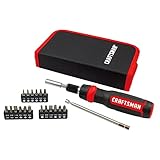


Quick picks by situation
- Best general-purpose pick: Wera Kraftform Plus 6-piece set. A compact, well-regarded choice for frequent manual work where grip and a dependable fit matter more than having every specialty bit.
- Best broad household coverage: Klein Tools 85078 8-piece set. A practical mix of common slotted and Phillips sizes for repairs, installation, and general maintenance.
- Best for electronics: iFixit Minnow Precision Bit Set. Its small-format bits and compact case suit delicate devices and small fasteners that ordinary drivers are too large for.
- Best for repetitive assembly: Wera Kraftform Kompakt 60. An interchangeable-bit driver system saves space and makes it easy to switch among common profiles.
- Best budget approach: A basic 6- to 10-piece set from a reputable tool brand. Prioritize correct sizes and a comfortable grip over a large assortment of obscure bits.
How the leading set types compare
The table uses typical published or commonly listed configurations as a practical comparison, not a claim that every regional package has identical contents. Weights are approximate and can differ by packaging and revision.
| Pick | Typical coverage | Approx. weight | Best use | Main trade-off |
|---|---|---|---|---|
| Wera Kraftform Plus 6-piece | 6 fixed drivers; common slotted and Phillips sizes | About 0.5–0.7 kg | Household and workshop tasks done often | Limited specialty coverage |
| Klein Tools 85078 | 8 fixed drivers; slotted and Phillips assortment | About 0.6–0.8 kg | General maintenance and electrical-adjacent household work | Not a precision or security-bit kit |
| iFixit Minnow Precision Bit Set | 16 precision bits in a compact case | About 0.1 kg | Small electronics and delicate assemblies | Bits are too small for full-size fasteners |
| Wera Kraftform Kompakt 60 | Compact handle and 17 interchangeable bits in a typical kit | About 0.3–0.5 kg | Portable repair work and mixed fasteners | Bit changes add a step; bits can be misplaced |
What matters more than the piece count
Bit coverage and fit
A driver that fits the fastener closely is less likely to slip and damage its recess. For household work, useful coverage usually means several Phillips sizes, multiple slotted widths, and—if your furniture, appliances, or workshop gear uses them—Torx bits. A set with 40 pieces is not automatically more useful than a six-piece set if most of those pieces duplicate sizes you rarely use.
Match the tip to the fastener rather than forcing the nearest size. Phillips and Pozidriv can look similar but are not interchangeable; using the wrong profile can cause cam-out. For wood screws, choose a driver or bit that seats fully and keep the tool aligned with the screw axis.
Handle comfort and control
Soft, shaped handles can make sustained turning more comfortable and help transmit force. A larger handle is useful for ordinary screws but awkward in cramped spaces. Precision work calls for a slim handle and controlled fingertip rotation, not maximum torque. If possible, consider whether the grip suits both the size of your hand and the spaces where you expect to work.
Tip durability and magnetic strength
Hardened, accurately machined tips generally hold their shape better than soft, poorly finished ones, but any tip can wear if it is undersized, used at an angle, or used as a pry bar. Magnetic tips help hold a screw during positioning, especially overhead, but are not a substitute for a correctly fitting tip. They can also attract metal filings, so wipe them clean when moving between delicate work and a bench covered in debris.
Storage that works in practice
A case or rack should keep sizes easy to identify and prevent tips from rubbing against one another. Fixed drivers are quick to grab but take more drawer space. Interchangeable-bit sets pack neatly, though loose bits can disappear if the case does not retain them firmly. Before buying, check whether the holder can be stored in your actual toolbox or repair kit.
Choose by job, budget, and available space
| Your situation | Best fit | Why |
|---|---|---|
| Occasional home repairs; tight budget | Basic 6- to 10-piece fixed-driver set | Low complexity and easy access to the sizes used most often |
| Frequent assembly or workshop maintenance | Comfortable fixed-driver set or quality ratcheting set | Grip and quick turning matter more when fasteners are numerous |
| Small apartment or limited tool storage | Compact interchangeable-bit set | More profiles in less space, with the trade-off of managing loose bits |
| Electronics, glasses, or small mechanisms | Precision set such as iFixit Minnow | Small tips and controlled handling are essential for tiny fasteners |
| Outdoor or workshop equipment with specialty screws | General set plus a separate Torx or security-bit assortment | Targeted coverage avoids paying for a large kit you will not use |
Real-world performance and ownership
For a loose cabinet hinge or a furniture assembly, a correctly sized Phillips driver with a comfortable handle is usually more useful than a large bit inventory. For a device repair, the precision set wins because the fasteners are too small for standard handles. For repeated work at a bench, a ratcheting handle can reduce wrist movement, but it will not compensate for a worn or mismatched bit.
Wear usually shows first at the tip: edges round over, corners chip, or the tip no longer seats firmly. Replace a damaged bit or driver instead of pressing harder; extra force can strip the screw and make removal much harder. Keep tools dry, wipe off oil and dust, and return interchangeable bits to their labeled slots. Avoid using screwdriver tips as chisels, punches, or pry tools, which can damage both the tool and the workpiece.
For a rough value check, divide the price by how often you expect to use the set. A $30 set used 30 times over three years costs about $1 per use; the same set used only three times costs $10 per use. This does not predict tool life, but it helps decide whether paying more for a better grip, stronger case, or specialized coverage fits your actual workload. Prices vary by seller and configuration; compare current listings by general market range rather than piece count alone.
Bottom line
For a dependable everyday kit, start with a comfortable fixed-driver set from Wera or Klein Tools and confirm that it includes the sizes you use. Choose the iFixit Minnow for precision work, or the Wera Kraftform Kompakt 60 when compact storage and a wider mix of profiles matter more than the convenience of dedicated drivers. The best screwdriver set is the one whose tips fit your fasteners, whose handle suits the job, and whose storage makes it easy to keep the right size at hand.