What's inside
As an Amazon Associate I earn from qualifying purchases. This post may contain affiliate links at no extra cost to you.
Installing concrete anchors in a basement wall is a job where the drill matters more than the fastener package suggests. A basic cordless drill may make a hole in soft block, but dense poured concrete quickly exposes its limits: slow progress, overheated bits, shallow holes, and anchors that do not seat correctly.
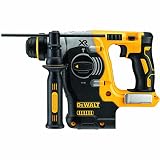
For occasional work, a cordless hammer drill is usually the most useful choice. It handles masonry holes while remaining suitable for wood, metal, and general fastening. If you are drilling dozens of holes or using anchors larger than about 1/2 inch, step up to a cordless rotary hammer with an SDS-Plus chuck.
As an Amazon Associate we earn from qualifying purchases at no extra cost to you.


What we cover
What to look for in a cordless hammer drill
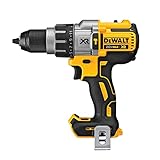
Choose a hammer drill with a brushless motor, a mechanical two-speed gearbox, and a side handle. A 1/2-inch chuck is preferable because it accepts larger masonry bits and provides a stronger grip than a 3/8-inch chuck. For basement concrete, a 18V or 20V cordless platform is the practical minimum for regular work.
Torque numbers printed on boxes are not directly comparable between brands, so do not choose solely by the highest advertised figure. More useful features include a low-speed range around 0–500 RPM, a high-speed range around 0–2,000 RPM, a hammer setting, and an adjustable clutch for driving screws without stripping them.
A hammer drill’s pounding action is vibration from the chuck moving back and forth. It is adequate for small holes, but it is much less aggressive than the piston action in a rotary hammer. Look for a brushless cordless hammer drill kit if you need one tool for both drilling and fastening.
Hammer drill or cordless rotary hammer?
| Tool | Best hole size | Typical use | Main trade-off |
|---|---|---|---|
| 12V or compact hammer drill | Up to 1/4 inch | A few holes in block or softer concrete | Slower drilling and limited battery capacity |
| 18V/20V hammer drill | 3/16 to 3/8 inch | Plastic anchors, Tapcon-style screws, light shelves | Works, but requires firm pressure and sharp bits |
| 18V/20V SDS-Plus rotary hammer | 3/16 to 5/8 inch | Many concrete anchors, railing, shelving, equipment mounts | Less useful as a normal drill unless it has a chuck adapter |
| Corded rotary hammer | 3/16 inch and larger | Extended drilling or heavy concrete work | Requires an outlet and extension cord |
For four or five 1/4-inch holes, a good hammer drill is fine. For ten or more holes, dense poured concrete, or holes deeper than 2 inches, a rotary hammer saves time and battery power. Its SDS-Plus bits also resist slipping better than round-shank bits in a standard chuck.
Do not buy a large rotary hammer just to install a few small plastic anchors. It is heavier, more expensive, and easier to over-drill with. The cheaper hammer drill is the sensible option when the project is light and occasional.
Match the drill to the anchor
Read the anchor manufacturer’s required hole diameter and depth. The anchor size, not the screw diameter alone, determines the bit. A 1/4-inch concrete screw often calls for a 3/16-inch bit, while some sleeve anchors require a hole matching the anchor body, commonly 3/8, 1/2, or 5/8 inch.
Use carbide-tipped masonry bits rated for concrete. A cheap general-purpose masonry bit may work in mortar or cinder block, but it can become frustratingly slow in poured concrete. For a hammer drill, a carbide-tipped concrete masonry bit set covers the common 3/16- to 1/2-inch sizes.
SDS-Plus bits are the better choice for a rotary hammer. They cost more, but the shank transfers impact efficiently and the bit changes in seconds. Buy individual bits when possible if you only need one diameter; inexpensive mixed sets often include sizes you will not use.
How to drill the hole correctly
Mark the hole and check for plumbing or wiring before drilling. Do not assume a basement wall is empty. Avoid drilling near visible cracks, wall joints, and the edges of concrete. Keep an anchor at least 3 inches from an edge unless the manufacturer specifies otherwise; closer holes can break out the concrete or split the edge.
Use the drill’s hammer setting, low gear, and the side handle. Start slowly to keep the bit from walking, then apply steady pressure. The bit should make progress without requiring your full body weight. Excessive pressure can stall the motor, overheat the bit, and reduce the hammer action.
Drill at least 1/4 inch deeper than the embedment required by the anchor. This leaves room for dust and prevents the anchor from bottoming out. Stop periodically on deep holes to withdraw the bit and clear dust. For a 2-inch anchor, a hole around 2-1/4 inches deep is a useful starting point, subject to the manufacturer’s instructions.
Vacuum the hole thoroughly, then brush and vacuum again if the anchor instructions call for a clean hole. Dust left in the hole acts like a lubricant and prevents concrete screws from cutting properly. A screw that spins without tightening usually indicates an oversized hole, damaged threads, weak concrete, or dust that was not removed.
Battery size and handling
A 4.0Ah or 5.0Ah battery is a good match for repeated concrete drilling. Compact 2.0Ah packs keep the tool lighter but may run down quickly in hard concrete. Keep a spare charged if you are installing more than a handful of anchors.
Wear eye protection and hearing protection. Concrete dust is hazardous, so use a vacuum attachment or dust shroud where practical and wear a suitable respirator when drilling many holes indoors. Keep both hands on the tool when the bit binds; a side handle is not optional on larger hammer drills.
The practical buying decision
Buy a compact hammer drill if you are mounting a few shelves, brackets, or cable supports with small anchors. Choose a full-size brushless 18V or 20V hammer drill if you want one battery platform for household work and expect occasional concrete drilling.
If the job includes many anchors, large sleeve anchors, or repeated work in poured concrete, buy a cordless SDS-Plus rotary hammer instead. It will drill faster, run cooler, and produce more consistent holes. For especially hard concrete or a single large project, renting a rotary hammer can be cheaper than buying one.