What's inside
As an Amazon Associate I earn from qualifying purchases. This post may contain affiliate links at no extra cost to you.
Magnetic bit holders make an impact driver faster to load and easier to use, but not every holder is suitable for impact work. A basic magnetic extension may hold a bit securely in a drill, then loosen, wobble, or break under an impact driver’s repeated hammering. The best choice depends on bit length, fastener access, and how much abuse the holder will take.
As an Amazon Associate we earn from qualifying purchases at no extra cost to you.


What we cover
What to Look For in a Magnetic Bit Holder
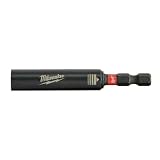
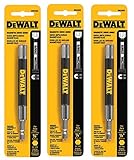
Start with a holder that has a 1/4-inch hex shank and is explicitly rated for impact drivers. Impact-rated holders are built with tougher steel and are designed to tolerate torsional shock. A standard chrome or polished drill extension can be harder and more brittle than an impact-rated part, making it more likely to crack at the shank or retaining groove.
The magnet should hold a bit firmly without making bit removal difficult. Rare-earth magnets are common and provide plenty of retention for standard driver bits. However, the magnet is not the main structural component. The bit should also be retained by a sleeve, retaining ball, or locking collar. A magnet alone can lose grip when metal chips, paint, or dust collect around the bit.
Pay attention to the holder’s overall length. Short holders around 2 to 3 inches are compact and have less leverage, which is useful when driving structural screws. Longer versions, typically 6 inches or more, help reach recessed fasteners and keep your hand away from the work, but they flex more and can amplify wobble. For general use, a 3-inch impact-rated holder is usually the best compromise.
The Main Types of Magnetic Holders
| Type | Best use | Main advantage | Main drawback |
|---|---|---|---|
| Basic magnetic extension | Indoor assembly and light fastening | Low cost and quick bit changes | May not withstand frequent impact use |
| Impact-rated sleeve holder | General construction and remodeling | Better bit retention and shock resistance | Costs more than a simple magnetic shaft |
| Locking impact holder | Overhead work and repetitive driving | Prevents the bit from falling out | Slower bit changes and more moving parts |
| Long magnetic extension | Deep recesses and awkward access | Greater reach | More flex, wobble, and bending stress |
| One-piece bit holder | Maximum stiffness and compact setups | Fewer joints to loosen or wobble | Does not provide much extra reach |
For most homeowners, an impact-rated magnetic bit holder in the 3-inch range is the sensible starting point. It handles cabinet screws, deck screws, wall-anchor screws, and general repair work without making the driver unnecessarily long.
Choosing by the Job
Use a basic magnetic holder for furniture assembly, shelving, electrical boxes, and other jobs where the driver is set to a moderate speed and the fasteners are small. If you drive fewer than a few dozen screws at a time, the cheaper holder may be entirely adequate. Its limitations usually appear when it is used with high-torque settings, long construction screws, or repeated production work.
Choose a locking holder when dropping a bit would be especially inconvenient. Overhead fastening, ladder work, and driving screws into metal framing are good examples. Locking collars are also useful when a bit has a shallow groove or when the holder will be tilted sharply. The trade-off is that a collar takes an extra motion to release, and its spring or sleeve can eventually collect grit.
For deep holes or recessed screws, consider a 6-inch impact-rated magnetic bit extension. Do not use a long holder simply because it looks more versatile. At 6 inches, even a small amount of runout is obvious at the bit tip. Keep the driver aligned with the screw and use lower speed during initial engagement. For very deep access, a long holder paired with a short bit is often steadier than a long bit in a short holder.
Bit Retention, Wobble, and Failure Modes
A quality holder should keep the bit seated with minimal side play. Some movement is normal, but visible wobble can strip Phillips recesses, damage Torx fasteners, and enlarge holes in soft materials. Test a holder before committing to a large project: insert a known-good bit, run the driver at low speed, and watch the tip against a fixed edge. A small circular movement at the holder can become several millimeters at the end of a long bit.
The most common failure is a worn retaining ball or sleeve. The bit may still be magnetic, but it can slide out when the driver is pointed downward or when the tool reverses. Another failure is a fractured shank near the 1/4-inch groove. This usually follows repeated high-torque use, side loading, or using the holder as a pry bar. Stop using a holder if the groove is visibly rounded, the sleeve sticks, or the bit no longer sits straight.
Magnetic holders can also pull small steel screws out of alignment. If a screw repeatedly follows the magnet instead of entering the pilot hole, use a screw with a deeper recess, reduce the magnet’s influence with a sleeve, or switch to a nonmagnetic locking holder. For delicate brass or stainless fasteners, a locking sleeve may provide better control than a very strong magnet.
Features Worth Paying For
Look for a clearly marked impact rating, a heat-treated or shock-resistant shank, and a sleeve that does not slide during rotation. A black oxide or phosphate finish is common and generally preferable to a decorative polished finish on an impact accessory. Some premium holders include a torsion zone that twists slightly under load. This can extend service life, but it will not compensate for severe misalignment or excessive torque.
If you frequently switch between Phillips, square, and Torx bits, buy a holder with a smooth, one-handed sleeve and keep spare bits nearby. If the holder will stay dedicated to one bit, a short one-piece or locking design may last longer. A multi-piece impact bit holder set is worthwhile when it includes several lengths and not just multiple copies of the same basic shaft.
How to Get Longer Service Life
Insert the bit fully before applying power, keep the driver in line with the fastener, and start at low speed until the threads bite. Avoid using a magnetic holder to remove seized screws; the shock can damage the retaining mechanism. Clean metal filings from the magnet with a cloth rather than striking the holder against the tool. Store long extensions straight, not bent inside a crowded tool bag.
For occasional household fastening, spend less on a reputable basic impact-rated holder and replace it when retention or alignment deteriorates. For deck building, framing, roofing, or daily shop work, pay more for a locking or heavy-duty sleeve holder. The extra cost is justified when a dropped bit, stripped screw, or broken extension costs more time than the holder itself.