What's inside
As an Amazon Associate I earn from qualifying purchases. This post may contain affiliate links at no extra cost to you.
What we cover
Choose the Right Hole Saw
For a recessed electrical box, the right hole saw depends on the wall, not just the box. Many single-gang old-work boxes need an opening around 3½ inches wide, but dimensions vary. Measure the box’s cutout template or its body before drilling; the flange is meant to cover the cut edge, not fit through it. A hole that is too large can leave the box’s ears unsupported.
For drywall, a standard bi-metal hole saw is usually the economical choice. For tile, masonry, or a layered wall, use a saw made for the material and plan for slower cutting. Check the box instructions and the saw’s actual cutting diameter before buying. A nominal size can differ slightly from the opening a particular box requires.
As an Amazon Associate we earn from qualifying purchases at no extra cost to you.
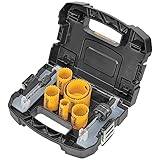

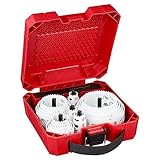
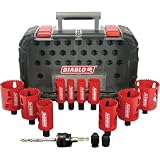
Hole-saw options compared
| Wall material | Useful saw type | What to watch for |
|---|---|---|
| Drywall | Bi-metal hole saw | Fast and inexpensive; dust and paper tear-out are the main concerns. |
| Plaster and lath | Bi-metal saw, used carefully | Lath can snag or break; avoid forcing the saw and inspect for hidden wiring. |
| Ceramic tile | Diamond-grit hole saw | Needs low speed, steady pressure, and cooling as directed by its maker. |
| Brick or concrete | Carbide or diamond masonry core bit | Requires a compatible drill and can be slow; a regular hole saw is not suitable. |
A 3½-inch bi-metal hole saw is a sensible starting point for a drywall opening if that size matches the box. A kit can be cheaper per saw if you will use its other diameters, but a single cutter is enough for a one-off job. For tile, buy a diamond hole saw in the required diameter; do not try to make a drywall saw work on tile.
Arbor, drill, and speed
The hole saw attaches to an arbor, which holds the pilot bit and connects the cutter to the drill. Check that the arbor fits the saw’s mounting thread and the drill chuck. A common round-shank arbor works in a standard three-jaw chuck. Tighten the chuck securely; a loose arbor can wobble, enlarge the opening, or damage the wall.
A corded drill or a capable cordless drill can cut a single drywall opening. Use low gear and moderate speed, particularly with larger cutters. High speed creates heat and makes it easier for the teeth to catch. If the saw binds, release the trigger rather than twisting the drill against the wall. For a large saw, a side handle provides better control. Do not use a hammer setting for hole-saw cutting.
Many hole saws have a pilot bit that helps keep the cutter centered, but the pilot hole can go through the wall before you know what is behind it. Make a small inspection opening first when needed, and use a stud finder or other appropriate checks for pipes and cables. Shut off power to nearby circuits and verify the area is safe; a wall scan cannot guarantee that a cavity is clear.
Cutting drywall cleanly
Mark the box center and confirm the opening will fall between studs with enough clearance for the box and its clamps. Check both sides of the wall if possible. Place a drop cloth below the cut: drywall dust spreads farther than expected. Wear eye protection and a suitable dust mask, especially if making several cuts.
Hold the drill square to the wall and start slowly so the pilot bit does not wander. Let the teeth cut rather than leaning hard on the drill. Pause if the saw heats up or fills with gypsum; clear debris only with the drill stopped. When the cutter approaches the back paper, ease off to reduce tearing. If the drywall is particularly fragile, score the cut line first with a utility knife.
The slug can stick inside the saw after the cut. Unplug or remove the battery before clearing it, and avoid prying at the teeth with a finger. Some saws have side slots for pushing the plug out. If you expect to make repeated cuts, a hole-saw dust shield can contain some debris, though it does not eliminate cleanup.
Tile, plaster, and masonry need different methods
Tile is the place where a cheap drywall cutter can turn into a cracked finish. Use a diamond-grit cutter rated for the tile, follow its speed and cooling instructions, and keep the drill straight. Masking tape can help mark the center, but it does not replace a guide or careful starting. Do not use hammer action on tile. If the tile is already installed, check what lies behind it before cutting through the substrate.
Plaster over lath is less predictable than drywall. A hole saw may cut plaster cleanly, then catch on wood lath and tear the edge. Use light pressure and stop if the cutter grabs. For brick or concrete, use a masonry core bit matched to the material and drill. An ordinary bi-metal saw will dull quickly and may overheat. If the wall contains reinforcing steel or the opening is near a structural element, reassess the location rather than forcing the cut.
A practical buying checklist
Before ordering, measure the required opening, identify the wall layers, and confirm the arbor is included or available separately. For one drywall box, a basic bi-metal saw is usually sufficient; premium coatings and large multi-piece kits are hard to justify unless you make frequent cuts. For tile, spend on the correct diamond cutter instead of risking a chipped finish. For masonry, choose a purpose-built core bit and verify that your drill is suitable.
Finally, test-fit the box without forcing it. If the opening is slightly rough, trim only where needed; if it is oversized, the box may not clamp securely. Keep the cutout until the installation is complete, since it can help with a small repair if the opening needs patching.