Our Top Picks


What's inside
As an Amazon Associate I earn from qualifying purchases. This post may contain affiliate links at no extra cost to you.
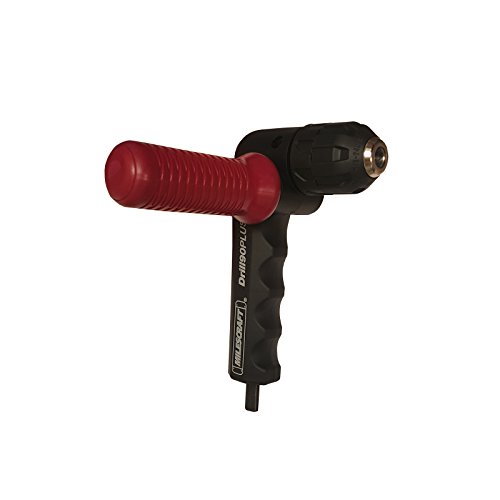
The best right angle attachment for most drill owners in this group is the Milescraft 1304 Drill90PLUS, because it has its own 3/8-inch keyless chuck, a removable dual-position handle and a design that accepts spade bits, Forstner bits and hole saws in places a drill body will not fit. A right angle attachment bends the drive 90 degrees (or a flexible shaft routes it around a corner) so you can drill or drive between joists, inside cabinets and under sinks. If you mostly drive screws with an impact driver, the DEWALT FLEXTORQ models are the closer match.
What we cover
Quick List
- DEWALT 12-Inch Flex Shaft (DWARAFS) – best for reaching around obstacles with a flexible shaft
- DEWALT FLEXTORQ Right Angle Adapter (DWAMRAFT) – best for impact driver users who need a compact, impact-rated head
- QWORK 90 Degree Right Angle Attachment – best for an 8mm-hex drive adapter at a basic level
- DEWALT FLEXTORQ 12-Inch Modular Attachment – best for one set that converts between right angle and flex shaft
- GRENPRO 19-Piece Flexible Extension Kit – best for a mixed kit of flexible shaft pieces and 105-degree adapters
- Milescraft 1304 Drill90PLUS – best for drilling bigger holes with a chuck in tight spaces
Which One Is Right for You?
| If you… | Choose |
|---|---|
| need to drill 1/2 to 1-inch holes between studs or joists | Milescraft Drill90PLUS |
| drive screws with an impact driver in tight corners | DEWALT FLEXTORQ DWAMRAFT |
| need to bend around pipes, wiring or framing | DEWALT 12-Inch Flex Shaft (DWARAFS) |
| want one modular set that can be configured for several jobs | DEWALT FLEXTORQ 12-Inch Modular |
| like an assortment of extension pieces in a single case | GRENPRO 19-Piece Kit |
| want a simple low-cost 90-degree adapter for light use | QWORK 90 Degree Attachment |
The right choice depends on what you are driving. Drilling larger holes wants a chuck and a handle, driving screws wants a compact head and impact rating, and reaching around a pipe wants a flexible shaft. Each approach has trade-offs in torque, reach and bulk, so choose the one that matches the tasks you meet most often.
All 6 Picks in Detail
1. DEWALT 12-Inch Flex Shaft Right Angle Attachment (DWARAFS) – Best for Reaching Around Obstacles
As an Amazon Associate we earn from qualifying purchases at no extra cost to you.

The DWARAFS is a 12-inch flexible shaft with a right angle head that takes 1/4-inch hex bits. It suits electricians, plumbers and remodelers who need to drive fasteners or drill small holes where a drill body cannot fit, such as between joists or behind pipes. DEWALT describes a Rapid Load head for easy bit changes, a magnet that supports fasteners and a removable side handle that clamps around the shaft to help control the tool.
- 12-inch flexible shaft
- 1/4-inch hex drive and bit holder
- Rapid Load head with magnetic bit holding
- Removable side handle for stability
- All-metal head, weight below about 1 pound (manufacturer and retailer specs)
Because the shaft flexes, it can route around obstacles that a rigid right angle drill cannot clear.
Keep the shaft as straight as the job allows and avoid tight loops, which waste torque and heat the shaft. Brace the side handle against your body or the work to counter rotation.
Pros
- Flexible reach around obstacles
- Magnetic bit and side handle improve control
Cons
- Some torque is lost in the flexing shaft
- Best for screws and small bits, not large boring bits
It differs from the DEWALT FLEXTORQ DWAMRAFT by trading a compact fixed head for a longer flexible reach.
2. DEWALT FLEXTORQ Right Angle Drill Adapter (DWAMRAFT) – Best for Impact Driver Owners in Tight Spaces

The DWAMRAFT is a modular right angle attachment for impact drivers and drills. The listing calls it a 2-in-1, and DEWALT’s pages describe a compact head with a metal gearcase and a magnet to hold fasteners. It is the fit for cabinet installers, deck builders and mechanics who need to drive screws or bolts in tight corners with an impact driver. Retailer sources give a head height of about 1.5 inches, which lets it slide where a driver body will not.
- Modular right angle for impact drivers (per listing)
- Metal gearcase built for impact use
- Magnetic fastener holding
- Head height around 1.5 inches (retailer specs)
- 1/4-inch hex shank and bit type (per retailer specs)
The impact rating is the key point: many generic right angle adapters are not designed for the hammering of an impact driver.
Check that the configuration in the box matches what you need, since sources disagree on whether it is described as a 2-in-1 or a wider modular family. Confirm contents on the product page.
Pros
- Impact-ready construction
- Very low profile head for tight corners
Cons
- Limited to hex bits, no chuck for round shank bits
- Package configuration is described differently by different sources
Next to the Milescraft Drill90PLUS, it is better for driving fasteners and worse for drilling large-diameter holes.
3. QWORK 90 Degree Right Angle Drill Attachment – Best for a Basic 8mm Hex Adapter

The QWORK attachment is a 90-degree adapter that its listing says is compatible with power and hand drills through an 8mm hex. It suits hobbyists and occasional users who need to reach a screw or small hole in a tight spot and do not need a big accessory system. The listing gives few other details, so confirm the chuck type, torque rating, bit capacity and whether it is intended for impact tools on the product page.
- 90-degree right angle drive
- 8mm hex drive compatibility (per listing)
- Designed for use with drills (confirm impact use on listing)
- Chuck size and bit capacity: confirm on listing
- Housing material and weight: confirm on listing
The 8mm hex input is a detail to read carefully, because many drill chucks hold round or hex shanks of different sizes and the attachment must be held firmly.
For safety, secure the attachment so its body cannot spin in your hand. Use a handle or brace the housing against the work, and keep the drill speed moderate.
Pros
- Simple concept and compact
- Useful for occasional tight-space jobs
Cons
- Sparse specifications in the listing
- Unclear impact-driver suitability
Compared with the Milescraft, it provides fewer documented features, so it is a lighter-duty option.
4. DEWALT FLEXTORQ 12-Inch Modular Attachment – Best for One Set That Converts Between Configurations

This DEWALT FLEXTORQ listing describes a compact, impact-ready, 4-in-1 modular system with a 12-inch straight flexible shaft and a right angle configuration. It suits professionals and serious DIYers who want a single set that can serve as a compact right angle, a standard right angle or a flexible shaft, depending on the job. Because the listing and DEWALT’s pages use different descriptions, check which pieces are in the box.
- Modular FLEXTORQ system (listing calls it 4-in-1)
- 12-inch flexible shaft option
- Impact-ready design (per listing)
- Right angle and straight configurations
- Included parts: confirm on listing
Modular sets reduce the number of separate accessories you carry, and they let you step up from a compact head to a flexible shaft when the space demands.
The drawback is complexity: more parts mean more to keep track of. Store the pieces together and check the retaining collars before each use.
Pros
- Several configurations in one system
- Impact-ready for driving fasteners
Cons
- More parts to manage
- Descriptions differ across sources, so confirm the contents
It is the more flexible sibling of the DWAMRAFT, and it partly overlaps with the DWARAFS flex shaft.
5. GRENPRO 19-Piece Flexible Extension Kit with Right Angle Adapters – Best for a Mixed Assortment (Kit, Not a Single Attachment)

This is a kit rather than a single attachment: 19 pieces including flexible drill bit extensions, two right angle adapters rated at 105 degrees (not 90), and three rotating socket adapters. It suits hobbyists and general repair users who want an assortment for reaching awkward screws. Because it is a mixed kit with 105-degree adapters, it is better as a general accessory set than as a dedicated 90-degree drilling attachment.
- 19-piece kit
- Two right angle attachments at 105 degrees
- Three rotating socket adapters
- Flexible drill bit extension pieces (length: confirm on listing)
- Material, torque rating and impact suitability: confirm on listing
Kits like this are convenient for light work such as removing a screw in a cabinet or reaching a fastener behind a panel.
Flexible extension shafts lose torque, so they are not a good choice for large holes or stubborn fasteners. Use light loads and avoid impact drivers unless the listing states they are supported.
Pros
- Many pieces for varied access problems
- Rotating socket adapters add reach
Cons
- Light-duty construction is likely at this kit’s level
- 105-degree adapters are not true 90-degree heads
Compared with the DEWALT sets, it offers more pieces but less documented build quality.
6. Milescraft 1304 Drill90PLUS – Best for Drilling Larger Holes with a Chuck in Tight Spaces

The Drill90PLUS is a right angle attachment with its own 3/8-inch keyless chuck, a removable dual-position handle and a hex shank on the power end. It is built for carpenters and DIYers who want to drill between studs, inside cabinets or beneath sinks with spade bits, Forstner bits, hole saws and twist bits. Listings give a minimum reach of about 4 inches, steel gears with three kinds of bearings and a reinforced housing.
- 3/8-inch keyless chuck
- Hex shank drive on the power side (shank size: confirm on listing)
- Dual-position removable handle, about 4-1/4 inches
- Steel gears and bearings, reinforced housing
- Speed up to about 3,000 RPM at the output (retailer specs)
The chuck is the difference-maker, because you can use round-shank bits and bigger accessories that a hex-only head cannot hold.
Retailer information says it is not recommended for impact drivers or 1/2-inch drills. Use it with a standard drill at moderate speed, hold the handle firmly and let the bit cut.
Pros
- Chuck accepts a wide range of bit types
- Handle improves control against twisting
Cons
- Not suited to impact drivers
- Larger than compact fixed heads
It is the opposite of the DWAMRAFT: bigger and chuck-equipped for drilling, while the DEWALT is slimmer and aimed at driving.
Specs Compared
| Model | Type | Drive / chuck | Angle | Impact use | Notes |
|---|---|---|---|---|---|
| DEWALT DWARAFS | Flex shaft, 12 in | 1/4-inch hex | 90 degrees (head) | Confirm on listing | Rapid Load head, side handle |
| DEWALT DWAMRAFT | Modular compact head | 1/4-inch hex (per retailer specs) | 90 degrees | Impact-rated metal gearcase | Head about 1.5 in |
| QWORK 90-Degree | Rigid adapter | 8mm hex input (per listing) | 90 degrees | Confirm on listing | Few stated specs |
| DEWALT FLEXTORQ 12-in | Modular with flex shaft | confirm on listing | 90 degrees and straight | Impact ready (per listing) | Contents: confirm on listing |
| GRENPRO 19-Piece Kit | Flexible extension kit | confirm on listing | 105 degrees | Confirm on listing | Includes socket adapters |
| Milescraft Drill90PLUS | Rigid with chuck | 3/8-inch keyless chuck | 90 degrees | Not recommended | About 3,000 RPM, handle included |
How We Chose These
This guide comes from desk research on the six products in the current catalog set. We compared the way each one transmits power (rigid head, flexible shaft or modular set), the drive and chuck type, the angle, and whether the listing or manufacturer says it is suitable for impact drivers. We checked DEWALT and Milescraft pages for the details they publish and treated sparse listings with caution, marking unknown values for confirmation. One product is a kit with 105-degree adapters and is described as such. Ranking weight went to documented impact suitability, handle design and the clarity of stated limits, rather than to piece counts.
What to Look For
Rigid head, modular set or flexible shaft
A rigid right angle head is compact and transfers torque efficiently, which makes it the best choice for driving screws and bolts and for drilling with a chuck. A flexible shaft routes around obstacles, but it loses some torque and can whip if it is bent too tightly or run at high speed. Modular systems let you convert between a compact head and a flexible shaft. As a rule of thumb, choose a rigid head when you can see a straight line to the work and a flexible shaft when the path bends.
Head height and access
The most important dimension is the distance from the drill’s chuck to the tip of the bit, plus the height of the head. Joists on 16-inch centers leave about 14-1/2 inches of clear space between 1.5-inch framing members, but plumbing, wiring and blocking reduce that, and some cabinets leave only 3 to 4 inches. A compact head around 1.5 inches fits where a 4-inch long drill body will not. Check the specified minimum reach and compare it to the gap you need to work in. A worked example: if you must drill a 1-inch hole through a stud in a 6-inch-deep cavity, you need a head and bit combination shorter than 6 inches.
Chuck versus hex input
Many compact heads accept only 1/4-inch hex bits, which suits driving but limits drilling. An attachment with a keyless chuck can hold round-shank twist bits and some larger accessories, up to its rated capacity. If you drill holes larger than 1/2 inch, check the capacity and speed limits. Spade and Forstner bits generate side loads, so a firm handle and moderate speed are important.
Impact rating and torque
Impact drivers deliver sharp rotational hits that can damage gears not designed for them. Only use an attachment on an impact driver if the manufacturer says it is impact-rated. Some chuck-equipped heads, like the Milescraft, specifically say not to use them with impact drivers. Keep in mind that the reaction torque on a right angle attachment can twist the housing in your hand, so a side handle or a brace against a stud is a good habit.
Safety and technique
Wear eye protection and keep your free hand behind the bit’s path. Start slowly to seat the bit, then increase speed gradually. Before drilling into walls or floors, check for wiring and pipes, and shut off the power if there is a chance you could contact a live conductor. Do not run flexible shafts at full speed in tight bends, and stop immediately if you hear unusual noise or feel heat building in the head.
Matching the attachment to the job
Think in terms of three common situations. Running electrical cable through studs usually means drilling a 3/4 to 1-inch hole through the center of a stud while standing in a narrow cavity, which calls for a chuck-equipped head and a spade or auger bit with a short shank. Installing cabinet hardware, hinges and brackets means driving small screws in a space a few inches deep, which suits a compact impact-rated head and a magnetic bit. Reaching a bolt behind a panel or in an engine bay is a job for a flexible shaft or a socket adapter, where bending around obstacles is more important than torque. Write down the smallest opening you need to work through and the largest bit you will use, then compare both numbers to the dimensions each listing gives.
Bits, accessories and care
Use short bits wherever possible, since a long bit makes the whole assembly clumsy and moves the cutting edge farther from the support of the head. Pair magnetic bit holders with screws to keep the fastener in place with one hand free for the work. After use, wipe off dust and grit, check the head for play by rocking the bit gently, and store flexible shafts coiled loosely instead of kinked. If the head gets noticeably hot, stop and let it cool, because heat is the first sign of overload or a bent shaft. Lubrication needs vary, and many sealed gear heads should not be opened, so follow the manufacturer’s guidance and replace the attachment if it develops grinding or looseness.
Speed, heat and duty cycle
Right angle heads are geared assemblies with small bearings, and they are designed for intermittent use rather than hours of continuous drilling. Keep the drill in a low or medium speed range for large bits, let the bit cut at its own pace and back out regularly to clear chips so friction does not build. If the head becomes too hot to hold comfortably, pause for a few minutes. Flexible shafts are more sensitive: the tighter the bend, the more heat and wear, so keep the radius generous and avoid kinks. For production tasks, such as drilling dozens of holes through a row of studs, a dedicated right angle drill is a better tool than any attachment.
Questions
Can I use a right angle attachment with an impact driver?
Only if it is specifically rated for impact use. Impact-ready models such as the DEWALT FLEXTORQ line are designed for it, while chuck-based attachments like the Milescraft say not to.
Which is better, a rigid head or a flex shaft?
A rigid head is stronger and more efficient for torque, while a flex shaft reaches around obstacles. Pick based on whether you have a straight line to the work.
How large a hole can a right angle attachment drill?
That depends on the chuck and the gear capacity. A 3/8-inch chuck attachment generally handles accessories up to that shank size, and larger spade or hole saw bits need low speeds and firm support.
Do right angle attachments reduce power?
Yes, some torque and speed are lost in the gears and, for flexible shafts, in the shaft. Expect them to feel less powerful than the bare drill.
What does a 105-degree adapter do differently?
It tilts the bit slightly past a right angle, which can help reach a recessed fastener but is not a true 90-degree drilling angle. For perpendicular holes, use a 90-degree head.
How do I keep the attachment from spinning in my hand?
Use the side handle, brace the housing against the work and avoid sudden bursts of trigger. A firm grip and moderate speed prevent most control problems.
Update History
- October 20, 2026 – Initial publication; product set drawn from current catalog listings.
- Check the product page for current specifications and availability before buying.
Sources
- Manufacturer product and specification pages for DEWALT and Milescraft
- Retailer listing titles and specification fields for each attachment