What's inside
As an Amazon Associate I earn from qualifying purchases. This post may contain affiliate links at no extra cost to you.
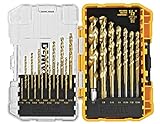
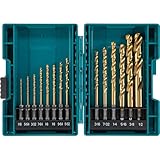
Titanium-coated twist bits are a practical choice for drilling clean holes in wood, plastic and mild steel with a cordless drill. The coating can reduce friction and help a bit resist wear, but it does not make the cutting edge immune to heat or damage. For most DIY jobs, the set’s size range, bit material and case matter more than a titanium-colored finish.
As an Amazon Associate we earn from qualifying purchases at no extra cost to you.


What we cover
What the coating does—and does not do
Most consumer “titanium” bits use high-speed steel (HSS) with a thin titanium nitride coating. The coating reduces friction while it remains intact. It does not turn ordinary HSS into a harder, longer-lasting bit all the way through. Once sharpening or heavy wear removes the coating at the cutting edge, the bit behaves much like uncoated HSS.
These bits work well for general-purpose drilling in wood, plastic and thin or medium-gauge steel. They are not the right choice for masonry, and they are a poor match for stainless steel or repeated production drilling. For those jobs, look for masonry bits or cobalt-alloy bits, respectively. Titanium-coated bits also are not impact-rated accessories: use them in a drill or hammer drill with hammer action switched off, not in an impact driver.
What to look for in a set
A useful general-purpose set should cover common fractional sizes from about 1/16 to 1/2 inch, preferably in sensible increments. Small pilot holes and clearance holes are more frequent than unusually large holes, so check that the set includes the sizes you actually need rather than choosing by the largest number on the box. Split points, often ground to 135 degrees, can help a bit start with less wandering on metal. They are helpful, not a substitute for a center punch on slippery sheet metal.
Check that the shanks fit your drill chuck. Most twist bits have round shanks, which work in standard three-jaw chucks. A cordless drill’s clutch should be set low enough to avoid twisting a bit if it binds. A metal index case keeps sizes organized, but it is only useful if the markings are readable and the bits stay put when the case is opened.
For a home kit, a titanium-coated HSS drill-bit set is a reasonable everyday choice. If you drill steel frequently, compare its contents and cutting-edge quality with a cobalt drill-bit set rather than assuming a larger titanium-coated set is an upgrade.
Set types compared
| Set type | Best for | Main trade-off |
|---|---|---|
| Titanium-coated HSS | Occasional holes in wood, plastic and mild steel | Coating wears; not for masonry or sustained hard-metal work |
| Black oxide HSS | General drilling when price matters | Usually a cheaper finish, not a major performance upgrade |
| Cobalt alloy | Repeated drilling in stainless steel and tougher metals | Costs more; still needs controlled speed and lubrication |
| Masonry bits | Brick, block and concrete with a compatible drill | Different tip design; unsuitable for ordinary metal drilling |
Black oxide bits are often the sensible budget pick for occasional work. If you are drilling a few holes in pine, plastic or thin mild steel, paying extra for a coating may not change the result much. Choose by useful sizes, a decent case and a return policy instead of treating the finish as a guarantee of life.
How to drill metal without burning bits
Use a sharp bit, mark the location and make a small pilot hole when the final hole is large. For example, a 1/8-inch pilot can make a 3/8-inch hole easier to start and less prone to grabbing. Clamp the work securely; never hold a small metal piece in your hand while drilling. A center punch helps keep the bit from skating.
Set the drill to low gear and use moderate pressure. As a rough starting point, small bits—around 1/8 inch—can run faster than large bits; large bits need slower speed to keep heat down. There is no single RPM that suits every bit and metal, so follow the bit maker’s guidance when available. If the bit squeals, smokes, turns blue or stops cutting, ease off and let it cool. A few drops of cutting fluid help on steel. Do not force a dull bit: extra pressure can snap it, damage the work or twist the drill out of your grip.
For a hole in thin sheet metal, back the sheet with scrap wood to reduce burrs and help prevent the bit from catching as it breaks through. Deburr the finished hole before fitting a fastener. If the hole is for a wall anchor, first identify the wall material and match the hole size to the anchor instructions; a twist bit is not automatically suitable for drilling masonry.
Care, sharpening and replacement
Wipe bits clean after use and store them dry. A bit that cuts slowly, wanders or needs much more pressure is likely dull or damaged. Small HSS bits can be sharpened, but sharpening takes practice and removes the coating at the edge. For occasional household repairs, replacing a cheap, badly worn bit may be quicker than trying to restore it. Keep frequently used sizes—such as 1/8, 3/16 and 1/4 inch—in easy reach, and replace any bit with a bent shank or chipped cutting edge.
Buy a titanium-coated set for a mix of everyday drilling where mild steel is part of the work but not a constant. Choose plain HSS to save money for light use, cobalt for frequent tough-metal work, and masonry bits for walls. That match between bit and job will matter more than the word “titanium” on the case.