
Our Top Picks
What's inside
- Quick Picks at a Glance
- Table of Contents
- How to Choose the Right Rivet Gun
- 1. DEWALT DCF403B — Best Cordless Rivet Gun
- 2. Astro Pneumatic PR14 — Best Pneumatic Rivet Gun
- 3. Astro Pneumatic 1423 — Best Lever Riveter for Large Rivets
- 4. Marson HP-2 — Best Professional Hand Riveter
- 5. Arrow RT188M — Best Budget One-Hand Riveter
- Rivet Gun Mistakes to Avoid
- Setup, Care and Consumables
- Safety and Recall Checks
- Frequently Asked Questions
- Conclusion
As an Amazon Associate I earn from qualifying purchases. This post may contain affiliate links at no extra cost to you.
- Top Pick: Quick Picks at a Glance
- Runner-up: Recommended product
- Also consider: Quick Picks at a Glance
The best rivet gun for most workshops is a powered one matched to the rivets you actually set: the DEWALT DCF403B if you already run 20V MAX batteries, or the Astro Pneumatic PR14 if your shop has air on tap and you set rivets all day. Both pull with more than 2,000 pounds of force and set stainless rivets that defeat cheaper hand tools. If you rivet only occasionally, a good hand tool still earns its drawer space: the Astro Pneumatic 1423 lever riveter handles quarter-inch stainless by hand, the Marson HP-2 is the professional hand riveter standard, and the Arrow RT188M covers light one-handed work at a budget tier.
This guide compares five rivet guns across the three power families, using published specifications only: rivet diameter range, the materials each tool is rated to set, pulling force, stroke, nosepiece handling and mandrel collection. Rivet guns look simple, but the wrong one shows its limits fast. A one-hand tool that cannot finish a stainless mandrel, or a pneumatic gun bought for a shop with no compressor, turns a ten-minute panel job into an afternoon of frustration. The picks below are organized so you can match the tool to your rivet sizes, your materials and your power source first, then worry about the details.
As an Amazon Associate, we earn from qualifying purchases.
What we cover
- Quick Picks at a Glance
- Table of Contents
- How to Choose the Right Rivet Gun
- 1. DEWALT DCF403B — Best Cordless Rivet Gun
- 2. Astro Pneumatic PR14 — Best Pneumatic Rivet Gun
- 3. Astro Pneumatic 1423 — Best Lever Riveter for Large Rivets
- 4. Marson HP-2 — Best Professional Hand Riveter
- 5. Arrow RT188M — Best Budget One-Hand Riveter
- Rivet Gun Mistakes to Avoid
- Setup, Care and Consumables
- Safety and Recall Checks
- Frequently Asked Questions
- Conclusion
Quick Picks at a Glance
| Product | Type | Rivet Range | Best For |
|---|---|---|---|
| DEWALT DCF403B | Cordless brushless, tool only | 3/32 to 3/16 in | 20V MAX owners who rivet often |
| Astro Pneumatic PR14 | Pneumatic air riveter | 3/32 to 1/4 in | Body shops and production benches |
| Astro Pneumatic 1423 | Two-hand lever riveter | 1/8 to 1/4 in | Large and stainless rivets by hand |
| Marson HP-2 | Professional hand riveter | 3/32 to 3/16 in | Steel and stainless hand work |
| Arrow RT188M | One-hand manual riveter | 3/32 to 3/16 in | Light repairs and occasional use |

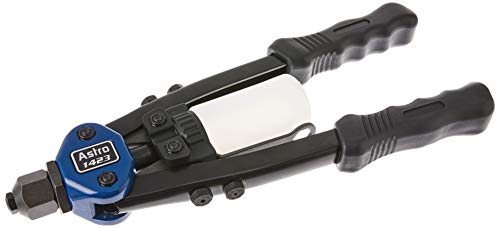


Table of Contents
- Quick Picks at a Glance
- How to Choose the Right Rivet Gun
- 1. DEWALT DCF403B
- 2. Astro Pneumatic PR14
- 3. Astro Pneumatic 1423
- 4. Marson HP-2
- 5. Arrow RT188M
- Rivet Gun Mistakes to Avoid
- Setup, Care and Consumables
- Safety and Recall Checks
- Frequently Asked Questions
- Conclusion
- Product and ASIN Reference
How to Choose the Right Rivet Gun
Start with power source, because it decides everything else
Rivet guns come in three families, and the family matters more than the brand. Hand riveters cost the least, need no power and set a handful of rivets comfortably, but every rivet is paid for in hand effort, and hard mandrels multiply that effort. Pneumatic riveters set a rivet with one light trigger pull and run all day without tiring, as long as a compressor, hose and regulator are already in the shop. Cordless riveters split the difference: one trigger pull per rivet, no hose, full mobility, at the cost of a battery platform commitment. Decide which family fits your workspace before comparing models, because a pneumatic gun without a compressor and a cordless gun without batteries are both paperweights.
Match rivet diameter and material to the tool rating
Blind rivets for shop work run from 3/32 inch up to 1/4 inch in diameter, and the material ladder matters as much as the size ladder. Aluminum rivets set easily in almost any tool. Steel rivets need noticeably more pull. Stainless steel rivets are the real test: a tool that is not explicitly rated for stainless will slip on the mandrel, half-set the rivet or wear its jaws out early. Check two numbers on every candidate: the diameter range and the material rating at the top of that range. A gun rated for 3/16 inch aluminum only is not a 3/16 inch gun for stainless work, and the difference shows up on the first hard rivet.
Pull force and stroke explain how a tool behaves
Manufacturers rate powered riveters by pulling force, and the useful band for shop tools runs from roughly 2,000 to 2,500 pounds. More force means the tool finishes hard mandrels in a single stroke instead of worrying at them. Stroke length matters alongside force: a longer stroke pulls more mandrel per cycle, so big rivets set in one pull instead of two. The DEWALT below pairs 2,100 pounds of force with a 0.98 inch stroke, which is why it is rated to set 3/16 inch stainless in a single pull. Hand tools publish no force rating; there, handle length and gearing are the leverage story, which is why the long-arm and geared designs below exist.
Nosepieces: swaps, storage and the sizes in between
Every rivet diameter needs its own nosepiece, and the practical differences are how nosepieces change and where they live between changes. Tool-free nosepiece swaps with onboard storage, as on the DEWALT, keep a size change to seconds and keep the small parts from vanishing into a toolbox. Pneumatic and hand tools more often thread nosepieces in with a small wrench, with spares stored in the tool body or base. Count the included sizes against your rivet assortment before buying: a gun that ships with 3/32 through 3/16 inch nosepieces covers most sheet metal work, while trailer, truck body and structural jobs may need the 1/4 inch capacity that only some tools here offer.
Mandrel collection is a small feature with a long shadow
Every set rivet leaves a snapped steel mandrel stem, and hundreds of rivets leave hundreds of sharp little nails looking for tires, shoes and shop-vacuum bags. Powered riveters increasingly include a collector cup or bottle that catches stems as they eject, and the PR14 and the DEWALT both address this. Hand tools drop stems where you stand. If you rivet over driveways, boat decks or finished floors, collection is worth real weight in the decision; if you rivet over a bench with a trash can beside it, it matters less.
Grip, access and working position
Rivet work happens in wheel wells, inside cabinets, under dashboards and along gutter seams, rarely on an open bench. Compact heads reach into channels and corners; swivel heads and extended noses exist for the worst angles. One-hand tools leave the other hand free to hold the workpiece or a backing piece, which is why they dominate light repair work. Two-hand lever tools need room to swing their handles through a wide arc, so they shine on open panels and bench work and struggle inside enclosures. Match the tool shape to where your rivets actually live.
Consumables, jaws and support
A rivet gun consumes rivets, obviously, but it also consumes jaws. The jaw set that grips the mandrel is a wear part on every design, and heavy stainless use wears it fastest. Before buying, confirm that replacement jaw sets and nosepieces are listed for the model and that the maker publishes a manual and parts support. Marson and Astro both sell into industrial distribution with parts behind them, and DEWALT supports its cordless line through its normal service network. A no-name tool with no listed jaw set becomes disposable the first time it starts slipping.
1. DEWALT DCF403B — Best Cordless Rivet Gun
The DCF403B is DEWALT’s brushless 20V MAX XR rivet tool, and it is the pick for anyone already carrying 20V MAX batteries who sets rivets often enough to feel hand-tool fatigue. The brushless motor delivers up to 2,100 lbf of pulling force with a 0.98 inch stroke, a combination DEWALT rates for aluminum, steel and stainless steel blind rivets in all four common sizes: 3/32, 1/8, 5/32 and 3/16 inch. That stainless rating at full size is the headline, because it puts the hardest common shop rivet inside a single trigger pull.
Runtime is the second headline. DEWALT rates the tool at up to 800 rivets per charge on a compact 2.0Ah pack, counted on 3/16 inch stainless rivets, which is a full day of panel, duct or trailer work for most shops without a battery swap. Bigger packs stretch that further. For maintenance crews, HVAC installers and auto body techs who already run the platform, the tool-only box drops straight into the existing battery rotation with no new chargers and no hose to drag across the shop.
The working details are sorted. Nosepieces swap by hand without a wrench and store on the tool, so a size change mid-job takes seconds and the loose pieces stay accounted for. A mandrel collector catches the snapped stems instead of scattering them across the floor, and an LED work light covers the inside-of-a-cabinet jobs where riveters so often end up. The tool holds a rivet in position while you line up the hole, which matters when the other hand is holding the panel.
The limits are platform limits. Sold as a bare tool, the DCF403B only makes sense if you own or plan to buy into 20V MAX; starting the platform from zero for this one tool is a premium-tier commitment. Its capacity also stops at 3/16 inch, so shops that set 1/4 inch structural rivets need the larger sibling model or one of the 1/4 inch tools further down this list. Within its size range, though, it is the most complete cordless answer here.
Specs
- Type: Cordless brushless rivet tool, tool only
- Battery platform: DEWALT 20V MAX
- Pull force: 2,100 lbf
- Stroke: 0.98 in
- Rivet capacity: 3/32 in, 1/8 in, 5/32 in, 3/16 in blind rivets
- Materials: Aluminum, steel, stainless steel
- Nosepieces: Four, tool-free changes, stored on the tool
- Mandrel collection: Onboard collector
- Runtime rating: Up to 800 rivets per charge on a 2.0Ah pack (maker rating, 3/16 in stainless)
- Listed weight: 1.89 kg in Amazon product data (about 4.2 lb packaged)
Choose the DCF403B if you run 20V MAX batteries and set rivets weekly or better, especially stainless. Think twice if you need 1/4 inch capacity or own no DEWALT batteries, because the bare-tool math changes completely.
2. Astro Pneumatic PR14 — Best Pneumatic Rivet Gun
The PR14 is Astro Pneumatic’s long-running shop air riveter, and it remains the benchmark pneumatic pick for one reason: range. Its five nosepieces cover 3/32, 1/8, 5/32, 3/16 and 1/4 inch rivets, the widest span in this roundup, and Astro rates its pulling pressure at 2,423 pounds, enough for steel and stainless work across that range. Body shops, fabrication benches and trailer builders who set rivets by the hundreds are exactly who this tool is built for.
Air tools earn their keep on cycle speed, and the PR14’s quick-release air valve snaps the cylinder back fast so the next rivet can be loaded immediately. The maker’s manual specifies a 16 mm stroke, a working pressure band of 90 to 120 PSI, a 1/4 inch NPT inlet and a 3/8 inch hose, all standard shop-air fittings. Spare nosepieces screw onto the base of the tool where they stay visible and accounted for, and a collector bottle catches spent mandrels instead of broadcasting them across the bay.
At a listed net weight of 3.5 pounds in the maker’s manual and an overall length of about 10.9 inches, the PR14 is a full-size bench-and-bay tool rather than a pocket riveter. It performs at any angle, which matters for overhead trailer and duct work, and the all-metal construction is the reason examples of this design stay in service for years. The one-year warranty is shorter than the hand tools below carry, which is normal for production air tools sold into shops that service their own equipment.
The obvious condition is air. The PR14 needs a compressor that can hold pressure through repeated strokes, a regulator set inside its band and an inline oiler habit to keep the air motor healthy. Without shop air already installed, the compressor purchase dwarfs the tool purchase. With air installed, it is the fastest and most capable riveter in this guide.
Specs
- Type: Pneumatic air riveter
- Rivet capacity: 3/32 in, 1/8 in, 5/32 in, 3/16 in, 1/4 in
- Nosepieces: Five included; spares screw onto the tool base
- Pulling pressure: 2,423 lb (maker manual)
- Stroke: 16 mm (about 0.63 in)
- Air pressure: 90 to 120 PSI
- Air inlet: 1/4 in NPT; hose ID 3/8 in
- Overall length: About 10.9 in
- Weight: 3.5 lb net (maker manual)
- Extras: Quick-release air valve; mandrel collector bottle
- Warranty: 1 year
Choose the PR14 if your shop has air and riveting is a daily or production task, or if you need 1/4 inch capacity with stainless confidence. Think twice if you rivet away from the shop, where the hose becomes the whole story.
3. Astro Pneumatic 1423 — Best Lever Riveter for Large Rivets
The 1423 is the hand tool for buyers whose rivets are too big or too hard for a one-hand squeeze gun. It is a 13 inch long-arm riveter with a patented internal geared mechanism that multiplies handle force, and Astro rates it for blind rivets up to 1/4 inch, including stainless steel. That combination, quarter-inch stainless capacity with no battery and no compressor, is rare in hand tools and is the entire reason this model exists.
Five nosepieces cover the range from 1/8 inch through 1/4 inch, so the common sheet-metal sizes and the big structural sizes share one tool. A jaw adjustment sets how firmly the jaws grip the mandrel stem, which is the control that keeps hard stainless stems from slipping mid-pull and soft aluminum stems from being crushed. At 2.5 pounds per the maker’s specification sheet, it is lighter than it looks, though the two-hand operation and the wide handle swing mean it wants open panels, bench work and trailer frames rather than the inside of a cabinet.
The 1423 sets blind rivets only. It is not a rivet nut tool, and buyers who need threaded inserts should look at a dedicated rivet nut setter instead of expecting one tool to do both jobs. It also asks for technique: a long-arm tool rewards a steady, full stroke and punishes half-pulls with half-set rivets, especially at the top of its range.
For farms, trailer owners, metal shops without air at the bench and anyone who sets 3/16 or 1/4 inch rivets a few dozen at a time, the 1423 delivers powered-tool capacity at a hand-tool tier. It is the strongest value in this roundup for occasional heavy work.
Specs
- Type: Two-hand lever hand riveter, 13 in class
- Rivet capacity: 1/8 in to 1/4 in blind rivets, including stainless steel
- Mechanism: Patented internal geared mechanism for added leverage
- Nosepieces: Five included
- Jaw adjustment: Adjustable mandrel grip setting
- Dimensions: 6 x 2 x 13.5 in (Amazon product data)
- Weight: 2.5 lb (maker specification sheet)
- Note: Blind rivets only; does not set rivet nuts
Choose the 1423 if your work includes 1/4 inch or stainless rivets and you want hand-tool simplicity. Think twice if most of your riveting happens in tight enclosures, where the long handles cannot swing.
4. Marson HP-2 — Best Professional Hand Riveter
The HP-2, model 39000 in Marson’s catalog, is the hand riveter that industrial fastener distributors have sold for decades, and its reputation rests on hard-rivet competence. Marson rates it to set rivets from 3/32 inch through 3/16 inch, up to and including 3/16 inch steel, and current listing data credits it across aluminum, steel and stainless. Where bargain riveters start slipping on steel mandrels, the HP-2’s jaw design and heat-treated fulcrum pin keep pulling.
Construction explains the longevity. The body is a die-cast, high-strength aluminum alloy casting; the upper handle is drop-forged carbon steel; the grips are thick, cushion-molded vinyl. The square-shoulder fulcrum pin is cold-formed heat-treated steel, specified so the pin cannot rotate and wallow out its bore over years of use. Four nosepieces, 3/32, 1/8, 5/32 and 3/16 inch, mount on the tool itself, and a service wrench is included, so the complete kit is the tool in your hand with nothing loose to lose.
At 11 x 3 x 1 inches in Amazon’s product data, the HP-2 is a full-size two-hand riveter for bench and panel work. It carries a lifetime warranty in current roundup data, consistent with its professional positioning. Marson’s catalog also carries a California Proposition 65 notice covering phthalates in its tool line’s grip materials, a labeling point buyers in California will see on the packaging; it is a disclosure requirement, not a defect finding.
The HP-2 is not the cheapest way to set an aluminum rivet, and it is not trying to be. It is the hand riveter for steel and stainless work, for shops that hand a riveter to whoever is on shift, and for buyers who intend to purchase this category once. If your riveting is all aluminum and occasional, the budget pick below covers it for less commitment.
Specs
- Type: Professional hand riveter (Marson model 39000)
- Rivet capacity: 3/32 in to 3/16 in, including steel and stainless work
- Nosepieces: Four mounted on the tool (3/32 in, 1/8 in, 5/32 in, 3/16 in); service wrench included
- Body: Die-cast high-strength aluminum alloy
- Handle: Drop-forged carbon steel upper handle; cushion-molded vinyl grips
- Fulcrum pin: Square-shoulder, cold-formed heat-treated steel
- Dimensions: 11 x 3 x 1 in (Amazon product data)
- Warranty: Lifetime
Choose the HP-2 if you set steel or stainless rivets by hand and want the professional standard with parts and distribution behind it. Think twice if you need 1/4 inch capacity, which is beyond its range; that is the 1423’s job.
5. Arrow RT188M — Best Budget One-Hand Riveter
The RT188M is Arrow’s one-handed pop rivet gun, and it covers the work that fills most home and garage rivet lists: gutters, downspouts, duct seams, lawn furniture, light brackets and auto trim. It works with the four standard blind rivet sizes, 3/32, 1/8, 5/32 and 3/16 inch, and its one-hand squeeze format leaves the other hand free to hold the workpiece, a backing washer or the part being fastened, which is how light repair work actually happens.
Arrow builds its rivet tools with steel working parts, spring-loaded handles and vinyl grips, and the RT188M follows that pattern in a compact red and black tool. The spring-loaded handle helps with loading and ejecting spent mandrels, small mercies that matter across a gutter run of forty rivets. Arrow’s listing positions the tool across metal, fabric, leather and auto repair, a fair map of the light-duty territory where a one-hand tool is the right answer.
The boundaries are honest ones. A compact one-hand tool is a leverage-limited tool: it is made for aluminum and light steel rivets in the common sizes, and repeated 3/16 inch steel work will wear both the tool and the hand squeezing it. Stainless production work belongs to the HP-2, the 1423 or a powered pick. Buyers whose list is mostly aluminum sheet, gutters and trim will never meet those limits; buyers whose list is stainless trailer hardware will meet them on day one.
As the budget tier of this roundup, the RT188M is the tool to keep in the kitchen drawer or the truck box for the rivet jobs that appear without warning. It is also the sensible first riveter: if it turns out you rivet every weekend, the upgrade path to the tools above will be obvious, and the Arrow will still earn its keep as the grab-and-go spare.
Specs
- Type: One-hand manual rivet tool
- Rivet capacity: 3/32 in, 1/8 in, 5/32 in, 3/16 in blind rivets
- Operation: One-handed squeeze; second hand stays free for the workpiece
- Construction: Steel working parts; spring-loaded handles; vinyl grips
- Intended work: Metal, fabric, leather and auto repair (maker listing)
- Tier: Budget
Choose the RT188M if your riveting is light, occasional and mostly aluminum. Think twice if steel or stainless rivets are routine, because hand effort and jaw wear climb quickly in a compact tool.
Rivet Gun Mistakes to Avoid
The most common rivet gun mistake is buying by diameter alone and ignoring the material rating. A tool that sets 3/16 inch aluminum beautifully may slip, jam or half-set a 3/16 inch stainless rivet, because the mandrel material is what the jaws actually fight. Read the rating as a pair, size plus material, every time.
The second mistake is the wrong hole. A blind rivet needs a hole matched closely to its diameter; an oversized or wallowed hole lets the rivet body tilt and set crooked, and no rivet gun fixes a bad hole. Drill clean holes, deburr them, and match grip range to the combined thickness of the parts, because a rivet that is too short or too long for the stack sets weak even in the best tool.
Third, do not force a slipping tool. When jaws start to slip on mandrels, the jaw set is worn or fouled with stem fragments, and more squeezing only chews the mandrel and ruins the set. Stop, clean or replace the jaws, and check that the nosepiece matches the rivet size. Relatedly, never use a blind rivet tool on rivet nuts or the reverse; they are different mechanisms, and the confusion damages both tool and fastener.
Finally, mind the stems. Snapped mandrels are sharp, springy and easy to lose in grass, gravel and tire treads. Work over a tray or choose a tool with a collector when the setting matters, and sweep the area when the job is done.
Setup, Care and Consumables
Setup is mostly verification. Fit the nosepiece that matches your rivet diameter, confirm the jaw adjustment if your tool has one, and set a few rivets in scrap of the same material and thickness before touching the real work. For pneumatic tools, set the regulator inside the maker’s pressure band and confirm the compressor can hold it through repeated strokes. For cordless tools, start the day with a charged pack sized to the rivet count the maker rates, not the smallest pack in the drawer.
Care is light but specific. Blow or brush mandrel fragments out of the jaw housing regularly, because stem chips are the leading cause of slipping and jams. Keep a drop of air-tool oil in a pneumatic riveter’s inlet on the maker’s schedule, and store hand riveters dry with the handles latched so the springs rest. Jaws are consumables: keep a spare jaw set for the tool you depend on, and replace nosepieces that show oval wear at the bore.
Consumables planning matters more than tool choice for big jobs. Buy rivets by the grip range your stack thickness needs, in the material the joint needs, and count the job before starting; running out of the correct rivet mid-panel invites a wrong-rivet substitution that has to be drilled out later. Keep the four common diameters stocked if you rivet regularly, and store them separated by size and material, because a stainless rivet in the aluminum bin is a galvanic and a strength mistake waiting to happen.
Safety and Recall Checks
Riveting is a low-drama operation with two real hazards. The first is the snapping mandrel: when a stem breaks, the offcut can flick away, and eye protection is the standard answer every maker prints in the manual. The second is the work itself: drilled sheet metal edges and freshly set rivet tails are sharp, and gloves during handling, removed for the actual tool work if your shop practice requires bare hands on triggers, keep the day cut-free. Pneumatic tools add hose discipline: route the hose where it cannot be tripped over or pinched, and disconnect air before clearing a jam. Cordless tools add the usual battery rules: remove the pack before clearing jams or changing jaw sets.
On recalls: a check of CPSC records for the rivet gun class found no recall covering any of the five models in this roundup, and no riveter recall affecting these makers’ rivet tools. The tool recalls that do exist in adjacent categories, such as pneumatic nailers with trigger faults, involve different mechanisms that discharge fasteners, which a rivet gun does not do. Recall status changes, so a thirty-second search of the CPSC database by model number before buying any tool remains a sound habit, and registering powered tools with the maker keeps recall notices reachable if one is ever issued.
One labeling note: Marson’s tool catalog carries a California Proposition 65 warning about phthalates in grip materials for its tool line. That is a California disclosure label, not a recall or a stop-use notice, and it appears on a wide range of handled tools. It is noted here so the packaging surprises no one.
Frequently Asked Questions
What size rivets do most rivet guns handle?
Most shop rivet guns cover 3/32 inch through 3/16 inch, the four sizes that handle sheet metal, gutters, ducts and light brackets. Tools rated to 1/4 inch, like the PR14 and the 1423 in this roundup, add trailer, truck body and structural work. Match the nosepiece to the rivet diameter every time; a mismatched nosepiece is the fastest route to a slipped mandrel and a spoiled set.
Can a hand riveter set stainless steel rivets?
Yes, if it is rated for it. Stainless mandrels are far harder to pull than aluminum ones, so the tool needs the leverage and jaw strength to match. In this roundup, the Astro 1423 lever riveter and the Marson HP-2 are the hand tools rated for stainless work; compact one-hand tools are intended for aluminum and light steel, and forcing them through stainless wears the jaws and the user.
Cordless or pneumatic: which rivet gun suits a home shop?
It depends on what the shop already has. A home shop with a compressor sized for air tools gets production speed from a pneumatic riveter like the PR14 for a mid-range tier commitment. A home shop without air but with a major battery platform gets nearly the same one-pull convenience from a cordless tool like the DCF403B, with full mobility as a bonus. A shop with neither should start with a good hand riveter and let the rivet count make the powered case later.
Why does my rivet gun keep slipping or jamming on the mandrel?
Slipping almost always means worn or fouled jaws, a nosepiece that does not match the rivet diameter, or a rivet material beyond the tool’s rating. Clear any stem fragments from the jaw housing, confirm the nosepiece size, and try a fresh rivet. If slipping continues on rated rivets, the jaw set is a wear part and due for replacement; makers of the tools in this roundup list replacement jaws for exactly this reason.
Conclusion
The right rivet gun is the one whose size range, material rating and power source match your work, and this lineup covers the honest options. The DEWALT DCF403B is the cordless answer for 20V MAX owners, with stainless-rated force and all-day runtime. The Astro PR14 is the production pneumatic, with the widest rivet range here and the cycle speed shops run on. The Astro 1423 brings quarter-inch stainless capacity to a hand tool through gearing and leverage. The Marson HP-2 is the professional hand riveter standard for steel and stainless. The Arrow RT188M keeps light, occasional riveting cheap, simple and one-handed. Pick by your rivets first and your power source second, and any of the five will set rivets cleanly for years.
Related guides
More from Amazon
Programs that pair well with the guide above. Offers and eligibility are set by Amazon and may change.
A free business account with business pricing and bulk-buying tools for work, shop or home office.
Create a business accountFree shipping on eligible items, Prime Video and more. Eligible new members can start with a free trial.
Start a Prime free trialAudiobooks and podcasts to listen to on the go. Eligible new members can start with a free trial.
Try Audible freeAd-free music streaming. Eligible new subscribers can start with a free trial.
Try Music Unlimited freeAs an Amazon Associate we earn from qualifying purchases.









