What's inside
As an Amazon Associate I earn from qualifying purchases. This post may contain affiliate links at no extra cost to you.
What we cover
What matters when driving Torx screws into dense lumber
Dense hardwood, pressure-treated lumber, and dry framing stock put more resistance on a screw than ordinary softwood. An impact driver can supply the bursts of torque, but the bit still has to fit the screw head closely and tolerate repeated impacts. A poor fit can cam out, chew up the Torx recess, or snap the bit before the screw is seated.
For most jobs, choose a 1-inch or 2-inch impact-rated Torx bit in the exact size specified for the screw. T25 is common for structural and decking screws, but screw sizes vary: check the box or manufacturer’s instructions rather than assuming. A T25 bit in a T30 recess can slip even if it seems to engage at first.
As an Amazon Associate we earn from qualifying purchases at no extra cost to you.

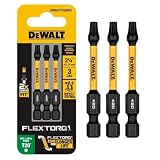

Look for packaging that explicitly says impact-rated or suitable for impact drivers. These bits are generally made to withstand the repeated twisting loads better than standard insert bits. That does not make them unbreakable: excessive torque, a worn tip, a crooked screw, or a bit that is not fully seated can still cause failure.
Choosing between bit types
Short insert bits are compact and inexpensive, and they work well in a magnetic bit holder or a compatible impact driver collet. Longer power bits reach recessed fasteners and can make it easier to keep the driver clear of a board edge. The extra length can also make a bit more likely to wobble if the fit is loose or the driver is angled.
For occasional repairs, a small set of impact-rated T25 Torx bits is usually enough if T25 is the size your fasteners call for. For regular deck, framing, or cabinet work, a set with several common Torx sizes and spare bits is more practical. Avoid buying a large mixed set if it contains mostly sizes you will not use.
Bit options at a glance
| Type | Best for | Trade-off |
|---|---|---|
| Short insert bit | Accessible screws and compact storage | Needs a holder unless the driver accepts it directly |
| Long power bit | Recessed screws and clearance around edges | Can flex or wobble more if poorly supported |
| Single premium bit | Frequent use of one Torx size | Costs more per bit; no spare if it wears or breaks |
| Multi-size impact bit set | Mixed fasteners and keeping spares on hand | May include sizes that see little use |
Coatings, steel, and bit life
Manufacturers use different steels and surface treatments, but labels such as “titanium” or “black oxide” alone do not guarantee long life. Fit, heat treatment, and how the bit is used matter more. A torsion-zone bit has a narrowed or shaped section intended to absorb some twisting shock. It can be useful for repeated high-load driving, but it is not necessary for every homeowner’s occasional project.
If you routinely drive long structural screws into hardwood or dense treated stock, consider impact-rated Torx torsion bits in the sizes you actually use. A cheaper standard impact bit is fine for short screws, softer wood, and intermittent work. Replace any bit whose tip is rounded, chipped, or visibly twisted; continuing with a damaged tip risks ruining the screw head.
How to drive without stripping the screw
Seat the bit fully in the recess and hold the driver in line with the screw. Start at a moderate speed, keeping firm forward pressure until the threads bite. Once the screw is moving, increase speed if needed, then ease off as the head approaches the surface. Letting the driver hammer against a fully seated screw can damage the head, split the wood, or overdrive the fastener.
For long screws or especially dense lumber, drill a pilot hole when the fastener maker recommends it or when the screw resists, wanders, or threatens to split the board. Pilot-hole dimensions depend on screw diameter, wood species, and whether the screw is structural; follow the screw manufacturer’s guidance where available. A clearance hole through the top piece can also help when the screw is pulling two boards together but the upper board keeps lifting.
Do not use a clutch setting from a drill as a substitute for controlling an impact driver. Many impact drivers do not provide a conventional adjustable clutch. If the driver has speed or assist modes, use a lower setting for small screws or finish work, and test on scrap first. A bulky impact driver can also be harder to keep square than a drill, especially near a corner.
A practical buying checklist
Before ordering, confirm the Torx size, whether you need a short insert or longer power bit, and whether the bits are explicitly impact-rated. If your driver’s collet uses 1/4-inch hex shanks, standard 1/4-inch hex impact bits are the usual fit. Check the package for the number of each size: some assortments provide many rarely used tips but only one of the size you need.
For a one-time project, one or two correctly sized impact bits and a pilot drill bit may be all you need. For recurring fastening, buy a modest set with duplicates of the common size, store bits dry, and keep a fresh spare nearby. Spending more makes sense when you drive many screws, work with long fasteners, or need consistent fit; for occasional light work, a reputable basic impact-rated bit is usually adequate.