We research everything we recommend. When you buy through our links, we may earn a commission. As an Amazon Associate we earn from qualifying purchases.
Best Planers: Benchtop Thickness Planers for Any Shop
Compare the best benchtop thickness planers for home workshops, covering cutterhead style, board capacity, snipe control, and dust collection.
A thickness planer turns rough, uneven lumber into boards of consistent thickness with smooth, parallel faces, and it is the tool that makes glued panels, tabletops, and cabinet parts actually fit together. Benchtop models give home workshops that capability without the floor space or cost of a stationary machine.
The five planers below cover the main choices a buyer faces: straight-knife cutterheads versus spiral heads with indexable carbide inserts, 12-inch versus 13-inch capacity, and two-speed feed systems that trade speed for a finer finish. Each pick is a current benchtop model from a major tool brand, sized for garage and basement shops.
As an Amazon Associate, we earn from qualifying purchases.
For most home workshops, the DEWALT DW735X is the planer to beat, thanks to its two-speed feed, three-knife cutterhead, and strong chip ejection. The WEN PL1326 and Cutech 40700H answer with spiral cutterheads that run quieter and leave a smoother finish, while the Makita 2012NB and DEWALT DW734 suit smaller shops that value compact size and simple, proven designs.
How to Choose
Start with capacity. Benchtop planers accept boards up to 12, 12.5, or 13 inches wide and usually up to 6 inches thick. Measure the widest stock you realistically mill; a 13-inch machine covers most furniture parts, while a 12-inch model saves bench space and weight.
Cutterhead style matters more than raw power. Straight knives are inexpensive and quick to swap, but they dull faster, make more noise, and can tear out figured grain. Spiral cutterheads carry dozens of small carbide inserts arranged around the head. Each insert can be rotated to a fresh edge when nicked, the cut is quieter, and tear-out drops noticeably on difficult wood.
Feed speed affects finish quality. Two-speed planers let you run stock through quickly for dimensioning, then slow down for a final pass that needs less sanding. Single-speed machines are simpler and cost less, but you give up that finishing gear.
Snipe, the deeper cut at the start and end of a board, is the classic benchtop complaint. Cutterhead locks, infeed and outfeed tables, and lifting the board ends slightly as it feeds all reduce it. Finally, plan for dust collection: a planer produces a large volume of chips, so a hood that connects to a shop vacuum or dust collector keeps the cutterhead clear and the shop cleaner.
The DW735X is the benchmark benchtop planer, built around a 15 amp motor and a three-knife cutterhead that makes 20,000 cuts per minute. Its two-speed gearbox lets you choose a faster feed for rough dimensioning or a slower feed that puts more cuts per inch into the surface for a finish that needs little sanding.
A fan-assisted chip ejection system clears shavings aggressively, which helps when the planer is connected to a modest dust collector. The X package adds infeed and outfeed tables that support long boards and reduce snipe, plus an extra set of knives. A material removal gauge and a turret stop with preset thickness settings make repeat passes to a target dimension straightforward.
At roughly 92 pounds it is the heaviest machine here, so it suits a semi-permanent bench or a rolling stand better than daily lifting. For shops that plane a lot of hardwood, it remains the most complete package.
The DW734 takes the same 15 amp, three-knife formula and shrinks it into a lighter, simpler machine. Its cutterhead also delivers 20,000 cuts per minute, and the disposable knives are reversible, so a dull edge can be flipped once before replacement. Four-column carriage guidance and a cutterhead lock help limit snipe and keep thickness consistent across the width of a board.
A turret stop offers repeatable settings for commonly used thicknesses, which speeds up batch work like planing a stack of drawer sides to one dimension. The dust hood connects to standard shop vacuum and collector hoses.
You give up the second feed speed and an inch of width compared with the DW735X, and the knives are a proprietary size. In return you get a planer that one person can move on and off a bench without much strain, at a noticeably lower cost of entry. For hobbyist shops that plane a few boards at a time, that trade is often the right one.
The 2012NB is the quiet, refined option in this group. Makita rates it as the quietest benchtop planer in its class, and its automated Interna-Lok head clamp reduces snipe by locking the cutterhead as stock feeds through. The 15 amp motor turns the two-knife cutterhead at 8,500 rpm, and the feed rate moves stock at a brisk pace for a 12-inch machine.
At about 62 pounds it is the easiest planer here to carry to a jobsite or store on a shelf, and the fold-down handles and compact body suit small shops. An adjustable depth stop and a clear stock-removal scale on the front make dialing in a target thickness simple.
The trade-offs are capacity and knife format: 12 inches of width rules out some panel glue-ups, and the double-edged knives are a Makita-specific size. Buyers who mostly mill boards under a foot wide, and who work in noise-sensitive spaces, will find it hard to beat.
The PL1326 brings a true spiral cutterhead to a price tier where straight knives used to be the only option. Its head carries 26 indexable carbide inserts, each with multiple cutting edges. When one edge dulls or nicks, you loosen a screw, rotate the insert, and keep planing instead of changing a full knife set.
The 15 amp motor and 13-inch capacity match the biggest benchtop machines, and the onboard depth-of-cut gauge plus a turret-style thickness stop support repeatable work. A granite-textured cast work table is not part of the package, but the stamped steel infeed and outfeed tables fold for storage.
Spiral heads cut with a shearing action, so the PL1326 runs quieter than straight-knife rivals and handles figured or reversing grain with less tear-out. The finish off the head often needs only light sanding. For woodworkers who plane exotics or curly maple, that alone can justify the choice.
Cutech built its name on spiral cutterhead planers, and the 40700H is its full-size benchtop model. The spiral head uses rows of two-sided carbide inserts that produce the same quiet, shear-cutting action as the WEN, with a surface finish that stands up well on hardwoods and figured stock.
The machine pairs the head with a 15 amp motor, a four-post carriage design for stability, and a thickness scale with preset stops for common dimensions. Infeed and outfeed tables support longer boards, and the dust port fits standard collector hoses.
Cutech sells replacement inserts and parts directly, which matters for a smaller brand. Buyers should confirm insert availability before purchase, since the inserts are a specific size. Woodworkers who want spiral-head performance with a support channel outside the big-box brands will find the 40700H a serious contender.
Specs
Feature
Specification
Motor
15 amp
Capacity
13 in wide, 6 in thick
Cutterhead
Spiral, two-sided carbide inserts
Cutterhead speed
10,000 rpm
Depth of cut
Up to 1/8 in per pass
Weight
About 70 lb
Who Should Skip It
Skip a benchtop planer if your work is mostly sheet goods, since plywood and MDF do not need thicknessing and their glue lines dull cutters quickly. Cabinet shops and anyone milling wide slabs or long production runs should look at stationary planers with induction motors and larger tables instead. If you only need to clean up the occasional board, a hand plane or a lumberyard surfacing service may cover the need for far less money and bench space.
FAQ
What is snipe, and how do I reduce it?
Snipe is the shallow extra cut a planer takes at the leading and trailing ends of a board. Locking the cutterhead, using infeed and outfeed tables, feeding boards end to end in a continuous train, and leaving parts long so the sniped ends can be trimmed off all reduce its effect.
Are spiral cutterheads worth the extra cost?
For many shops, yes. Carbide inserts last far longer than steel knives, each insert rotates to fresh edges, and the shearing cut lowers noise and tear-out. The savings show up over years of use rather than on the first board, so frequent planer users benefit most.
Can a benchtop planer flatten a warped board?
Not by itself. A thickness planer makes the second face parallel to the first; it does not create a flat reference face. Flatten one face on a jointer, or use a planer sled with shims, before thicknessing the opposite side.
How thick a cut can I take per pass?
Take light passes on wide or hard stock, usually a small fraction of the maximum depth, and save the deepest cuts for narrow, soft boards. Listening to the motor and watching the finish tells you more than any fixed number.
Final Verdict
The DEWALT DW735X remains the safest all-around recommendation: strong chip ejection, two feed speeds, and a proven cutterhead. Choose the WEN PL1326 or Cutech 40700H if a quieter spiral head and better behavior on figured grain matter more than brand size. The Makita 2012NB fits small, noise-sensitive shops, and the DW734 covers straightforward hobbyist work in a lighter package. Match capacity to the widest boards you actually mill, and any of the five will serve well.
M
Miller the Driller Editorial Team
We compare specs, warranty terms, long-term owner feedback and street pricing before anything earns a spot. Rankings are never paid.
Affiliate disclosure. As an Amazon Associate we earn from qualifying purchases at no extra cost to you. Prices accurate as of the date shown.
Three wireless routers for small offices compared on device capacity, network separation, wired speed, and coverage, with specs taken from their Amazon listings.
Compare 5 mechanic tool sets for car repairs: a 247-piece DEWALT kit, a 450-piece CRAFTSMAN set, a drawer-box GEARWRENCH set, a 170-piece Crescent set and a 450-piece WORKPRO set.
Four splitting axes and mauls that actually split firewood: a long 36-inch axe for tall users, a shorter 28-inch option, and two 8 lb mauls for knotty rounds.
Learn whether a 20V rechargeable drill battery can be repaired, which faults you can check safely at home, and when replacing the pack is the safer choice.
A specs-based review of the officially licensed Retro-Bit Sega Saturn 2.4 GHz wireless controller: dual receivers, Genesis Mini and Switch support, battery, layout, limits, and FAQs.
Find the best drill battery for Power Wheels ride-on toys for families, with DeWalt, Milwaukee and Ryobi adapters, voltage and safety guidance in this guide.
Find the best hole saw for noching dom pipe: bi-metal saws, deep cups, and the right sizes for clean, tight notches in DOM tube for fabrication shops today.
Find the best diy tile saws for home tiling projects. Compare wet tile saws by blade size, cutting capacity, and features for ceramic and porcelain tile.

 DEWALT DW735X 13-Inch Thickness Planer
 DEWALT DW734 12.5-Inch Thickness Planer
 Makita 2012NB 12-Inch Thickness Planer
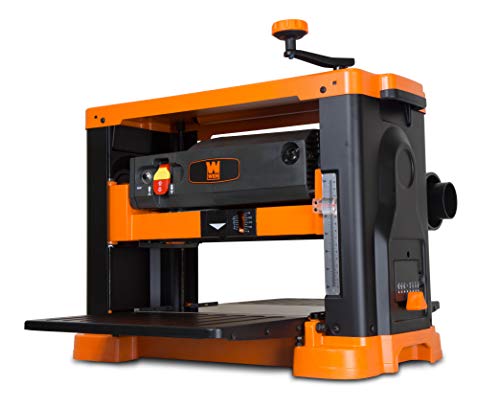 WEN PL1326 13-Inch Spiral Benchtop Planer
 Cutech 40700H 13-Inch Spiral Cutterhead Planer









