What's inside
As an Amazon Associate I earn from qualifying purchases. This post may contain affiliate links at no extra cost to you.
What we cover
Start with the shelf and wall
A small bathroom shelf can still put more load on drywall than its weight suggests. A bottle pulled toward the front edge creates leverage, and repeated grabbing can loosen a fastener that seemed secure on installation day. First check the shelf maker’s stated load limit and mounting-hole spacing. Then decide what the shelf will actually hold; a few light toiletries are different from full shampoo bottles or a heavy glass jar.
Find out what is behind the finish, too. A stud finder can locate likely framing, but confirm the mark with a small pilot hole or by checking the shelf’s position against accessible framing. In bathrooms, tile, cement board, plaster, and drywall can look similar once painted or finished. The recommendations below apply to drywall; tile and masonry need anchors and bits made for those materials.
As an Amazon Associate we earn from qualifying purchases at no extra cost to you.


Which anchor to buy
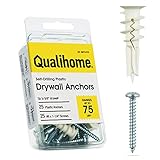
For a light shelf, a plastic expansion anchor is inexpensive and can work when the load is modest and the drywall is sound. For a shelf that will hold everyday toiletries, a metal self-drilling anchor is usually a better drywall-only choice. It has a broader body and generally grips more reliably than a small plastic plug, though it still depends on the condition and thickness of the board.
A toggle anchor spreads force behind the drywall and is useful when the shelf is heavier, the mounting holes do not line up with studs, or you want more resistance to pull-out. It needs a larger hole and space behind the wall. If the shelf bracket can reach a stud, fastening into the stud with a suitable screw is generally preferable to relying on any drywall anchor.
| Fastener type | Best use | Trade-offs |
|---|---|---|
| Plastic expansion anchor | Very light shelf and occasional use | Cheap and simple, but easy to over-tighten or pull loose in damaged drywall |
| Metal self-drilling anchor | Light-to-moderate shelf loads in sound drywall | Quick to install; can spin, crush the board, or protrude if driven carelessly |
| Toggle anchor | Higher pull-out resistance where no stud is available | Larger hole and more involved installation; needs clear space behind the wall |
| Screw into a stud | Heavier or frequently used shelf | Strongest practical option here, but shelf holes may not align with framing |
Choosing a product
For a basic, inexpensive job, a small pack of plastic anchors is reasonable if the shelf is decorative, the load is light, and the manufacturer’s rating suits the installation. Do not treat a package rating as a guaranteed shelf capacity: ratings vary by drywall thickness and test conditions, and a shelf’s leverage can make the real-world result less forgiving.
For most small bathroom shelves mounted directly to intact drywall, compare the shelf’s screws with a pack of metal self-drilling drywall anchors. Check that the anchor accepts the screw diameter and length supplied with the shelf. If the shelf is relatively heavy or likely to be tugged, look at toggle anchors with screws instead. Choose a toggle that fits the wall thickness and bracket hole; an oversized fastener can make a neat installation difficult.
Tools and installation
Use a tape measure, pencil, level, appropriate screwdriver or drill, and the bit size specified on the anchor package. A cordless drill is useful for pilot holes, but high speed and heavy pressure are not. Keep the drill perpendicular to the wall. If drilling through tile, stop and use a tile-rated bit and the correct procedure before reaching the drywall; do not drive a self-drilling drywall anchor through tile.
Mark the bracket holes and check for wiring or plumbing before drilling. Bathroom walls can contain pipes close to sinks and showers, so avoid drilling where you cannot reasonably rule out a service line. When using a plastic anchor, drill the stated pilot-hole diameter and press or tap the anchor in flush. When using a self-drilling anchor, start it straight and turn slowly. Stop once the flange sits flat against the wall. If the anchor spins, backs out, or tears the paper face, remove it and move the fixing point rather than tightening harder.
For a toggle, drill the specified hole, pass the bolt through the bracket and toggle, then fold or fit the toggle as directed. Keep gentle outward tension on the bolt while tightening so the toggle stays open behind the board. Do not over-tighten: crushed drywall loses holding strength. If the bracket has two fasteners, install both and tighten evenly.
Check the finished mount
Before loading the shelf, press and pull the bracket gently in several directions. It should not rock, click, or leave a widening gap at the wall. Add items gradually and keep heavy containers toward the wall rather than at the front edge. If the shelf loosens, the drywall crumbles, or the anchor turns with the screw, unload it immediately and repair the hole or move to a stud or toggle in sound material.
Use a stud-mounted screw whenever the layout allows it, especially for a shelf holding heavy bottles or getting frequent use. If the holes miss the studs, a properly installed toggle is a sensible upgrade over a small plastic anchor. For a light decorative shelf on solid, undamaged drywall, the cheaper plastic option can be enough; the key is matching the fastener to the load and installing it without damaging the wall.