What's inside
As an Amazon Associate I earn from qualifying purchases. This post may contain affiliate links at no extra cost to you.
What we cover
Choosing an impact driver for wood joists
For ordinary construction screws into framing lumber, a compact 18-volt or 20-volt cordless impact driver is usually the practical choice. It is easier to handle overhead than a drill, and its repeated rotational blows help drive long screws without the wrist-twisting reaction you can get from a drill. A basic model is enough for most home projects; paying extra for more torque or advanced modes makes sense mainly for frequent, heavy fastening.
Match the tool to the fastener, not just the joist. Cabinet and trim screws are a different job from 3-inch structural screws used to tie framing together. For typical 2-by lumber, which is 1½ inches thick, a 2½- or 3-inch screw can provide useful penetration into the second piece, but follow the screw maker’s instructions for the connection. Do not substitute ordinary deck screws where a structural connection requires approved structural fasteners.
As an Amazon Associate we earn from qualifying purchases at no extra cost to you.



What to look for
Choose a driver with a standard ¼-inch hex collet, variable-speed trigger, and a comfortable grip. A brushless motor can improve runtime and reduce maintenance, but a brushed driver can still be a sound, less expensive buy for occasional work. Battery voltage labels do not tell the whole story: compare tools within the same battery platform, and consider whether you already own compatible batteries and a charger.
Compact, lower-cost drivers are often enough for screws up to about 3 inches in common framing lumber. Longer or thicker structural screws, dense hardwood, and repeated fastening can call for a stronger tool and a larger battery. More power is not automatically better: an impact driver can snap a screw, strip its head, or bury it too deeply if you lean on the trigger. Look for speed settings or a fastening mode if you expect to work with smaller screws or varied materials.
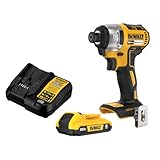
For occasional repairs, compare 18-volt cordless impact driver kits with the cost of a bare tool. A kit is often the better value if you need a battery and charger; a bare tool makes more sense if you already have batteries in that brand’s system.
Impact driver buying trade-offs
| Option | Best for | Trade-off |
|---|---|---|
| Basic brushed driver | Occasional repairs and a modest budget | May run hotter or use batteries faster under sustained heavy work |
| Brushless compact driver | Regular DIY use, overhead work, mixed screw sizes | Costs more; performance gains matter less for a few screws |
| Higher-torque driver | Frequent long structural screws or demanding fastening | Can be heavier and easier to overdrive small fasteners |
| Corded drill or impact wrench | Not usually the right first choice for wood screws | A drill can twist your wrist; an impact wrench uses a different drive and is bulky for this task |
If you are buying into a battery platform, compare the compact brushless impact driver kits against basic kits on price, weight, and included battery capacity. A small battery keeps the tool lighter, but a larger one may last longer when driving many structural screws. Check the kit contents carefully: “tool only” listings do not include a battery or charger.
Bits, screws, and setup
Use a fresh, correctly sized driver bit that matches the screw head. A worn bit cams out more readily, chewing up the recess and making the screw hard to finish or remove. For repeat work, keep spare bits nearby. Long, impact-rated bits are useful for reaching between joists or into tight corners; ordinary drill bits do not fit the driver’s hex collet unless they have a compatible hex shank.
Use screws intended for wood and the connection at hand. Structural screws are designed and rated for specified framing applications; check their packaging or technical instructions for size, edge distance, and installation requirements. For large-diameter screws, hardwood, or a position near the end of a joist, a pilot hole may reduce splitting. Follow the fastener maker’s guidance: an unnecessarily large pilot hole can weaken the screw’s grip.
Hold the driver straight, seat the bit fully, and start slowly. Let the screw threads pull the fastener in rather than forcing the tool sideways. Stop when the head reaches the intended depth. Do not use the driver’s clutch-like electronic mode as a substitute for checking the connection, and do not assume that a deeply buried head means a stronger joint.
Common problems and how to avoid them
If the screw stops partway, first check whether the bit is slipping, the battery is low, or the screw is binding. Back it out rather than continuing to hammer; repeated impacts can heat or damage the fastener and strip the head. A pilot hole, a fresh bit, or a suitable longer screw may solve the problem, depending on the cause. If the screw breaks, remove it and inspect the wood before trying again. A broken fastener is not a sound connection.
Splitting is more likely near a joist end or edge, with oversized screws, and in dry or brittle lumber. Move the screw if the design permits, maintain the required edge distance, and predrill when the fastener instructions call for it. If you are fastening into an existing ceiling or wall, locate the joist rather than guessing; a screw that misses framing cannot provide the intended holding strength.
For a few general-purpose screws, a budget driver is fine. For repeated framing work, a compact brushless model offers a useful balance of weight, control, and runtime. Choose the least expensive tool that fits your screw sizes, workload, and existing battery system, then spend attention on the right fasteners, bits, and installation technique.