We research everything we recommend. When you buy through our links, we may earn a commission. As an Amazon Associate we earn from qualifying purchases.
5 Best Benchtop Drill Presses for Precision (November 2026)
Five benchtop drill presses with verified Amazon specs, from variable speed WEN and JET models to the 16-speed JET JDP-15B and compact WEN 4208T.
As an Amazon Associate I earn from qualifying purchases. This post may contain affiliate links at no extra cost to you.
A benchtop drill press is a precision instrument that happens to share your workbench. Its accuracy depends less on any single spec than on the combination of swing, spindle travel, chuck size and how rigidly the machine sits once you have bolted it down. The real decision for project work is how much of that capacity you need on the bench: a compact 8 inch press and a 15 inch, 16-speed machine both call themselves benchtop models, but they serve very different shops.
This guide is for woodworkers and metalworkers who drill on a bench and want project-grade accuracy without giving floor space to a standing press. The five machines below come from their Amazon listings and span variable speed models with digital readouts, a 16-speed JET with the largest swing here, and two smaller fixed-speed options. Each entry states the motor, speeds and capacity the listing publishes, so you can match the machine to your bench and your work.
The largest swing and the most speed steps on the bench
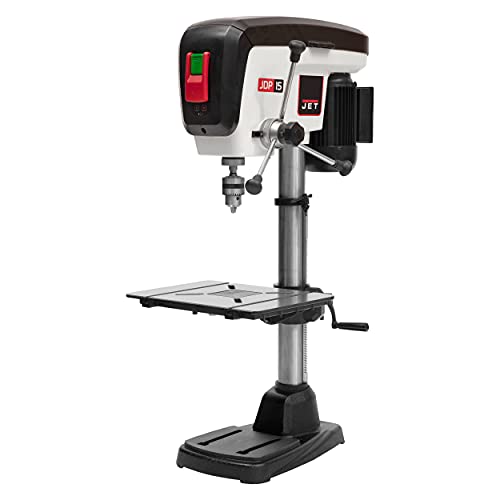
3/4 HP, 16 speeds, 15 in. swing, benchtop
SKIL 6.2 Amp 10 In. 5-Speed Benchtop Drill Press with Laser Alignment & Work Light – DP9505-00
Five speeds, a laser and a light in a 10 in. frame
6.2A, 5 speeds 610-2,800 RPM, 10 in. swing
WEN 4208T 2.3-Amp 8-Inch 5-Speed Cast Iron Benchtop Drill Press
The compact entry point for narrow parts and small benches
2.3A, 5 speeds, 8 in. swing, cast iron
How to Choose
Start with swing, then check it against your bench
Swing sets the widest work you can center a hole in, and benchtop models here run from 8 to 15 inches. The jump matters in practice: an 8 inch press centers holes in narrow parts only, a 12 inch press covers most furniture components, and the 15 inch JET reaches into cabinet-scale work. But swing also describes the machine’s physical depth, and a big benchtop press needs bench depth behind the column and clearance above it. Measure your bench and the space over it before falling for the largest swing on the page.
Use spindle travel to judge thick-work capability
Travel is the depth of hole you can complete in one stroke. The variable speed 12 inch models here offer 3-1/8 inches, enough for most furniture and bracket work, while the two compact models offer 2 inches. Thick stock, tall jigs and stacked parts consume travel quickly, and running out mid-hole means raising the table or the work, which is where alignment goes to die. If your projects include thick legs, deep boxes or tall fixtures, weight travel as heavily as swing in your comparison.
Decide whether variable speed earns its place on your bench
Three of these five machines change speed continuously with a readout, and two use fixed belt steps. Variable speed is worth having when your projects mix materials and bit sizes in one session, because the change takes seconds and the displayed RPM is repeatable. Fixed steps are simpler and perfectly accurate for shops that drill a narrow range of work. Neither choice affects the machine’s inherent accuracy, but the wrong one will annoy you every session, which is its own kind of specification.
Plan the bench as part of the machine
A benchtop press is only as rigid as what it stands on. The larger models here weigh about 85 pounds before you add a workpiece and a vise, so the bench must be level, solid and preferably against a wall. Bolt the press down, leave room for the table to tilt and for long stock to pass both sides, and think about height: the chuck should sit where you can see the bit meet your layout lines without stooping. Setup effort here pays accuracy dividends on every hole that follows.
The 5 Best Options
WEN 12-Inch Benchtop Drill Press, 6.2-Amp Variable Speed Motor with Cast Iron Construction, Laser and LED Work Light (DP1263V)
The DP1263V is the benchtop pick for shops that set up often. Its mechanical variable speed runs 580 to 3,100 RPM with a digital readout, and the listing adds a laser guide, an LED work light and a table roller extension for long stock, which together shorten the path from layout line to finished hole. The 5/8 inch chuck and 3-1/8 inch travel match the capacity project work usually needs, and the cast iron build keeps the 85 pound machine settled. It is the most complete benchtop specification in this list.
Specs
Motor: 6.2-amp induction motor, 120V, per the listing
Speed: mechanical variable speed, 580 to 3,100 RPM, with a digital LED readout
Swing: 12 in.
Spindle travel: 3-1/8 in.
Chuck: 5/8 in. keyed chuck
Table: 9-1/2 x 9-1/2 in., bevels 45 degrees left and right, with a roller extension
Listing features: laser guide, LED work light, adjustable depth stop
Weight: 85 lb
Best for: Benchtop shops doing varied project work with frequent setups on longer stock
Watch out for: The speed range starts at 580 RPM, so the largest bits in steel run faster than ideal, and the 85 lb weight makes the chosen bench position effectively permanent.
ASIN: B0DQ9F3DX8
Benchtop precision work split between wood and light metal
Watch out for
The listing is lighter on included setup aids than the WEN, so budget attention for your own work light and layout routine; the machine also weighs 85 lb.
JET’s JWDP-12 matches the WEN on swing, chuck and travel, then widens the variable range down to 530 RPM and keeps the digital readout. The 1/2 HP motor and cast iron base suit a shop that splits its drilling between hardwood and light metal and wants the speed changes to happen without opening the head. The table tilts 45 degrees each way for angled work. It reads as the more traditional machine of the two 12 inch models: fewer listed accessories, a focus on the drive and the casting.
Larger benchtop work needing 15 in. of swing and very low or very high speeds
Watch out for
Speed changes mean moving a belt through 16 steps, and you should confirm the machine’s weight and dimensions on the listing before committing bench space to it.
The JDP-15B is the benchtop press for buyers whose work outgrew 12 inch swing. Its 15 inch swing centers holes in wider panels and parts, the 3/4 HP motor is the strongest here, and 16 belt-stepped speeds from 200 to 3,630 RPM give both the lowest low and the highest high in this group, useful for big bits and tiny ones alike. The 5/8 inch chuck matches the tooling the other large models use. The costs are belt changes for speed and a substantial machine that will dominate a bench.
SKIL 6.2 Amp 10 In. 5-Speed Benchtop Drill Press with Laser Alignment & Work Light – DP9505-00
SKIL 6.2 Amp 10 In. 5-Speed Benchtop Drill Press with Laser Alignment & Work Light – DP9505-00
Best for: Smaller benches doing small to medium project work with repeat setups
Motor: 6.2-amp induction motor, 120V, per the listing
SKIL’s DP9505-00 is the middle path for a bench that cannot host a 12 inch machine. The 6.2-amp motor matches the WEN models on draw, five speeds run from 610 to 2,800 RPM, and the listing includes the two setup aids that matter most at this size: a laser alignment system and an LED work light, plus an adjustable depth stop for repeat holes. The table tilts up to 45 degrees both ways. Its limits are the 10 inch swing and 1/2 inch chuck, which suit small and medium project work rather than cabinet-scale parts.
WEN 4208T 2.3-Amp 8-Inch 5-Speed Cast Iron Benchtop Drill Press
The 4208T is the smallest machine here by design: an 8 inch swing, a 2.3-amp motor, five speeds and 2 inches of travel in a cast iron benchtop package. For narrow parts, small boxes, model work and hardware holes, that capacity is honestly sufficient, and the machine leaves most of the bench free for the work itself. The 1/2 inch JT33 chuck and beveling table cover the basics without frills. It is the right specification for a shop adding a first press for small work, as long as nobody expects it to center a hole in a wide panel.
Specs
Motor: 2.3-amp induction motor, 120V, per the listing
Speeds: 5 speeds
Swing: 8 in.
Spindle travel: 2 in.
Chuck: 1/2 in. keyed chuck, JT33
Table: 6.5 x 6.5 in., bevels 45 degrees left and right
Construction: cast iron table and base per the listing
Best for: First benchtop press for small parts, narrow work and tight benches
Watch out for: The 8 in. swing is a hard physical limit on workpiece width, and the 2.3-amp motor is the lightest here, so large bits in hard material are slow going.
ASIN: B08ZVT5JKC
Which One Fits Your Situation
A furniture bench that drills long stock and wide parts
Split the decision by width. If your parts stay within a 12 inch center reach, the WEN DP1263V’s roller extension and alignment aids serve long stock best. If wide panels are routine, the JET JDP-15B’s 15 inch swing is the only benchtop specification here that centers them, and its low 200 RPM setting also suits the large Forstner bits furniture work uses.
A mixed bench alternating hardwood and steel brackets
The JET JWDP-12 fits this rhythm because its variable drive and readout make material changes fast and repeatable, and its cast iron build tolerates metalwork better than lighter machines. The 530 RPM low end is the more metal-friendly floor among the benchtop variable models here, short of the big JET’s belt-stepped 200 RPM.
A small workshop bench shared with other tools
Choose the SKIL DP9505-00 or the WEN 4208T by the work’s width. The SKIL keeps a laser, light and depth stop in a 10 inch frame for general small work; the WEN is the smaller, simpler machine for narrow parts. Both leave bench room for a vise, layout tools and the project itself, which compact shops need as much as capacity.
A beginner setting up a first precision drilling station
Start with the WEN DP1263V if the bench allows it. Variable speed with a readout removes the belt-chart learning curve, the depth stop and laser teach repeatable setup habits, and the capacity will not be outgrown in a season. The 4208T is the fallback when budget or bench size is the binding constraint, accepting its narrower envelope honestly.
Common Mistakes
Measuring the workpiece but not the bench, then discovering the press does not fit the space above or behind it.
Comparing presses on swing alone and ignoring spindle travel, which limits thick work sooner.
Leaving a heavy benchtop press unbolted, so it walks and vibrates under load.
Buying a 1/2 inch chuck machine while owning 5/8 inch tooling, or the reverse.
Treating a laser guide as a substitute for clamping; the work must be fixed before any alignment aid matters.
Frequently Asked Questions
How much swing does a benchtop press need for furniture work?
Most furniture components center within a 12 inch swing, which is why the 12 inch class is the default recommendation for project benches. Chair parts, drawer boxes and typical rails all fit. Move to a 15 inch machine when wide panels, large tops or big jigs are routine, and accept an 8 or 10 inch machine only when your work is genuinely narrow, because swing is a hard physical limit.
Is variable speed worth it on a benchtop press?
For mixed work, yes. Changing speed with a lever and confirming it on a readout takes seconds, so you actually use the right RPM for each bit instead of leaving a belt where it was. Shops that drill one material with two bit sizes will not miss it. The fixed-speed machines here are not less accurate; they are less convenient when the work keeps changing.
Can a benchtop press handle thick stock?
Within its spindle travel, yes. The larger models here stroke 3-1/8 inches, which covers most thick furniture parts in one pass, especially with the table lowered to make room. Beyond travel, you finish from the other side or reposition, and accuracy depends on your setup. Bit length, table height adjustment and a square, clamped setup matter as much as the travel figure once the work gets tall.
What should I check when the press arrives?
Check the chuck size and mount the listing states, confirm the table tilts and locks, and run the spindle through its speed range. Set the machine on its bench, bolt it down, and drill test holes in scrap to check the table is square to the spindle before the first real part. Keep the listing’s components list handy; chuck keys and small hardware are the items most often miscounted.
M
Miller the Driller Editorial Team
We compare specs, warranty terms, long-term owner feedback and street pricing before anything earns a spot. Rankings are never paid.
Affiliate disclosure. As an Amazon Associate we earn from qualifying purchases at no extra cost to you. Prices accurate as of the date shown.
Find the best golf headcovers for woods, driver, fairway wood, and hybrid clubs. Compare knit, nylon, and leather sets that protect clubheads and fit modern woods.
Compare the best Porter-Cable routers for woodworking, from the compact 450 to the 691 D-handle router and the 693LRPK two-base kit, by motor and base.
Compare the best wood spoon sets in teak and sheesham, from 7-piece and 10-piece cooking sets with spatulas and ladles for nonstick pans and daily use.
Compare four tool box sets, from a stackable three-piece tower to steel boxes on wheels, with drawer, latch and capacity checks for home and site work.
Current Windows laptops for photographers chosen by colour-accurate screens, RAM, SSD storage and card readers, with a clear note on Windows 7 support.
Compare four insect repellent sprays for beach days, from picaridin and DEET aerosols to a plant-based pump, with sizes, coverage times and beach-bag fit.