What's inside
As an Amazon Associate I earn from qualifying purchases. This post may contain affiliate links at no extra cost to you.
Installing cabinet pulls and knobs is a small job where a powerful drill can cause expensive damage. The useful features are a controllable trigger, a clutch, and a comfortable grip—not maximum torque. For most kitchens, a compact 12-volt drill-driver is the easiest tool to handle. A basic 18- or 20-volt drill-driver is also a sound choice if you already own that battery platform or expect to use the drill for larger projects.
As an Amazon Associate we earn from qualifying purchases at no extra cost to you.


What we cover
What to buy for cabinet hardware
Look for a drill-driver with a variable-speed trigger, a two-speed gearbox, and an adjustable clutch. A 3/8-inch chuck is sufficient for the small bits used on typical cabinet doors and drawer fronts; a 1/2-inch chuck is more versatile but not necessary for this job. A compact body helps when working inside a cabinet or near a wall.
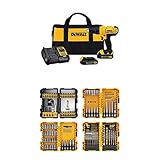
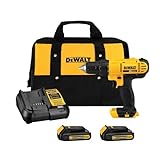
A 12-volt cordless drill-driver kit is a good fit if you want a light drill for hardware, flat-pack furniture, and occasional home repairs. The trade-off is less capacity for long, large-diameter drilling. If you already have batteries from a full-size tool system, a cordless 18- or 20-volt drill-driver may cost less than starting a second battery platform.
Skip the impact driver for drilling cabinet-hardware holes. Its repeated hammering action makes it harder to stop cleanly, and it has no adjustable drill clutch. It is useful for driving screws, but a drill-driver gives better control over a small bit and a finished cabinet surface.
Drill types compared
| Tool | Best use | Trade-off for cabinet hardware |
|---|---|---|
| 12-volt drill-driver | Pulls, knobs, light household work | Light and easy to control; less suited to heavy drilling |
| 18- or 20-volt drill-driver | Hardware plus regular home projects | More capable, but often heavier than needed |
| Impact driver | Driving screws and fasteners | Too abrupt for precise small holes; no drill clutch |
| Manual awl or hand drill | One or two holes in thin material | Slow, but avoids buying a power tool |
For just a couple of knobs, a manual awl can mark the center and a hand drill can make a hole in thin wood. If you have a dozen or more pulls to install, a cordless drill saves time and helps produce consistent holes. A drill guide or hardware-installation jig often matters more to accuracy than a larger battery or higher voltage.
Bits, templates, and setup
Check the fastener supplied with the hardware before drilling. Many cabinet pulls use a machine screw around 8-32 size, but screw length and hole requirements vary. Measure the screw and read the hardware instructions rather than choosing a bit by guesswork. For a typical small through-hole in wood, a sharp twist bit is usually suitable. A brad-point bit can help start accurately because its center point resists wandering. Match the bit to the specified hole diameter.
Use a cabinet hardware installation jig if you are fitting several pulls. It holds spacing and edge offsets consistent; measure the first position carefully, then verify the jig against the door or drawer before drilling. For a single knob, a ruler, square, and sharp pencil may be enough. Measure twice, and mark the center with an awl so the bit does not skate across the finish.
Remove the door or drawer front when practical and support it on a stable surface. Put a scrap board behind the drilling point and clamp the work if possible. The backing board reduces tear-out as the bit exits; without it, the veneer or painted face can splinter around the hole. If you must drill in place, make sure the bit cannot hit the cabinet frame, drawer contents, or a wall behind the panel.
Drilling without damaging the panel
Set the drill to its low-speed gear and use light trigger pressure. Keep the bit square to the surface. A drill guide helps if you tend to tilt the tool; even a small angle can make the pull sit crooked or cause its posts to bind. Drill through the panel into the backing board, rather than forcing the bit at high speed. Stop as soon as the bit breaks through.
Do not rely on the clutch to limit drilling depth: the clutch is designed for driving screws, and its behavior varies by tool and material. If you need a blind hole rather than a through-hole, mark the required depth on the bit with tape or use a depth stop. For normal cabinet pulls, the hole generally goes all the way through so the machine screw can pass through the panel.
Common failures are preventable. A wandering bit usually means the mark was not punched or the bit was dull. A chipped exit face usually means there was no backing board or the drill was pushed too hard at breakthrough. A pull that sits at an angle usually points to a tilted hole or inaccurate layout. If a hole is slightly oversized, the screw may still hold the hardware, but a visibly misplaced hole is difficult to hide; check the jig and measurements before drilling the rest.
Fitting the hardware and avoiding overbuying
After drilling, insert the screws from the back of the door or drawer and tighten the pull by hand with a screwdriver. A drill can spin a screw quickly, but it can also strip the screw head, damage the finish, or overtighten hardware against a soft panel. If you use the drill, select a low clutch setting and stop before the pull is fully snug; finish by hand.
For occasional cabinet work, there is little reason to pay extra for hammer mode, smart controls, or the highest torque rating. Those features do not improve a small, clean hole. Spend instead on a decent bit, a layout jig if you have many pieces, and a second battery only if you will use the drill for longer tasks. A basic drill-driver with good trigger control is enough for most cabinet hardware, while a heavier drill makes sense when the same tool will also handle larger holes, construction screws, or regular workshop use.