What's inside
As an Amazon Associate I earn from qualifying purchases. This post may contain affiliate links at no extra cost to you.
What we cover
Choosing a cordless drill for fiber cement
Fiber cement siding is hard, abrasive and prone to chipping at the edges. For ordinary screws and small pilot holes, a good 18V or 20V cordless drill/driver is usually enough. You do not need a hammer drill: its impact action is for masonry and can damage siding or the drill bit. A compact 12V drill can handle occasional holes, but a full-size drill is a better choice for repeated work or larger bits.
Buy based on the holes and fasteners you actually need to install. For small pilot holes, a basic drill with a two-speed gearbox and a clutch is fine. If you expect to drill many holes, use larger bits, or work in thick material, favor a brushless drill with a side handle and enough battery capacity to keep the job moving. Compare brushless 18V cordless drill/drivers by features and battery platform, not just the advertised maximum torque.
As an Amazon Associate we earn from qualifying purchases at no extra cost to you.
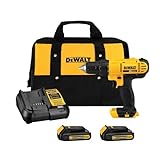


Drill types compared
| Tool | Best for | Trade-off |
|---|---|---|
| 12V drill/driver | A few small pilot holes and light fastening | Lighter and cheaper, but less reserve for large bits or long work sessions |
| 18V/20V drill/driver | Most siding installation and repair jobs | More capable, but heavier than a compact drill |
| Hammer drill | Occasional drilling into brick or concrete | Unnecessary for siding; leave hammer mode off for fiber cement |
| Impact driver | Driving compatible screws after drilling pilot holes | High speed and impact force make it easy to overdrive or damage siding |
Voltage labels do not tell the whole story. Battery capacity, motor design, gearing and ergonomics matter too. A 2.0Ah battery keeps a drill light; a 4.0Ah pack generally lasts longer but adds weight. For an occasional repair, the lower-cost drill that shares batteries with tools you already own is often the sensible choice.
Use the right bit and hole size
Fiber cement wears ordinary bits quickly. Use a carbide-tipped masonry bit or a bit specifically labeled for fiber cement, and check its recommended speed. For many small holes, a carbide-tipped bit is a practical purchase; for frequent work, compare carbide-tipped bits for fiber cement. Avoid using a dull bit: it makes the drill work harder, heats up, and is more likely to wander or chip the surface.
Match the hole diameter to the fastener maker’s instructions. A pilot hole that is too small can split or crack the board, especially near an edge. One that is too large weakens the fastener’s grip. If the screw is intended to pass through the siding and anchor into framing, make sure the pilot hole and fastener length suit that assembly; siding alone is not a reliable anchor for heavy loads.
Use a steady, moderate speed and light pressure. Let the bit cut rather than forcing it. Support the board where practical, keep the drill perpendicular, and do not push so hard that the bit suddenly breaks through and catches. On visible work, test the bit and technique on a scrap offcut first.
A reliable drilling process
Mark the hole and check the siding manufacturer’s installation guidance for edge distances and fastening locations. Avoid drilling too close to an edge or corner, where the board is more likely to chip. Wear eye protection and a properly fitted respirator suitable for the dust; cutting or drilling fiber cement can release respirable crystalline silica. Follow local safety rules and the product’s instructions, and keep dust away from other people.
Set the drill to its low gear when using a larger bit or when you need better control. For a small pilot hole, the high-speed setting may be suitable if the bit manufacturer allows it. Start slowly to keep the bit from skating, then maintain a consistent speed. Back the bit out occasionally if dust packs into the flutes. Stop if the bit gets hot, the drill bogs down, or the hole begins to crumble; clear the dust and inspect the bit before continuing.
For fastening, a drill/driver gives better control than an impact driver because its clutch can limit torque. If using an impact driver, start at low speed and stop as soon as the fastener seats. Driving too far can crush the siding or damage its coating. Choose corrosion-resistant fasteners approved for the siding and exposure conditions, and follow the manufacturer’s instructions for head style and placement.
When a more capable drill is worth it
Choose a brushless 18V/20V drill if you have a large installation, expect to drill many holes, or need to use larger bits without frequent pauses. A side handle is useful when the bit can bind, particularly with larger holes; it gives you more control but adds bulk. A spare battery can be more useful than paying for a small increase in advertised torque.
For a handful of small holes, a basic cordless drill is adequate if it accepts the right bit and has a controllable clutch. Spending extra on hammer mode does not help with fiber cement. If the project also involves masonry, a hammer drill may make sense as a multi-purpose purchase, but switch hammer mode off before drilling siding.
Common problems to avoid
Chipped edges usually point to a hole placed too close to the edge, a dull or unsuitable bit, too much pressure, or inadequate support. A wandering hole often starts with a fast, slippery approach; begin gently and use an offcut to practice. Slow drilling and a sharp bit help limit heat, while clearing dust prevents binding. If a board cracks or a hole is oversized, do not assume a larger screw will fix it. Follow the siding maker’s repair guidance or replace the damaged piece where necessary.
For most homeowners, the best buy is a mid-range drill/driver on a battery platform they already use, paired with sharp carbide-tipped bits and proper dust protection. Pay for a heavier brushless model only when the workload, larger holes or longer run time justify it.